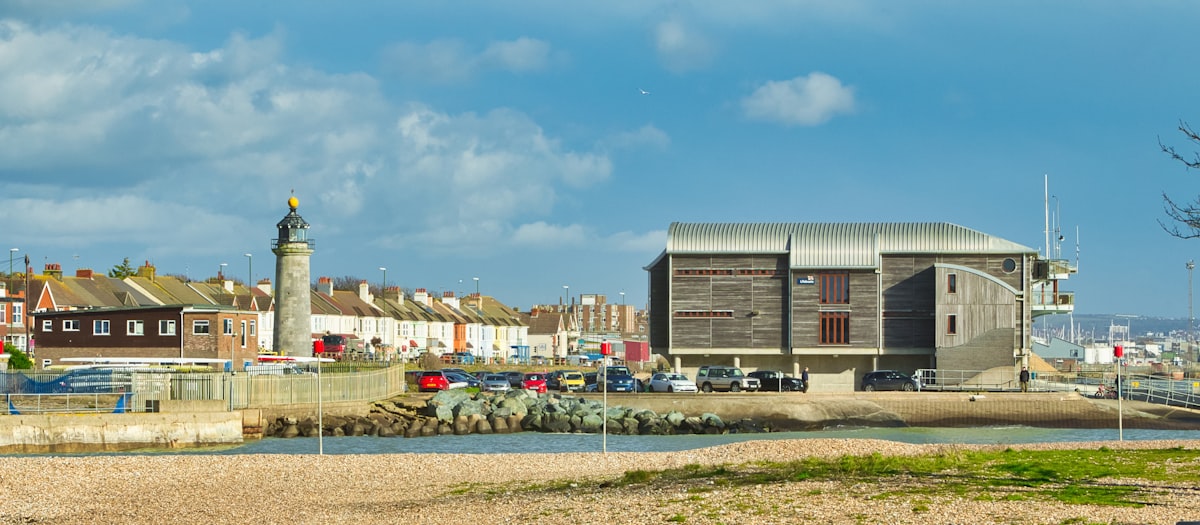
Understanding the daylight requirements in Adur is essential for anyone planning a home extension, an infill dwelling or a larger residential scheme across Shoreham-by-Sea, Lancing, Southwick and Sompting. Adur District Council is the local planning authority (LPA) for the district outside the part that falls within the South Downs National Park, and it assesses every application against its adopted development plan and its own design standards. This guide explains, accurately and specifically, how the council approaches daylight, sunlight and residential amenity.
The local planning framework in Adur
The relevant development plan is the Adur Local Plan 2017, adopted by Adur Full Council on 14 December 2017. It sets the land-use strategy for the district (outside the South Downs National Park) to 2032 and contains the policies used to determine planning applications.
Two policies are particularly relevant to daylight, sunlight and living conditions:
- Policy 2 (Spatial Strategy) — defines the built-up area boundary within which development is permitted subject to compliance with other policies.
- Policy 15 (Quality of the Built Environment) — requires development to be of a high standard of design that respects and enhances the character of the site and the prevailing character of the surrounding area. Protecting the amenity of neighbouring occupiers, including their access to daylight and sunlight, is a core part of this design test.
Where heritage is involved, Policy 16 (A Strategic Approach to the Historic Environment) and Policy 17 (The Historic Environment) also apply — relevant in Shoreham's conservation areas and around its many listed buildings.
Does Adur have a daylight and sunlight SPD?
Adur does not publish a standalone daylight and sunlight Supplementary Planning Document. Instead, the council sets out its detailed expectations in Development Management Standard No. 2: Extensions and Alterations to Dwellings, supported by its Development Control Standards on "Space around dwellings and flats". These documents are the practical day-to-day reference for householder and small-scale residential proposals.
Importantly, the council's own guidance confirms that national and technical standards apply through the Local Plan. The standard expressly relies on the National Planning Policy Framework (NPPF) and Planning Practice Guidance, which seek good design and a wide choice of quality homes. For the technical assessment of light, the recognised methodology is the Building Research Establishment guide, BRE BR 209 (Site Layout Planning for Daylight and Sunlight, 2022 edition), alongside the British Standard BS EN 17037 on daylight in buildings.
The numerical standards Adur actually applies
What makes Adur distinctive is that its extensions standard contains specific, measurable thresholds. These are the figures officers use when judging loss of light, overlooking and overbearing impact:
- Single-storey rear extensions on semi-detached or terraced dwellings that abut, or are within 1m of, a common side boundary should normally be no deeper than 3.5m.
- Two-storey (or first-floor) rear extensions within 1m of a side boundary should normally be no deeper than 2m; extensions abutting the boundary will not normally be permitted.
- Principal windows on the rear elevation should be 22m from principal windows of dwellings to the rear, and a minimum of 6.1m from any solid obstruction or boundary on a side elevation.
- On corner plots, a distance of 14m should be retained between rear-facing principal windows and side windows of a dwelling to the rear.
- A rear garden of at least 11m depth should normally be retained.
The standard is explicit that the closer a rear extension sits to a boundary, the more likely it is to harm a neighbour by overlooking or loss of daylight, and that a two-storey extension is far more likely to reduce daylight than a single-storey one. It also notes that a false mono-pitch facade may be accepted where a full pitched roof "would substantially reduce the light to the adjoining properties" — a clear signal that light is weighed in design decisions.
Local factors that affect daylight assessments in Adur
Several Adur-specific characteristics shape how schemes are judged:
- Shoreham-by-Sea's historic core and harbour. The tightly grained streets around the harbour, the High Street and East Street conservation areas mean tall, dense layouts are common, so the relationship between new development and existing windows is sensitive. The Shoreham Harbour regeneration area, governed by additional flood-risk guidance, brings higher-density mixed-use blocks where mutual daylight between buildings must be designed in from the outset.
- The South Downs National Park boundary. Land to the north of the built-up area sits within the National Park, where the South Downs National Park Authority — not Adur District Council — is the planning authority. Sites on the urban fringe near the Downs need careful attention to which authority and which plan applies.
- Coastal, low-rise residential character. Much of Lancing, Sompting and Southwick is characterised by bungalows and modest semi-detached housing. The council's guidance specifically warns that in bungalow areas, where no overlooking exists at present, dormers and two-storey additions can cause an excessive degree of overlooking and unacceptable loss of light.
What a daylight and sunlight report should demonstrate
For most residential proposals in Adur, a robust assessment will show how the scheme performs against the BRE BR 209 (2022) tests — the Vertical Sky Component and Annual Probable Sunlight Hours for neighbouring windows, and No Sky Line (daylight distribution) for affected rooms — while also addressing the council's own distance and depth standards. Where new homes are created, BS EN 17037 informs the daylight provision within the proposed dwellings themselves. Presenting both the numerical BRE results and a clear explanation of compliance with Local Plan Policy 15 gives a case officer the evidence needed to reach a positive recommendation.
How Fortress Associates can help
Fortress Associates prepares our daylight and sunlight report service to BRE BR 209 (2022) and BS EN 17037, tailored to the Adur Local Plan 2017 and the council's extensions standard. We also produce Building Regulations drawings. We work nationwide with a 4–5 working day turnaround and no advance payment. To discuss a Shoreham, Lancing or Southwick project, please contact our team.
Sources & further reading
- Adur Local Plan 2017 — Adur & Worthing Councils
- Supplementary Planning Documents, Guidance & Design Bulletins (Adur)
- BRE BR 209: Site Layout Planning for Daylight and Sunlight (2022)
- National Planning Policy Framework (gov.uk)
- Fortress Associates daylight and sunlight reports and our related guide, Daylight Requirements in Worcester
Need help with a UK planning project?
Fixed-fee daylight reports and Building Regulations drawings — delivered in 4–5 working days. No advance payment.
Request a free quote