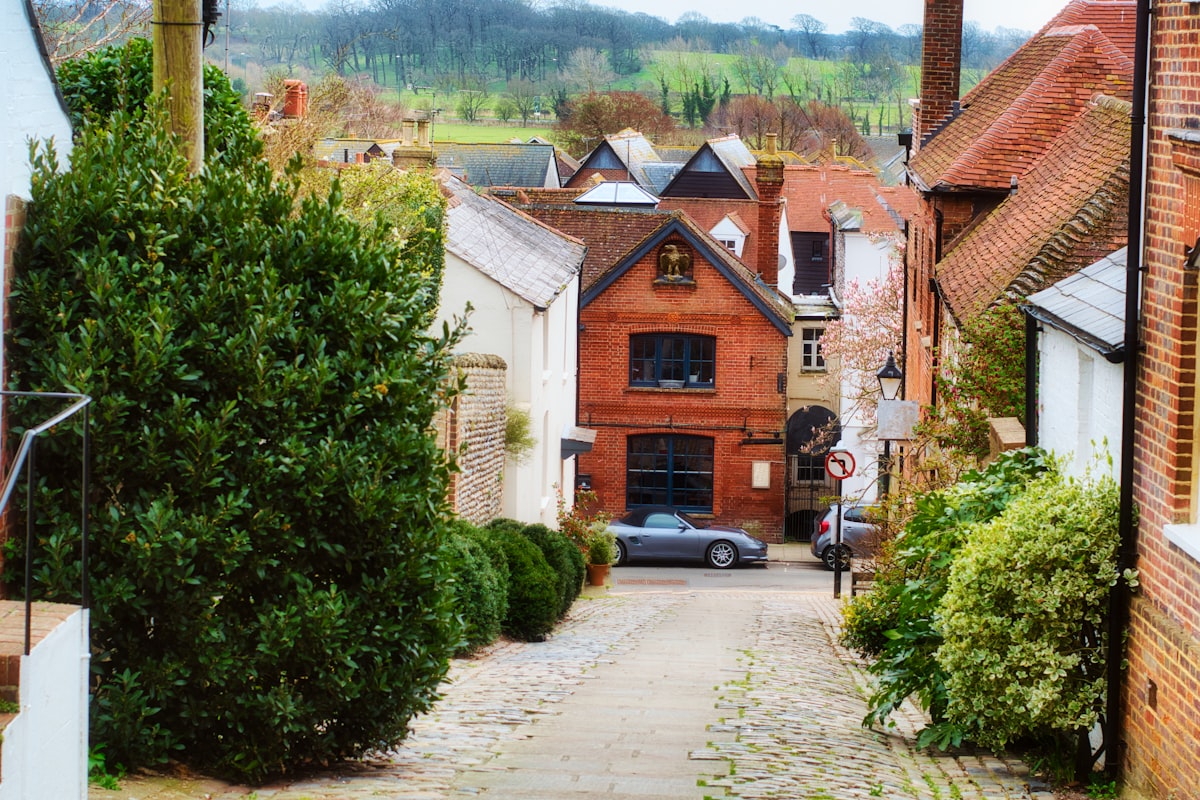
Whether you are planning an extension in Sutton-in-Ashfield, an infill plot in Kirkby-in-Ashfield, or new homes in Hucknall, understanding the daylight requirements in Ashfield before you design will help you avoid delay and neighbour objection. Ashfield District Council is the local planning authority (LPA) for the area — not Nottinghamshire County Council — and it assesses the effect of new development on daylight, sunlight and overshadowing through its adopted (and currently fairly dated) development plan, its residential design guidance and recognised national standards. This article explains how the framework works and when a daylight and sunlight assessment is sensible.
The adopted development plan
The adopted development plan for the district remains the Ashfield Local Plan Review, adopted in November 2002. A number of its policies were ‘saved’ and continue to be the formal basis for decisions, with weight given according to their consistency with the National Planning Policy Framework. The retained policies include strategic (ST), environment (EV) and housing (HG) policies.
For daylight and sunlight, the most directly relevant saved policy is:
- Policy HG5 — under which residential development is permitted where the amenity of neighbouring properties is protected. This is the policy hook for considering loss of light, overshadowing, overbearing impact, privacy and overlooking when a household extension or new dwelling could affect a neighbour.
Other saved policies, such as ST4 and EV2, govern where development is acceptable (for example restricting development in the countryside), and form part of the wider context within which amenity is judged. Because the 2002 plan predates current practice, national policy and recognised technical guidance carry significant weight in filling the gaps.
The council's residential design guidance
Ashfield supports its Local Plan with adopted supplementary guidance that is particularly important for householder and residential schemes:
- the Residential Design Guide, which sets out the council's expectations for high quality residential development; and
- the Residential Extensions Design Guide, which deals specifically with extensions and alterations to existing homes.
These documents address how a proposal should respect its neighbours and its setting — spacing between buildings, outlook, privacy and the avoidance of an overbearing or overshadowing effect — which are precisely the factors that determine daylight and sunlight outcomes. Applicants are expected to demonstrate how their scheme reflects this guidance, and case officers will frequently refer to it when assessing impact on a neighbour's light.
The emerging Local Plan 2023-2040
Ashfield has been preparing a new Ashfield Local Plan 2023-2040 to replace the 2002 plan. It has progressed through the Regulation 19 pre-submission stage, public consultation and examination, with the council consulting further on additional housing site allocations during 2025. Until the new plan is formally adopted, however, the saved 2002 policies remain the development plan. For larger or more sensitive proposals, it is worth checking the latest position, as emerging policies can attract weight as they advance.
Which technical standards apply?
Because the adopted Local Plan does not set numerical daylight thresholds, Ashfield officers and appeal inspectors apply the recognised national methodology:
- BRE BR 209 – Site Layout Planning for Daylight and Sunlight: A Guide to Good Practice (2022, third edition). This sets out the established tests: Vertical Sky Component (VSC) and the No Sky Line method for daylight to neighbours, Annual Probable Sunlight Hours (APSH) for sunlight, and the sun-on-ground test for overshadowing of gardens and amenity areas.
- BS EN 17037 (Daylight in Buildings), which informs the daylight standard for new dwellings themselves.
- The National Planning Policy Framework (NPPF), which expects good design and a high standard of amenity for existing and future occupiers, while encouraging efficient use of land and a flexible approach to daylight and sunlight where it would otherwise prevent suitable development.
These standards are applied through Policy HG5 and the council's design guidance rather than in isolation. A well-prepared report demonstrates compliance with BRE BR 209 and BS EN 17037 and ties the findings back to the council's amenity expectations.
The tests in plain terms
- VSC — skylight reaching a neighbour's window, with 27% used as the benchmark for good daylight.
- Daylight distribution — how far daylight penetrates a room (the No Sky Line).
- APSH — sunlight to windows facing within 90 degrees of due south.
- Overshadowing — the proportion of an amenity area receiving sun on the spring equinox.
Local factors that shape daylight cases in Ashfield
- A former coalfield district. Ashfield's three principal towns — Sutton-in-Ashfield, Kirkby-in-Ashfield and Hucknall — grew around the Nottinghamshire coalfield. The legacy is a townscape of densely built Victorian and early twentieth-century terraces, where modest plot sizes and short back-to-back distances make loss of light and overbearing impact a common cause of objection.
- Hucknall and the Nottingham fringe. Hucknall sits on the northern edge of the Nottingham conurbation and has seen sustained housing pressure and regeneration. Higher-density redevelopment near existing homes makes daylight and overshadowing a recurring consideration.
- Mixed urban and rural settings. Beyond the towns, parts of the district are more open countryside, where established building lines and spacing protect neighbours' daylight and where the saved countryside policies also apply.
An assessment that engages with the actual character of the street — and references the council's Residential Extensions Design Guide — will be far more persuasive to a case officer than a generic submission.
When a daylight and sunlight report helps
Consider a formal assessment where:
- a two-storey or deep rear extension could overshadow a neighbour's windows or garden in a tight terraced setting;
- an infill or backland plot sits close to existing dwellings;
- a higher-density or flatted scheme is proposed, particularly in Hucknall, Kirkby or Sutton;
- a neighbour has raised concerns about loss of light, or the council has requested further information.
How Fortress Associates can help
Fortress Associates provides our daylight and sunlight report service to homeowners, architects and developers across Ashfield. Each report is prepared to BRE BR 209 (2022) and BS EN 17037 and written to address Policy HG5 and the council's residential design guidance directly. We work UK-wide, offer a 4–5 working day turnaround, and ask for no advance payment. We also prepare Building Regulations drawings where your project needs them. To discuss your scheme, get in touch with our team.
Related reading
If your project is further east, our guide to daylight requirements in Breckland covers a Norfolk district with a more recently adopted Local Plan and an adopted design guide.
Sources & further reading
Need help with a UK planning project?
Fixed-fee daylight reports and Building Regulations drawings — delivered in 4–5 working days. No advance payment.
Request a free quote