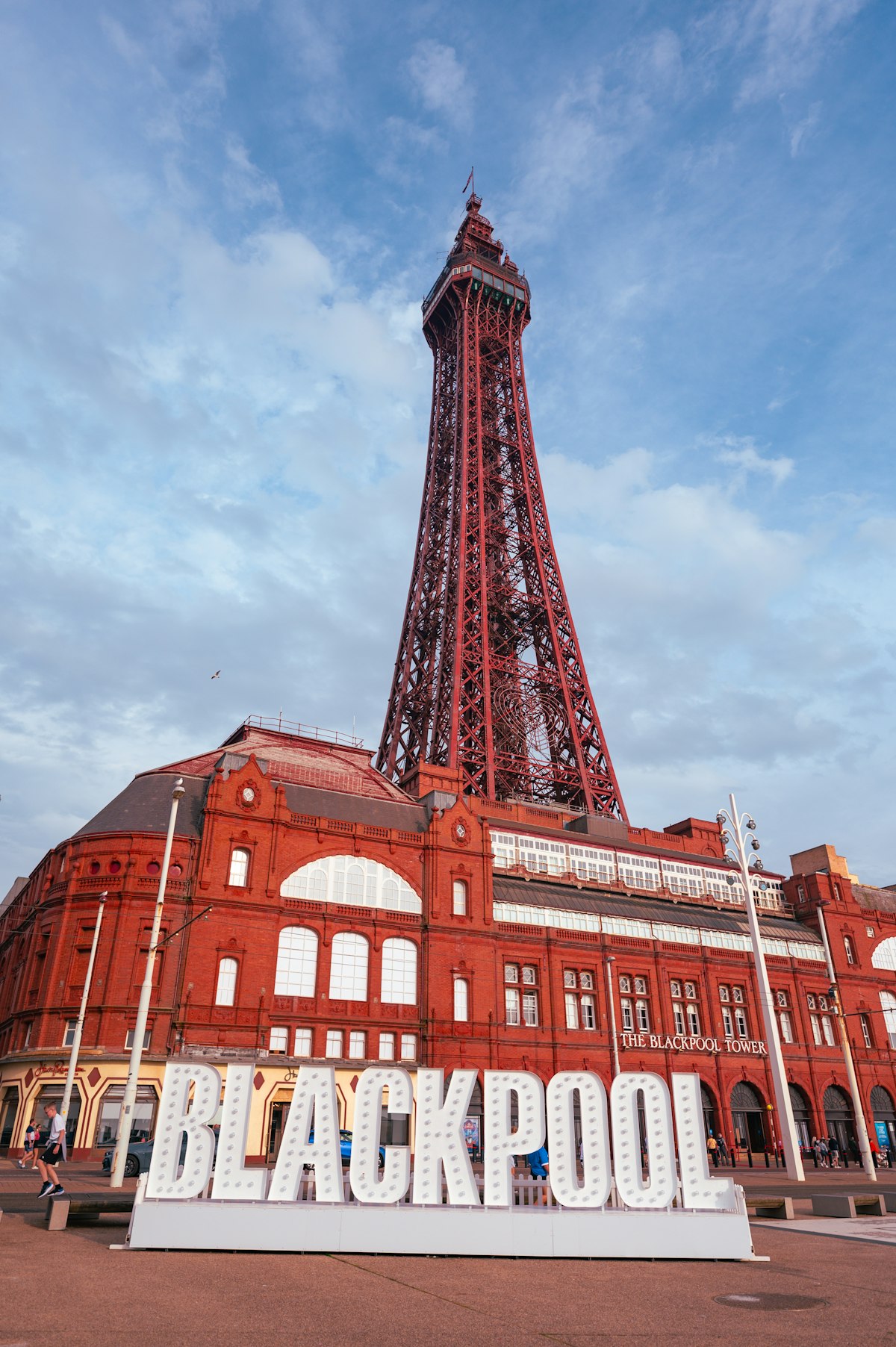
Understanding the daylight requirements in Blackpool is essential for anyone planning an extension, a flat conversion, or a new residential scheme along the Fylde coast. From the densely built terraces behind the Promenade to taller proposals near Blackpool Tower and the seafront, the way a development affects light to neighbouring homes is one of the matters Blackpool Council scrutinises most closely. This guide sets out the adopted planning policy position, the local design guidance that applies, and how a professional daylight and sunlight assessment supports a robust application.
Daylight requirements in Blackpool and the local policy framework
Blackpool is a unitary authority, so the Council acts as the local planning authority for the whole borough. Its development plan is delivered in two parts. The Blackpool Local Plan Part 1: Core Strategy 2012–2027 was adopted on 20 January 2016 and sets the strategic direction, including Policy CS7 (Quality of Design), which requires new development to be well designed and to respond positively to its context, character and surroundings.
The detailed development management policies sit in the Blackpool Local Plan Part 2: Site Allocations and Development Management Policies, which was adopted on 22 February 2023. Together with the Core Strategy, Part 2 replaced the remaining saved policies of the older Blackpool Local Plan. The key amenity policy for householders is Policy DM20 (Extensions and Alterations), under which extensions that have an unacceptable impact on neighbour amenity — through loss of privacy, loss of outlook, loss of sunlight or daylight, or an overbearing effect — will not be permitted.
What the policies expect on amenity
Read together, CS7 and DM20 mean that an applicant is expected to demonstrate that a proposal protects the living conditions of existing and future occupiers. In practice the Council looks at:
- whether main habitable rooms in neighbouring properties retain reasonable daylight and sunlight;
- whether the proposal causes unacceptable overshadowing of windows or gardens;
- whether outlook from neighbouring habitable rooms becomes oppressive or overbearing; and
- whether the scale and bulk of the development remain appropriate to the plot and the streetscene.
Local design guidance: the Extending Your Home SPD
Blackpool's principal daylight-related design guidance is the Extending Your Home Supplementary Planning Document, adopted in November 2007 as a joint document with Fylde and Wyre. Its dedicated “Daylight and Sunlight” section advises that most extensions cause some shadowing, and that any extension should be located and sized so it does not cause unacceptable overshadowing of, or loss of natural daylight to, a neighbouring property.
The SPD is useful because it explains how the Council defines a habitable room. For these purposes habitable rooms include bedrooms, kitchens, living rooms and principal dining areas, but exclude bathrooms, halls, stairs, landings, utility rooms, conservatories, porches and garages. It also confirms that side-facing habitable room windows are given the same protection as rear-facing windows, unless they are secondary windows serving a room that already has a larger primary window. Alongside daylight, the SPD addresses overlooking and privacy and the importance of keeping extensions subordinate in bulk and scale to the original dwelling.
It is worth being clear about what Blackpool does not have: there is no separate adopted numerical daylight standard unique to the borough. Instead, the technical assessment of light is carried out against national best practice — principally the Building Research Establishment guidance — applied through the adopted Local Plan policies and the SPD.
How daylight and sunlight are actually assessed
Where a proposal could materially affect light, the recognised method is set out in the BRE's Site Layout Planning for Daylight and Sunlight: A Guide to Good Practice (BR 209, 2022 edition). This is the document planning officers across England, including Blackpool, refer to when judging impact. The core tests include:
- Vertical Sky Component (VSC) — the amount of skylight reaching a neighbouring window, where a figure below 27%, or a reduction of more than 20% from the existing value, signals a potential issue;
- No Sky Line / Daylight Distribution — how far daylight penetrates into a room;
- Annual Probable Sunlight Hours (APSH) — relevant for windows facing within 90 degrees of due south; and
- overshadowing of amenity areas, assessed on the 21 March sun-on-ground test.
For the quality of daylight within the proposed dwellings themselves, BS EN 17037 (Daylight in Buildings) provides the target illuminance benchmarks. The National Planning Policy Framework (NPPF) reinforces all of this by directing decision-makers to secure a high standard of amenity for existing and future occupants, while also encouraging the efficient use of land — a balance that matters a great deal on Blackpool's tight coastal plots.
Blackpool's particular pressures
Two local factors make daylight assessment especially relevant in Blackpool. First, much of the inner resort consists of closely packed Victorian and Edwardian terraces and former guesthouses, where even a modest rear extension can affect a neighbour's only source of light. Second, the Council actively encourages regeneration and higher-density, sometimes taller, development in the town centre and along the seafront; here a measured BR 209 study is often the difference between a smooth consent and a refusal on amenity grounds.
Do you need a daylight and sunlight report?
A formal report is most often required where a development is close to neighbouring windows, where it adds height or bulk, or where a validation request or pre-application response specifically asks for one. Submitting a clear assessment up front demonstrates compliance with Policy DM20 and Policy CS7 and reduces the risk of delay, objections, or a request for further information part-way through determination.
How Fortress Associates can help
Fortress Associates prepares BRE-compliant studies through our daylight and sunlight report service, assessing VSC, daylight distribution, APSH and overshadowing to BR 209 (2022) and BS EN 17037. We work nationwide with a 4–5 working day turnaround and no advance payment. We also produce Building Regulations drawings to Approved Documents A–S. To discuss a Blackpool scheme, please get in touch. If your project is further along the Dorset coast, see our companion guide to daylight requirements in Bournemouth, Christchurch and Poole.
Sources & further reading
Need help with a UK planning project?
Fixed-fee daylight reports and Building Regulations drawings — delivered in 4–5 working days. No advance payment.
Request a free quote