Daylight requirements in Blaenau Gwent are shaped by an unusual combination: a steep south Wales valleys landscape of tightly packed terraced streets, and a planning framework that pairs the council's adopted Local Development Plan with national Welsh policy. Whether you are extending a terraced house in Ebbw Vale, infilling a backland plot in Tredegar or bringing forward new housing on a sloping site, the amenity of existing and future occupiers will be a central planning consideration. This article explains how daylight and sunlight are assessed locally and how a professional report supports a robust application.
The planning framework in Blaenau Gwent
In Wales, planning decisions are made against the relevant authority's adopted development plan together with national policy. For Blaenau Gwent the starting point is the Blaenau Gwent Local Development Plan 2006–2021, adopted on 22 November 2012. Despite the end date in its title, this remains the statutory adopted plan: the council's Replacement Local Development Plan 2018–2033 is still progressing through examination and is not expected to be adopted until later in 2026. Applications today are therefore determined against the adopted 2012 plan.
Sitting above the LDP is the Welsh national framework, principally Planning Policy Wales (Edition 12, 2024), Future Wales: the National Plan 2040 and the Technical Advice Notes, including TAN 12: Design. Planning Policy Wales places strong emphasis on placemaking and good design, which expressly includes securing satisfactory levels of amenity and avoiding unacceptable harm to neighbouring occupiers.
Local Development Plan policies that matter for daylight
Two adopted LDP policies are central to any daylight or sunlight question:
- Policy DM1 (New Development) – the general development management policy used to assess proposals. Among its criteria, DM1 requires that development does not have an unacceptable impact on the amenity of neighbouring occupiers, and decision reports routinely apply DM1 to issues such as overbearing impact, loss of light and overshadowing.
- Policy DM2 (Design and Placemaking) – requires development to be of good design quality, to respond to its context and to protect the amenity of existing and future users. In a closely built valleys setting, that amenity test naturally encompasses daylight, sunlight and privacy.
The council also publishes Householder Design Guidance as Supplementary Planning Guidance, alongside the Welsh Government's Model Design Guide for Wales, which together inform how extensions and infill should respect neighbouring light and outlook.
How daylight and sunlight are actually assessed
Like most Welsh authorities, Blaenau Gwent does not set out its own numerical daylight or sunlight standard within the LDP. Instead, the recognised national best-practice methodology is applied to demonstrate compliance with the amenity aims of policies DM1 and DM2 and with Planning Policy Wales. That methodology is set out in:
- BRE BR 209 – Site Layout Planning for Daylight and Sunlight: A Guide to Good Practice (Third Edition, 2022), which provides the familiar tests — Vertical Sky Component (VSC), the daylight distribution / no-sky-line check, and the Annual Probable Sunlight Hours (APSH) test for sunlight; and
- BS EN 17037 (Daylight in Buildings), the European standard for daylight provision within new dwellings, which BR 209 cross-refers to.
A daylight and sunlight report measures how much skylight a window receives, how light is distributed across a room, and how much winter and annual sunlight reaches habitable rooms and gardens, comparing the figures against the BRE targets. Where a proposal falls short, the report explains the scale and context of any change — which is exactly the proportionate judgement DM1 calls for.
Why valleys topography makes this critical
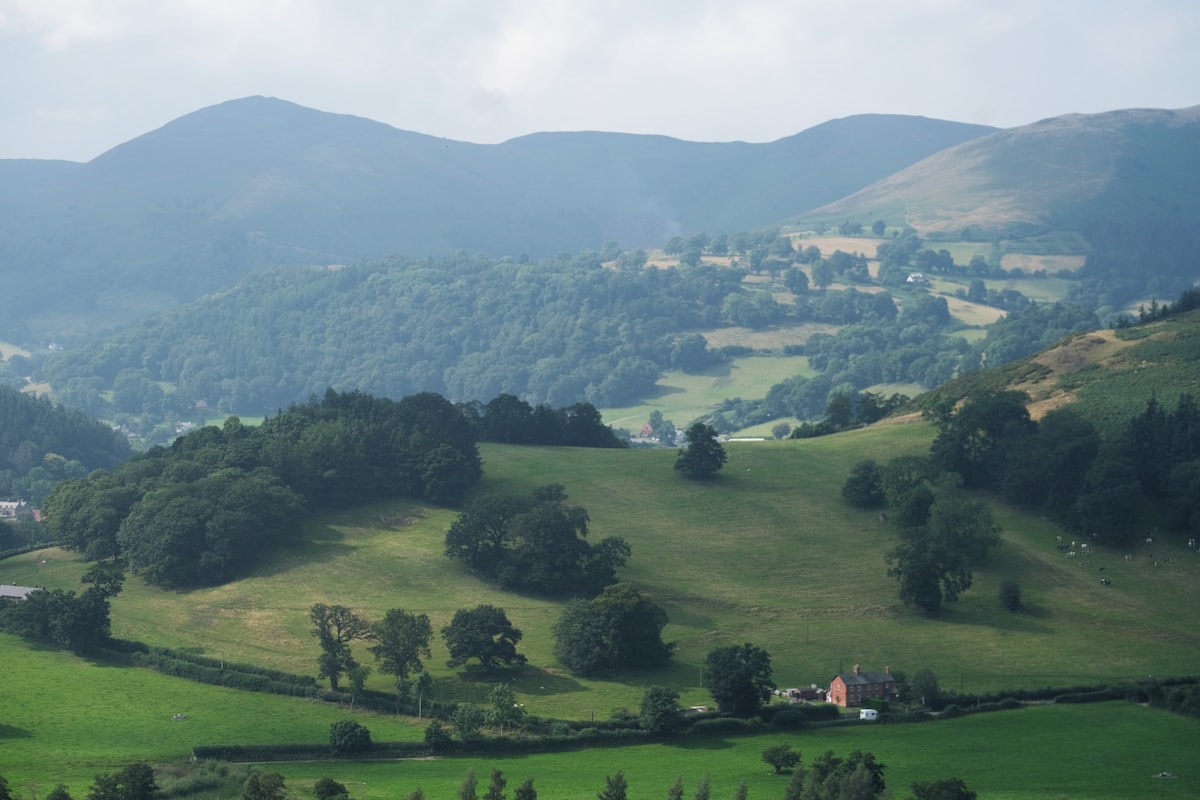
Blaenau Gwent's geography sets it apart. Settlements such as Ebbw Vale, Tredegar, Brynmawr and Abertillery climb the valley sides in long terraces, so dwellings frequently sit above or below one another on sloping ground. Two local realities follow:
- Level differences amplify overshadowing. A modest rear extension on an upslope plot can cast a far longer shadow over the property below than the same extension would on flat land, making BRE's sunlight-on-ground and APSH tests especially important.
- Tight terraced rears restrict outlook. Short back gardens and close-set rear elevations mean small changes in massing can have a real effect on a neighbour's Vertical Sky Component, so accurate three-dimensional analysis is far more reliable than judging by eye.
For these reasons, a measured BRE assessment is often the difference between a confident officer recommendation and a refusal on amenity grounds under DM1.
How Fortress Associates can help
Fortress Associates provides our daylight and sunlight report service to homeowners, architects and developers across Blaenau Gwent and the wider valleys. Our reports are prepared to BRE BR 209 (2022) and BS EN 17037, written to address the amenity tests in LDP policies DM1 and DM2 and the placemaking aims of Planning Policy Wales. We work UK-wide with a 4–5 working day turnaround and no advance payment. See our services or contact us to discuss your site.
Sources & further reading
Need help with a UK planning project?
Fixed-fee daylight reports and Building Regulations drawings — delivered in 4–5 working days. No advance payment.
Request a free quote