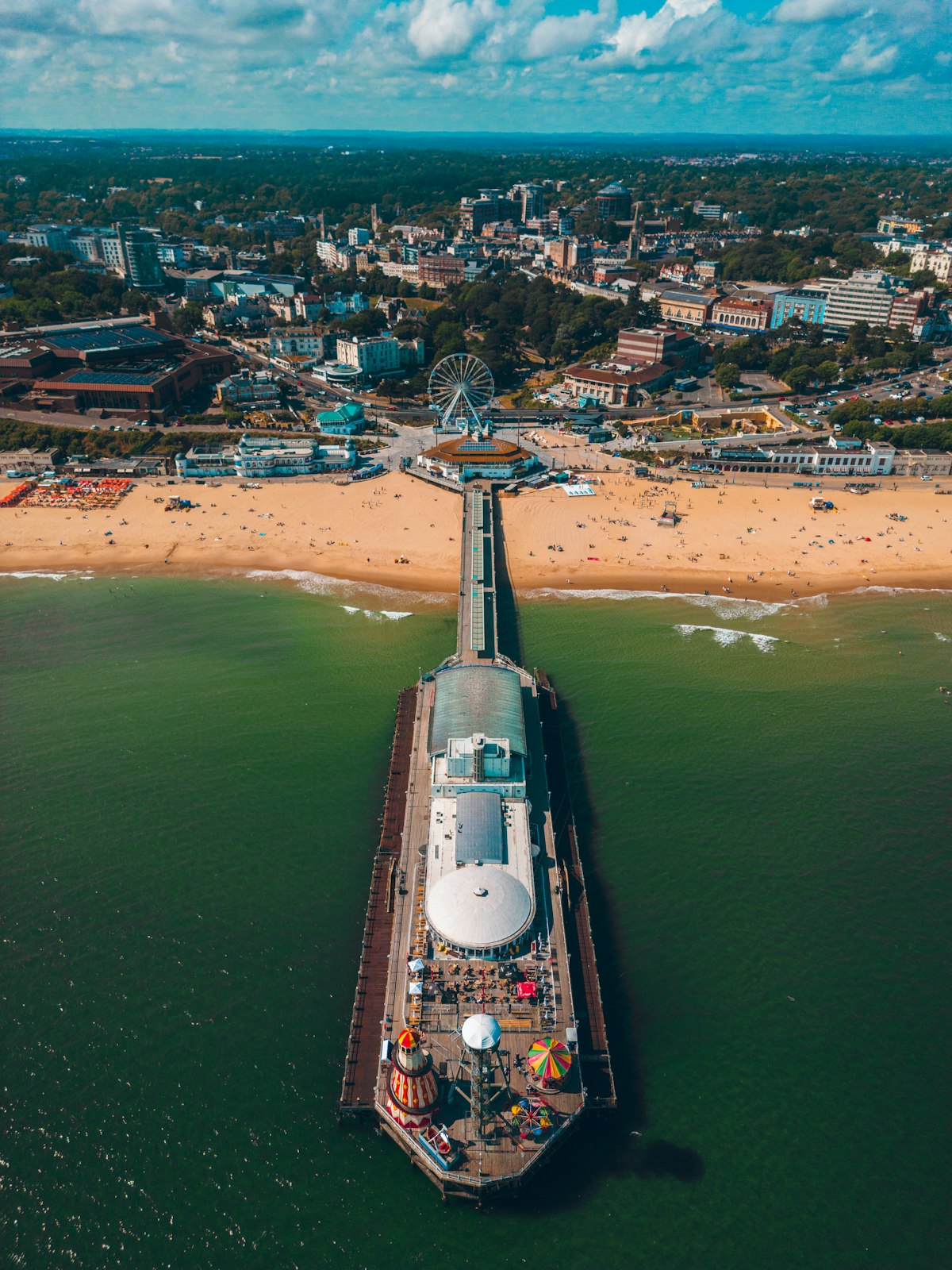
BCP Council covers one of the most distinctive planning areas on the south coast, and the daylight requirements in Bournemouth, Christchurch and Poole reflect that complexity. The authority was created in 2019 by merging three former boroughs, and — crucially — it still does not have a single adopted local plan. Anyone designing an extension, a block of flats, or a tall seafront building here needs to know which plan applies to their site and how light to neighbours will be judged. This article maps the current policy position and explains the technical assessment.
A patchwork of plans: daylight requirements in Bournemouth, Christchurch and Poole
Because Bournemouth, Christchurch and Poole came together as a unitary authority only in 2019, planning decisions are still made against the separate development plans inherited from the predecessor councils. BCP Council prepared a single BCP-wide Local Plan, but following examination hearings the Local Plan Inspectors recommended withdrawal, and on 3 June 2026 the Council confirmed the draft plan would be withdrawn (largely over a duty-to-cooperate finding on housing). A replacement plan is not expected to reach examination until around 2028. Until then, the inherited plans remain the starting point for every decision.
The table below summarises which adopted plan applies where, and the principal policy used to protect daylight, sunlight and residential amenity in each area.
| Area | Adopted plan in force | Key amenity / design policy |
|---|---|---|
| Bournemouth | Bournemouth Local Plan: Core Strategy (adopted 2012) | Policy CS41 – good design and a high standard of amenity |
| Poole | Poole Local Plan (adopted November 2018) | Policy PP27 – Design (sunlight, daylight, privacy, overbearing impact) |
| Christchurch | Christchurch and East Dorset Local Plan Part 1: Core Strategy (adopted April 2014) | Policy HE2 – design and amenity (overshadowing, sunlight and daylight) |
Poole: Policy PP27
The Poole Local Plan is the most recent of the three and is explicit on light. Policy PP27 (Design) requires development to be compatible with surrounding uses and to avoid a harmful impact on amenity for both existing residents and future occupiers, having regard to levels of sunlight and daylight, privacy, noise and vibration, artificial light intrusion, and whether the development is overbearing or oppressive. It also requires development to respond to the local pattern of layout, height, scale, bulk and materials.
Christchurch: Policy HE2
In the Christchurch area, Policy HE2 of the 2014 Core Strategy carries the amenity test. Proposals must be compatible with surrounding uses and must not cause an unacceptable impact on public amenity or the living conditions of current or future occupiers, taking into account overlooking, overshadowing, privacy, noise, and levels of sunlight and daylight, as well as whether the scheme is overbearing or oppressive.
Bournemouth: Policy CS41
For sites in the Bournemouth area, Policy CS41 of the 2012 Core Strategy requires new residential development to be of good design and to provide a high standard of amenity for future occupiers, while protecting the amenity of neighbouring properties. It is the policy hook routinely cited in committee reports and appeal decisions when daylight, sunlight, privacy and overbearing impacts are weighed.
Is there a specific daylight standard or SPD?
None of the three inherited plans sets out a bespoke numerical daylight metric of its own. The policies speak in terms of avoiding unacceptable loss of sunlight and daylight; the recognised way to demonstrate that test is met is through the national technical guidance. In other words, the policy framework provides the requirement, and the Building Research Establishment (BRE) methodology provides the measurement. The National Planning Policy Framework (NPPF) sits above all three, directing decision-makers to secure a high standard of amenity while making efficient use of land — a tension that is acute on Poole's harbourside and Bournemouth's cliff-top and town-centre sites.
The BRE method used across the BCP area
Whichever inherited policy applies, the assessment of light to neighbours and within new homes is carried out to the BRE's Site Layout Planning for Daylight and Sunlight: A Guide to Good Practice (BR 209, 2022 edition). The principal tests are:
- Vertical Sky Component (VSC) for daylight to existing windows, with attention where a value falls below 27% or drops by more than 20% of its former level;
- No Sky Line / Daylight Distribution, measuring how deeply daylight reaches into a room;
- Annual Probable Sunlight Hours (APSH) for windows facing within 90 degrees of due south; and
- overshadowing of gardens and amenity space, tested for sun on the ground on 21 March.
Internal daylight provision for proposed dwellings is benchmarked against BS EN 17037 (Daylight in Buildings), which the 2022 BRE guide aligns with. Together these give a consistent, defensible basis for demonstrating compliance with CS41, PP27 or HE2.
Why the coast and tall buildings matter here
Two local realities shape daylight casework in BCP. First, the conservation areas and leafy, low-density suburbs of areas such as Branksome Park and the Poole harbour edge place a premium on protecting outlook and avoiding overbearing massing. Second, Bournemouth and Poole town centres and the seafront have seen sustained pressure for taller, higher-density schemes; for these, a rigorous BR 209 study of impact on surrounding flats and of daylight to the new units themselves is frequently decisive at committee.
When a report is needed
A daylight and sunlight assessment is typically expected where a proposal is close to neighbouring habitable-room windows, adds significant height or bulk, or where a pre-application response or validation request asks for one. Providing the analysis at submission helps show the relevant policy test is satisfied and reduces the risk of objection or delay during determination.
How Fortress Associates can help
Fortress Associates produces BRE-compliant assessments through our daylight and sunlight report service, covering VSC, daylight distribution, APSH and overshadowing to BR 209 (2022) and BS EN 17037 for sites anywhere in the BCP area. We work nationwide with a 4–5 working day turnaround and no advance payment, and we also prepare Building Regulations drawings to Approved Documents A–S. To discuss a Bournemouth, Christchurch or Poole project, please contact us. For a scheme on the Lancashire coast instead, see our companion guide to daylight requirements in Blackpool.
Sources & further reading
Need help with a UK planning project?
Fixed-fee daylight reports and Building Regulations drawings — delivered in 4–5 working days. No advance payment.
Request a free quote