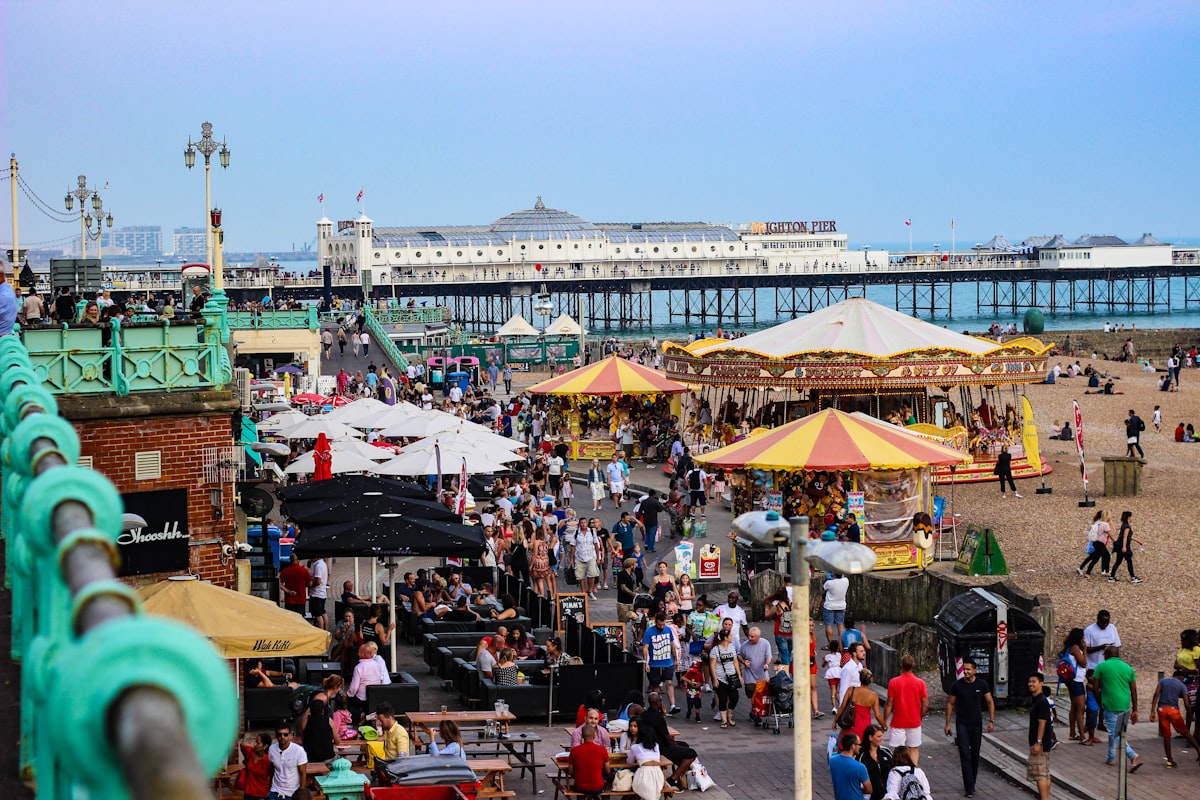
Few English cities present the daylight and sunlight challenges that Brighton and Hove does. A tightly packed seafront grain, steep north-facing slopes, numerous conservation areas and a clear ambition for taller buildings all mean that daylight requirements in Brighton and Hove are scrutinised closely. This guide explains the local policy framework, the city-specific guidance you need to be aware of, and how nationally recognised technical standards are applied when assessing daylight and sunlight here.
Daylight requirements in Brighton and Hove: the local policy framework
Brighton & Hove City Council is a unitary authority and therefore the local planning authority for the whole city. Its development plan is in two parts:
- the City Plan Part One, adopted on 24 March 2016, which sets the strategic framework to 2030; and
- the City Plan Part Two, adopted in October 2022, which adds detailed development management policies used to determine the majority of planning applications.
The single most important policy for daylight and sunlight is Policy DM20 (Protection of Amenity) in City Plan Part Two. It directs that planning permission should not be granted where development would cause an unacceptable loss of amenity to proposed, existing or adjacent occupiers. In assessing this, the council expressly considers visual privacy and overlooking, outlook and overshadowing, and sunlight and daylight for neighbours as well as for the future occupiers of the development itself.
Two further policies frequently come into play:
- Policy DM18 (High Quality Design), which requires development to respond to local context, character and urban grain; and
- Policy DM21 (Extensions and Alterations), which governs householder and similar works and again requires high quality design that respects neighbouring amenity.
These sit beneath the strategic design policy in Part One, Policy CP12 (Urban Design), and operate within the wider context of the National Planning Policy Framework (NPPF), which expects a high standard of amenity for existing and future users.
City-specific guidance: the Urban Design Framework and tall buildings
This is where Brighton and Hove differs markedly from many authorities. The council has adopted an Urban Design Framework Supplementary Planning Document (UDF SPD, reference SPD17), prepared to support Policy CP12. It provides detailed design guidance and, importantly, addresses taller development.
The UDF identifies areas considered suitable for taller buildings, with indicative height ranges, and sets out additional design considerations that apply particularly to development of 18 metres or more in height. Crucially, the council requires that planning applications involving tall buildings are accompanied by a Tall Building Statement. In practice, the sunlight, daylight and overshadowing analysis demanded by Policy DM20 forms a central part of demonstrating that a taller scheme is acceptable, both for surrounding properties and for the public realm.
Conservation areas and the historic seafront
Brighton and Hove contains a large number of conservation areas, including the Regency squares and terraces of the seafront and the dense Victorian streets that climb the surrounding hills. In these areas, daylight and sunlight considerations are weighed alongside the duty to preserve or enhance the character and appearance of the conservation area. A rear extension that might be unremarkable in a suburban setting can have a disproportionate effect on a tightly enclosed Brighton terrace, where rear amenity spaces are small and windows are close together. Realistic, well-evidenced daylight analysis is therefore especially valuable here.
What technical standards apply?
Brighton and Hove does not publish its own numerical daylight targets that replace the national approach. Instead, like most authorities, it relies on the recognised industry methodology. A daylight and sunlight assessment in the city is normally carried out to the BRE publication BR 209: Site layout planning for daylight and sunlight (2022), with daylight provision standards drawn from BS EN 17037.
The standard BRE tests are used to inform the judgement under Policy DM20:
- Vertical Sky Component (VSC) and No Sky Line / Daylight Distribution for daylight to neighbouring windows and rooms;
- Annual Probable Sunlight Hours (APSH) for sunlight to windows and habitable rooms; and
- overshadowing and sun-on-ground studies for gardens, amenity spaces and public realm, which matter greatly given the city's compact layout.
Because Policy DM20 also protects the amenity of future occupiers, schemes for new flats and houses must demonstrate that the proposed homes themselves will receive adequate daylight and sunlight, not only that neighbours are protected.
When is a daylight and sunlight report needed?
A report is commonly required or advisable where:
- a proposal adds height or massing on a constrained seafront or hillside plot;
- an extension sits close to a boundary in a dense terraced street and could reduce a neighbour's light;
- a flatted or higher-density scheme is proposed, where the daylight to the new homes must also be demonstrated;
- a tall building (18 metres or more) is proposed and a Tall Building Statement is required; or
- a neighbour or officer raises a specific amenity objection regarding loss of light or overshadowing.
How Fortress Associates can help
Fortress Associates provides our daylight and sunlight report service prepared to BRE BR 209 (2022) and BS EN 17037, referenced to the specific policies that apply in Brighton and Hove. We work nationwide, typically turn assessments around in four to five working days, and ask for no advance payment. Where supporting drawings are needed, we also prepare Building Regulations drawings to the relevant Approved Documents. To talk through a particular site, please get in touch.
Related reading
If your project is in the Thames Valley rather than on the south coast, you may also find our guide to daylight requirements in Bracknell Forest useful for comparison.
Sources & further reading
Need help with a UK planning project?
Fixed-fee daylight reports and Building Regulations drawings — delivered in 4–5 working days. No advance payment.
Request a free quote