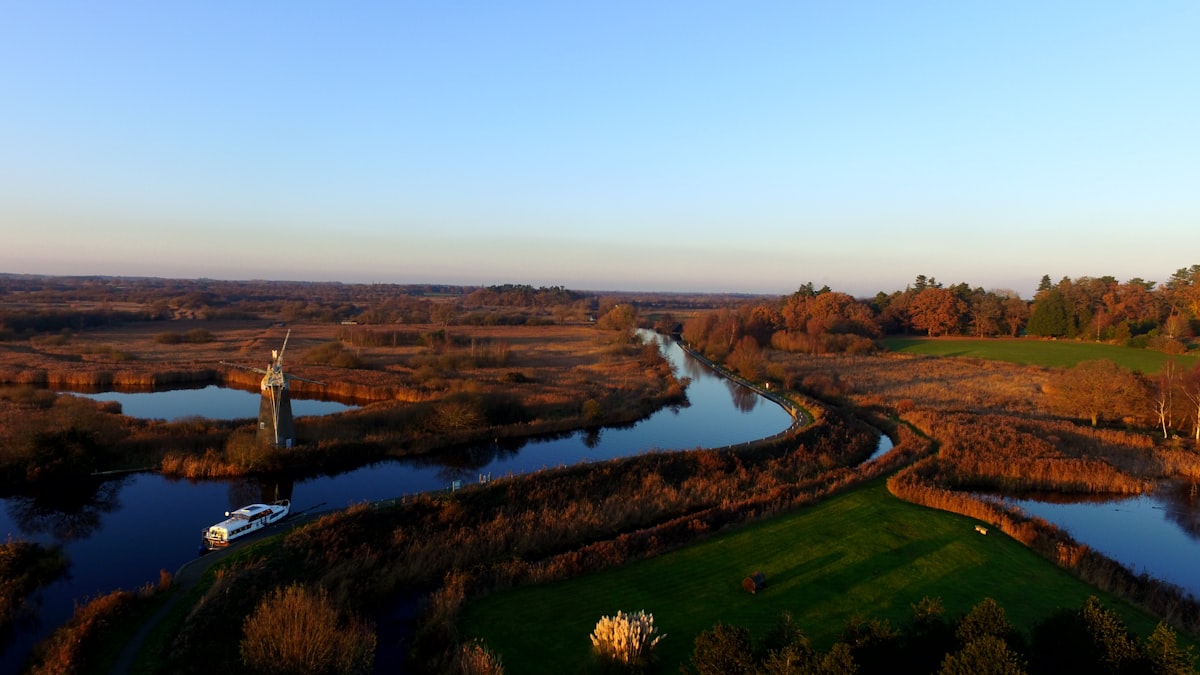
Daylight requirements in Broadland are an important consideration for householders, architects and developers working across this varied Norfolk district, from the market town of Aylsham to the growing suburbs of Sprowston and the villages along the fringe of the Norfolk Broads. Broadland District Council expects new development to safeguard the daylight, sunlight and general living conditions of neighbouring occupiers while delivering good-quality amenity for future residents. This article explains the planning framework that applies locally, including an important quirk about who the planning authority is, and shows how a professional assessment can support your application.
Who sets daylight requirements in Broadland?
Broadland is a shire district, and Broadland District Council is the local planning authority (LPA) for most of the area. Norfolk County Council is the upper-tier authority but is not the LPA for ordinary householder and residential development. Broadland shares a single planning service with neighbouring South Norfolk Council, but the two remain separate planning authorities with their own development plans.
There is an important local exception. The Broads Authority is a separate local planning authority in its own right and is responsible for planning within the executive area of the Norfolk and Suffolk Broads. Parts of the Broadland district lie close to, or within, that area. If your site sits within the Broads executive area, your application is determined by the Broads Authority under its own Local Plan rather than by Broadland District Council. It is always worth confirming which authority covers your site before you apply, because the policies and contacts differ.
The adopted Local Plan for Broadland
The development plan for Broadland is made up of more than one document. The strategic layer is the Greater Norwich Local Plan (GNLP), which was adopted on 25 March 2024. The GNLP was prepared jointly by the Greater Norwich Development Partnership — Broadland District Council, South Norfolk Council and Norwich City Council, working with Norfolk County Council — and sets the overall strategy and strategic policies for the area to 2038.
The GNLP did not sweep away the detailed local policies. Broadland retains its own adopted documents, which are read alongside the GNLP, including:
- the Broadland Development Management DPD (adopted August 2015); and
- the Broadland Site Allocations DPD.
The Development Management DPD was not superseded by the GNLP and continues to be used in conjunction with it. Several made neighbourhood plans also apply in particular parishes.
Key policies on amenity and design
Two strands of policy matter most for daylight and sunlight:
- GNLP Policy 2 (Sustainable Communities) requires the design of development to be high quality and to support healthy, inclusive communities, with a high standard of amenity for existing and future occupiers achieved through good design.
- Policy GC4 (Design) of the retained Broadland Development Management DPD is the principal local design policy. It promotes good design and is routinely used to ensure that development does not have a detrimental impact on the amenity of neighbouring dwellings, including through overlooking, loss of privacy and loss of light, while also protecting the amenity of future occupiers.
These policies are expressed as design and amenity principles rather than fixed numerical daylight thresholds, which is why an objective technical assessment is often the clearest way to demonstrate that a scheme is acceptable.
Daylight requirements in Broadland: the technical standards
Broadland District Council does not publish a dedicated daylight and sunlight supplementary planning document (SPD), nor a residential design SPD setting bespoke numerical daylight targets. Where its policies require amenity to be protected and loss of light avoided, officers rely on nationally recognised technical guidance to judge whether an impact is acceptable. The relevant standards are:
- BRE BR 209, Site Layout Planning for Daylight and Sunlight: A Guide to Good Practice (2022 edition) — the established methodology for assessing daylight to neighbouring dwellings (Vertical Sky Component and the daylight distribution / no-sky line tests), sunlight (Annual Probable Sunlight Hours) and overshadowing of gardens and amenity space.
- BS EN 17037 Daylight in Buildings — the British/European standard addressing daylight provision within new dwellings, relevant to the internal living conditions of future occupiers.
- The National Planning Policy Framework (NPPF), which requires decisions to secure a high standard of amenity for existing and future users and to support well-designed places.
Because there is no local SPD overriding them, these national documents effectively set the daylight requirements that apply through Broadland's Local Plan policies. The same standards are applied by the Broads Authority where it is the deciding authority. A BRE BR 209 (2022) assessment is the recognised way to test a proposal objectively.
When is a daylight and sunlight assessment needed?
An assessment is commonly expected or advisable where:
- development is close to a boundary and could overshadow a neighbour's windows or garden;
- a first-floor or two-storey extension projects significantly beyond an adjoining property in Aylsham, Sprowston or a village;
- an infill or backland plot sits among existing dwellings;
- a larger residential scheme would affect the daylight and sunlight enjoyed by surrounding homes; or
- a neighbour has objected on loss-of-light grounds and the council requests supporting evidence.
Submitting a clear BRE-based report up front can prevent delays, reduce the risk of refusal and give officers the objective evidence they need.
How Fortress Associates can help
Fortress Associates provides our daylight and sunlight report service to homeowners, architects and developers across Broadland and the wider Greater Norwich area. We prepare clear, robust assessments to BRE BR 209 (2022) and BS EN 17037, written to support your application against GNLP Policy 2 and Broadland Policy GC4 — or against the Broads Authority's policies where it is the deciding authority. We work nationwide with a 4 to 5 working day turnaround and ask for no advance payment. We can also prepare Building Regulations drawings for your project. To discuss a scheme in Aylsham, Sprowston, the Broads fringe or anywhere in the district, please get in touch.
Related reading
If your work crosses district boundaries, see our companion guides to daylight requirements in South Norfolk — which shares the Greater Norwich Local Plan with Broadland — and daylight requirements in Great Yarmouth, where a different adopted plan applies.
Sources & further reading
Need help with a UK planning project?
Fixed-fee daylight reports and Building Regulations drawings — delivered in 4–5 working days. No advance payment.
Request a free quote