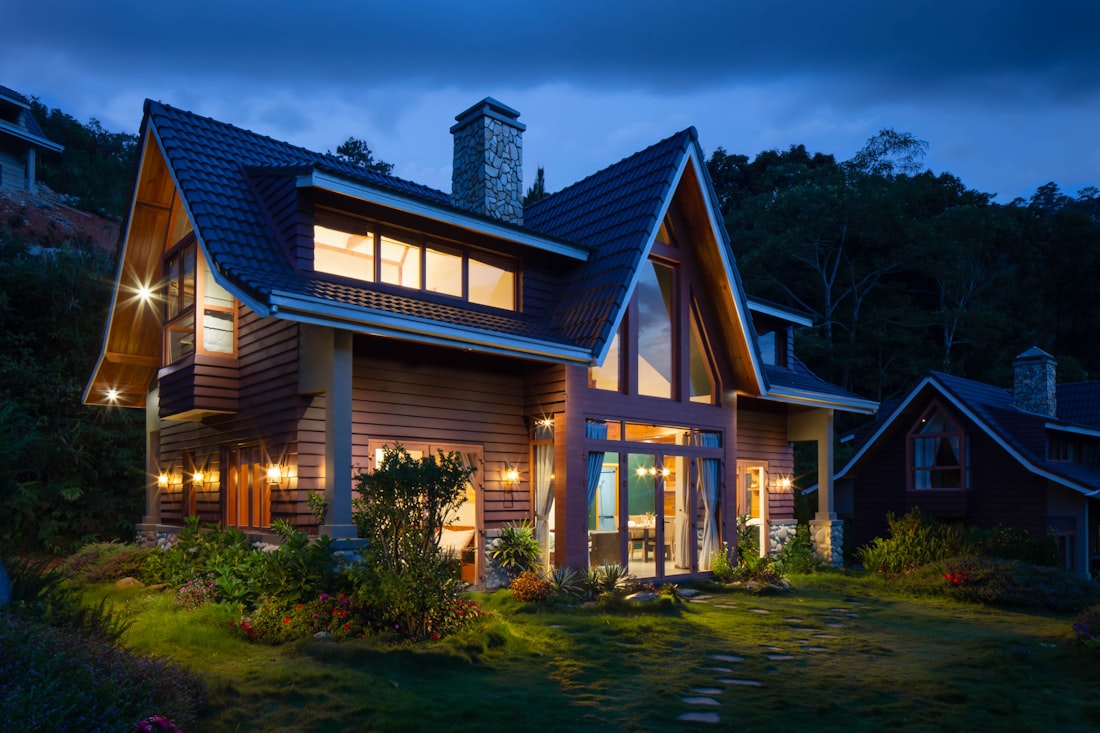
Bromley is London's largest borough by area and one of its most distinctly suburban. Stretching from the Crystal Palace transmitter mast at its northern tip to the wooded countryside of the Green Belt in the south, the borough is dominated by interwar and post-war semi-detached and detached housing set within generous plots. Extensions, loft conversions, and new residential development in established garden suburbs are the most common triggers for daylight and sunlight assessment in Bromley - and, unlike some inner London boroughs, the relatively open character of the townscape does not make daylight a simple matter. BRE BR 209 (2022) applies in full, and officers expect assessments that properly account for the suburban context.
This guide explains Bromley's planning environment, its approach to daylight policy, and when a formal daylight report is required.
Planning context in Bromley
Bromley's character is defined by its suburban and semi-rural setting. The borough contains no major tall building clusters, no significant riverside regeneration zones, and relatively few of the dense Victorian terrace areas that dominate inner south and south-east London. Instead, the predominant housing typology is the interwar semi-detached house - often set back from the road with a side garage, a front garden, and a rear garden of between ten and twenty metres. This spacious suburban grain creates a particular set of considerations for daylight assessment that differ from those in denser boroughs.
Town centres at Bromley, Beckenham, Orpington, and Penge serve as focal points for retail, commercial, and increasingly residential development. Bromley town centre in particular has seen proposals for flatted development and town centre intensification in recent years, consistent with London Plan policy for town centres. These schemes operate at greater density than the surrounding suburban areas and bring with them the need for careful daylight assessment, both for proposed new residential units and for the impact of new buildings on neighbouring properties. Crystal Palace Park, at the northern boundary with Croydon, Lewisham, and Southwark, adds heritage and open space considerations to the mix.
A significant proportion of the southern parts of the borough falls within the Metropolitan Green Belt. Development in these areas is tightly controlled, but where proposals do come forward - barn conversions, agricultural dwellings, or rural extensions - the openness of the landscape does not eliminate the need to assess daylight impacts on neighbouring dwellings. Bromley's Local Plan sets the framework for development management across the borough and confirms the council's commitment to protecting residential amenity, including access to adequate daylight and sunlight.
Daylight and sunlight policy in Bromley
Bromley Council applies BRE BR 209 (2022) as the technical framework for daylight and sunlight assessment. The council's validation guidance requires that daylight, vertical sky component, sunlight availability, and shadow studies be undertaken and assessed against BRE criteria where proposals have the potential to affect neighbouring properties. This applies equally to householder applications for extensions and to larger residential development schemes.
Compared to inner London boroughs, Bromley officers may be expected to apply BRE targets with reference to the suburban rather than urban context. The BRE guidance itself makes clear that the recommended values are intended as benchmarks and that the appropriate outcome depends on the character of the local area. In a suburban setting where properties typically enjoy generous rear gardens and well-separated windows, a reduction in daylight that might be considered acceptable in a dense urban area may be less easy to justify. Applicants should not assume that the BRE's contextual flexibility will work in their favour in suburban Bromley.
The 45-degree rule is widely used by Bromley planning officers as a preliminary screening tool for householder applications. However, this rule provides only a rough guide and is not a substitute for a proper BRE assessment where there is genuine uncertainty about the impact of a proposal on neighbouring windows. Officers may seek a more detailed assessment at validation or at the request of a third-party objector, particularly for extensions that are large in relation to the host property or that are sited close to a shared boundary.
When is a daylight report required in Bromley?
A daylight and sunlight assessment is typically required in Bromley in the following circumstances:
- Extensions - particularly single- or two-storey rear extensions - on semi-detached or detached properties where the proposal would project close to a neighbouring habitable room window
- Loft conversions with rear, side, or hip-to-gable dormers where the enlarged roof form may affect adjacent properties
- New residential development in Bromley, Beckenham, Orpington, or other town centre locations where flatted development is proposed at greater density
- Infill development on backland sites or gap sites within established residential streets
- Residential conversions (house-to-flats, conversions of commercial buildings) where internal daylight to proposed rooms requires assessment
- HMO applications where the daylight performance of individual bedrooms and living rooms is relevant to the planning decision
- Development adjacent to or within conservation areas, including those in Bromley town centre and Beckenham
- Any proposal where a neighbouring resident raises a formal objection citing daylight or sunlight loss, prompting officers to seek supporting evidence
Bromley's validation guidance for planning applications sets out the local information requirements, including when a daylight and sunlight report must accompany an application. Applicants should check the current validation checklist before submission to avoid the delay caused by an invalid application.
Common daylight challenges in Bromley
The most frequent daylight challenges in Bromley arise from extensions and loft conversions on the interwar semi-detached housing that dominates the borough. The standard semi-detached layout - with a kitchen or living room window at the rear facing onto the shared side boundary - means that a rear extension on the adjacent property can have a pronounced effect on that window, particularly when the extension wraps around or projects beyond the rear building line. The geometry of the semi-detached pair means that even a relatively modest extension can cause a meaningful reduction in VSC for the affected room, and the open suburban character of the area means that neighbours are likely to have high expectations for daylight.
New flatted development in Bromley town centre and other district centres presents a different type of challenge. Higher-density schemes proposed in a suburban setting inevitably involve buildings that are taller and bulkier than their surroundings, and the interface between these developments and adjacent lower-rise residential properties requires careful management. Applications for flatted development in town centres should include a daylight assessment from the early design stage to avoid fundamental conflicts with neighbouring amenity that emerge only at the planning application stage.
Backland development on large suburban plots is another source of daylight complexity in Bromley. Where a new dwelling is proposed in the rear garden of an existing house, the relationship to windows on the rear elevation of the host property and to windows in adjacent properties must be carefully assessed. The open outlook that characterises rear gardens in suburban Bromley means that neighbouring residents are particularly sensitive to proposals that may introduce new structures into their field of view and reduce their access to natural light.
How Fortress Associates can help
At Fortress Associates, we prepare daylight and sunlight reports for planning applications in Bromley and across the UK. Our assessments comply with BRE BR 209 (2022) and include VSC, NSL, and APSH calculations. Reports are delivered within four to five working days with no advance payment required. Contact us to discuss your project, or visit our services page for more information.
Sources & further reading
Need help with a UK planning project?
Fixed-fee daylight reports and Building Regulations drawings — delivered in 4–5 working days. No advance payment.
Request a free quote