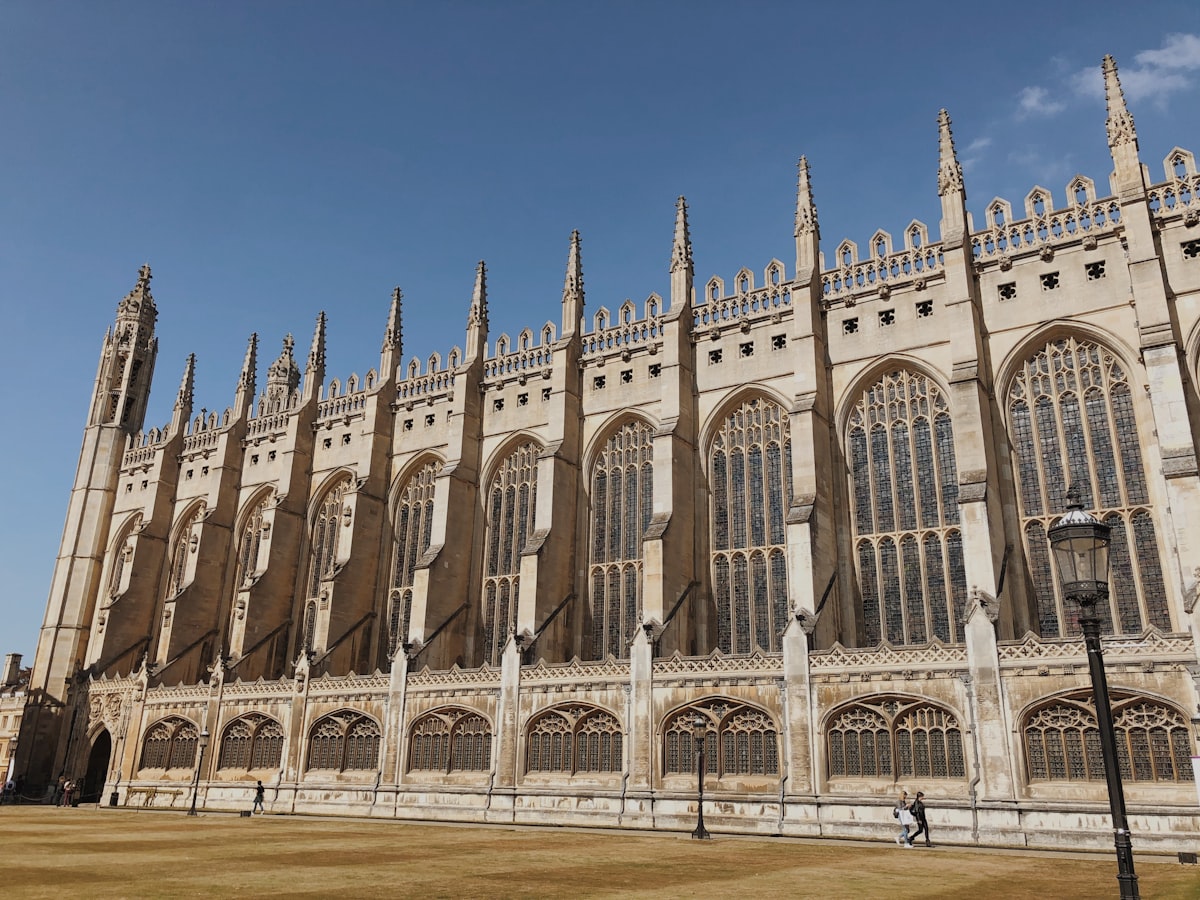
Understanding the daylight requirements in Cambridge is essential for anyone planning a residential extension, an infill plot, a roof addition or a larger development within the city. Cambridge is a tightly built historic city of colleges, conservation areas and constrained urban plots, so the way a proposal affects daylight and sunlight, both to neighbouring properties and within the new accommodation, is regularly a deciding factor in whether planning permission is granted.
This guide sets out the local policy position, the specific guidance the council expects applicants to follow, and how a properly prepared daylight and sunlight assessment fits into a Cambridge planning application.
The Cambridge Local Plan 2018
The development management authority for Cambridge is Cambridge City Council, which now operates its planning service jointly with South Cambridgeshire District Council under the banner of Greater Cambridge Shared Planning. The adopted development plan for the city is the Cambridge Local Plan 2018, formally adopted on 18 October 2018, which guides development across the city to 2031.
Several Local Plan policies are relevant to daylight, sunlight and residential amenity:
- Policy 50: Residential space standards — sets internal and external space standards drawing on the nationally described space standard, which is closely linked to the provision of good light and useable private amenity space.
- Policy 55: Responding to context — the first of a family of design policies (Policies 55 to 59) requiring development to respond appropriately to its surroundings and be of high quality.
- Policy 56: Creating successful places — recognises that good internal spaces and private outdoor space, well lit by natural daylight and sunlight, are fundamental to wellbeing and to creating liveable places.
- Policy 57: Designing new buildings — addresses the design quality of new buildings, including their relationship to neighbouring properties.
- Policy 58: Altering and extending existing buildings — directly relevant to householder schemes, requiring that alterations and extensions are sympathetic to the existing building and surroundings and do not unacceptably overlook or overshadow neighbouring properties.
Taken together, these policies establish that protecting the daylight, sunlight and privacy of neighbours, and providing good levels of daylight within new homes, is a clear planning requirement in Cambridge.
Daylight guidance: the Greater Cambridge Sustainable Design and Construction SPD
Cambridge does have specific adopted guidance on daylight and sunlight. The Greater Cambridge Sustainable Design and Construction Supplementary Planning Document (SPD), adopted by Cambridge City Council and South Cambridgeshire District Council in January 2020, provides the technical detail that sits beneath the Local Plan policies. It directs applicants to the Building Research Establishment guidance on daylight and sunlight as the key reference for assessing impacts.
The validation expectations for the Greater Cambridge area reflect this. For schemes involving new building works, applicants are generally expected to confirm that the BRE "rule of thumb" tests have been applied — the 25 degree test for daylight to neighbouring windows and the 45 degree test for daylight and the spread of light. Where those rules of thumb are passed, no further analysis is usually required; where they are not, a fuller daylight and sunlight assessment identifying the impacts is expected.
The technical benchmarks themselves come from the BRE guide, now in its 2022 edition, BR 209: Site Layout Planning for Daylight and Sunlight — A Guide to Good Practice. This sets out the familiar measures used in Cambridge applications: Vertical Sky Component (VSC) and the no-sky line / daylight distribution for daylight to neighbours; Annual Probable Sunlight Hours (APSH) for sunlight; and overshadowing tests for gardens and amenity areas. Daylight within new dwellings is assessed against BS EN 17037, the British and European standard for daylight in buildings, while the National Planning Policy Framework (NPPF) reinforces, at national level, that development should secure good living conditions and avoid unacceptable impacts on amenity.
Local factors that matter in Cambridge
Cambridge presents some particular challenges that make daylight and sunlight evidence especially important:
- Historic and constrained sites. The city's colleges, listed buildings and numerous conservation areas mean that plots are often tight and surrounded by sensitive neighbours, so even modest extensions can raise overshadowing or loss-of-light concerns.
- Tall buildings and rising density. Cambridge is a city under significant growth pressure, and taller and higher-density schemes — including around the station, the biomedical campus and other urban edges — bring daylight and sunlight to neighbours and within new homes firmly into the assessment.
- The emerging Greater Cambridge Local Plan. Cambridge City and South Cambridgeshire are jointly preparing a new Greater Cambridge Local Plan covering both areas. While the 2018 Local Plan remains the adopted plan for now, applicants should be alert to emerging policy as it progresses.
Because of these constraints, a clear, BRE-compliant daylight and sunlight report can be the difference between a smooth approval and a refusal or costly redesign.
What a daylight and sunlight report should cover
A robust report for a Cambridge application will typically:
- Identify the neighbouring habitable rooms and amenity spaces that could be affected.
- Apply the BRE BR 209 (2022) tests — VSC, daylight distribution, APSH and overshadowing — and report the results clearly against the recognised numerical guidelines.
- Assess daylight within the proposed dwellings against BS EN 17037 where relevant.
- Relate the findings back to the relevant Cambridge Local Plan 2018 policies and the Sustainable Design and Construction SPD, so the planning officer can weigh the evidence against adopted policy.
How Fortress Associates can help
Fortress Associates prepares clear, policy-aware daylight and sunlight assessments for sites across Cambridge and the wider Greater Cambridge area. Our daylight and sunlight report service is produced to BRE BR 209 (2022) and BS EN 17037, and we cross-reference the relevant Local Plan policies and SPD so your report speaks directly to the council. We work UK-wide with a 4 to 5 working day turnaround and no advance payment. To discuss your project, see our services or get in touch via our contact page. If your scheme also needs Building Regulations drawings, we can help there too. You may also find our guide to daylight requirements in South Cambridgeshire useful, given the shared Greater Cambridge approach.
Sources & further reading
Need help with a UK planning project?
Fixed-fee daylight reports and Building Regulations drawings — delivered in 4–5 working days. No advance payment.
Request a free quote