Daylight requirements in Cannock Chase are governed by national guidance read alongside the district's own development plan and design guidance. For homeowners, developers and agents preparing applications across Cannock, Hednesford, Rugeley, Norton Canes and the surrounding villages, understanding how the local planning authority assesses daylight and sunlight is essential to avoiding refusal and unnecessary delay. This guide sets out the policy framework that applies in the district and how a professional assessment supports a robust application.
Cannock Chase District Council is the local planning authority for the area. It is a shire district within Staffordshire, and it is the district council — not Staffordshire County Council — that determines the vast majority of householder and residential planning applications and sets the relevant amenity and design policies.
The local policy framework for daylight in Cannock Chase
The principal development plan document is the Cannock Chase Local Plan 2018–2040, which was adopted at Full Council on 23 March 2026 and superseded the previous Local Plan Part 1 (2014). Daylight and sunlight are dealt with most directly through the plan's amenity and design policies.
The key policy is Policy SO2.2: Safeguarding Health and Amenity. This requires development proposals to safeguard the health and amenity of local communities by, among other things, “ensuring that new development provides for satisfactory daylight, sunlight, outlook, and privacy, and protects new and existing residents, workers and visitors from noise, smell, litter, dust, air pollutants or other unacceptable impacts.†Importantly, the policy states that unacceptable impacts “will be judged against the level of amenity in the locality†— so context matters when an assessment is carried out.
Daylight is also engaged by Policy SO1.2: Enhancing the Quality of the Built Environment, which requires high-quality building design and layout that is sympathetic to local character, and sets out the details — including siting, layout, orientation, massing and height — expected within a Design and Access Statement for major proposals. Orientation and massing are precisely the factors that determine whether a scheme protects daylight and sunlight to neighbours, so the two policies work together.
Design guidance and the Cannock Chase National Landscape
The Local Plan is supported by the council's adopted Design Supplementary Planning Document (April 2016), which provides detailed guidance on residential design and extensions. The SPD advises that extensions and new development should avoid significant loss of privacy, outlook, daylight or sunlight to neighbours and should not be visually overpowering. The Local Plan also signals that more detailed Local Design Guides will set out the precise design requirements for safeguarding health and amenity going forward.
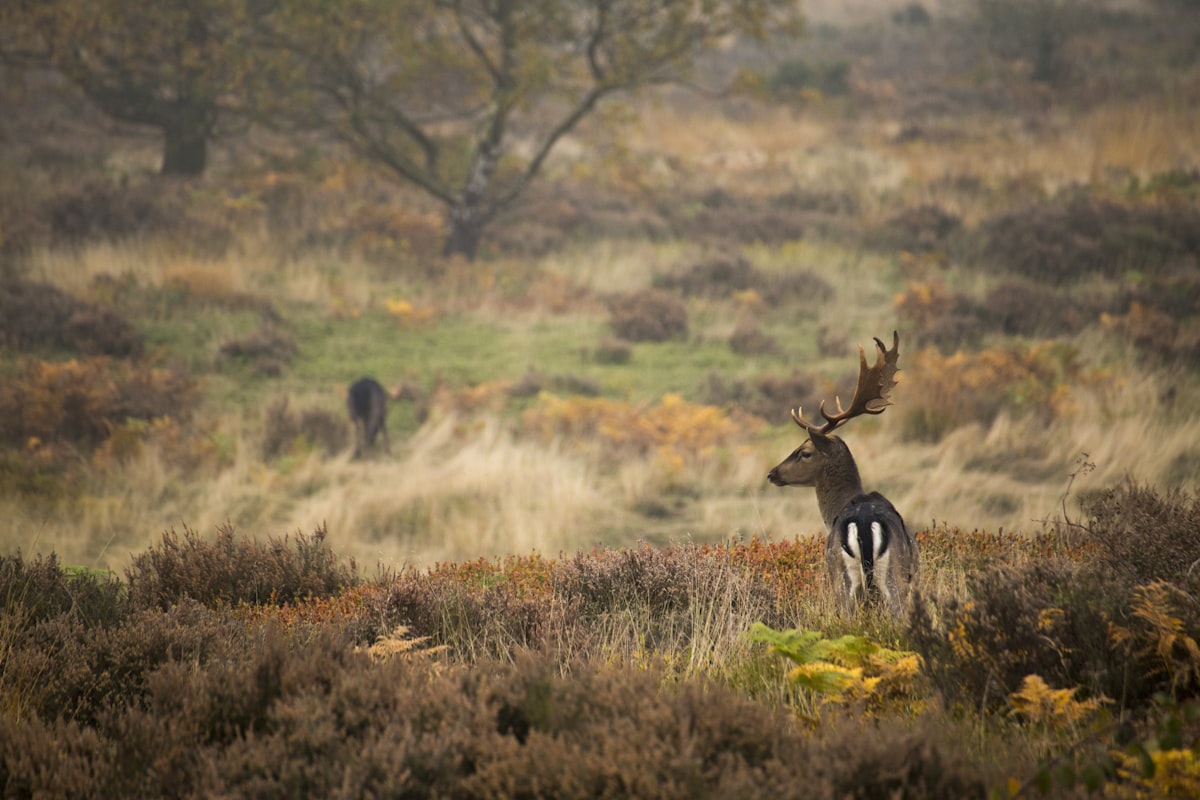
A distinctive local consideration is the Cannock Chase National Landscape (formerly the Cannock Chase Area of Outstanding Natural Beauty, redesignated a National Landscape on 22 November 2023). Under Policy SO7.5, development within or affecting the setting of this protected landscape must positively contribute to its special qualities. While this policy addresses landscape and scenic beauty rather than daylight directly, schemes near the National Landscape often face close scrutiny of massing, height and layout — the very parameters that also drive daylight outcomes.
Daylight requirements in Cannock Chase: which national standards apply
The council does not publish its own numerical daylight metrics. Instead, daylight requirements in Cannock Chase are assessed against the recognised national technical standards, brought into effect through the Local Plan's amenity policies and the National Planning Policy Framework. The three reference points are:
- BRE BR 209 (2022) — Site Layout Planning for Daylight and Sunlight: A Guide to Good Practice, the standard methodology used to assess daylight to neighbouring windows (Vertical Sky Component and the no-sky line / daylight distribution), sunlight to existing dwellings (Annual Probable Sunlight Hours) and overshadowing of amenity space.
- BS EN 17037 — the British and European standard for daylight in buildings, increasingly relied upon to assess daylight provision within proposed dwellings themselves.
- The National Planning Policy Framework (NPPF), which the Local Plan repeatedly references (NPPF 2023) and which requires a high standard of amenity for existing and future users.
A BRE-based daylight and sunlight report demonstrates objectively whether a proposal meets these benchmarks, both for neighbouring properties and for the proposed accommodation. Where the recommended targets are not fully met, BR 209 itself allows for context to be taken into account — which aligns neatly with Policy SO2.2's instruction to judge impacts against the level of amenity in the locality.
When is a daylight and sunlight assessment needed?
The council validates applications against its local validation checklist. A daylight and sunlight assessment is most commonly expected where a proposal could materially affect light to neighbouring dwellings — for example two-storey rear or side extensions close to a boundary, infill development between or behind existing houses, flatted schemes, or taller buildings in town-centre locations such as Cannock or Hednesford. Submitting a clear assessment up front reduces the risk of the council requesting further information and the 28-day delay that can follow a request to validate.
It is worth bearing in mind the particular character of Cannock Chase as a district. Much of its housing stock consists of tightly arranged terraced and semi-detached properties in the former mining settlements around Cannock, Hednesford, Rugeley and Norton Canes, where rear gardens and boundaries are often close together. In these settings even a modest extension can have a measurable effect on a neighbour's daylight, so an early, evidence-based assessment is frequently the difference between a smooth consent and a contested decision. Equally, the rural villages and the land surrounding the Cannock Chase National Landscape bring their own sensitivities, where the council will weigh both amenity and the protected landscape together.
A common point of confusion is the role of the county. Staffordshire County Council deals with matters such as minerals, waste and highways, but it is not the local planning authority for everyday residential development in the district. Householder extensions, new dwellings and most residential schemes are determined by Cannock Chase District Council under the policies described above, so it is the district's Local Plan and Design SPD — not any county-level document — that govern daylight and sunlight here.
How Fortress Associates can help
Fortress Associates provides BRE-compliant daylight and sunlight reporting and building regulations drawings for projects in Cannock Chase and across the UK. Our our daylight and sunlight report service prepares assessments to BRE BR 209 (2022) and BS EN 17037, presented clearly for planning officers and neighbours alike. We work nationwide with a 4–5 working day turnaround and require no advance payment. Explore our services or contact us to discuss your scheme.
If your project lies in a neighbouring authority, you may also find our guide to daylight requirements in Stafford useful for comparison.
Sources & further reading
Need help with a UK planning project?
Fixed-fee daylight reports and Building Regulations drawings — delivered in 4–5 working days. No advance payment.
Request a free quote