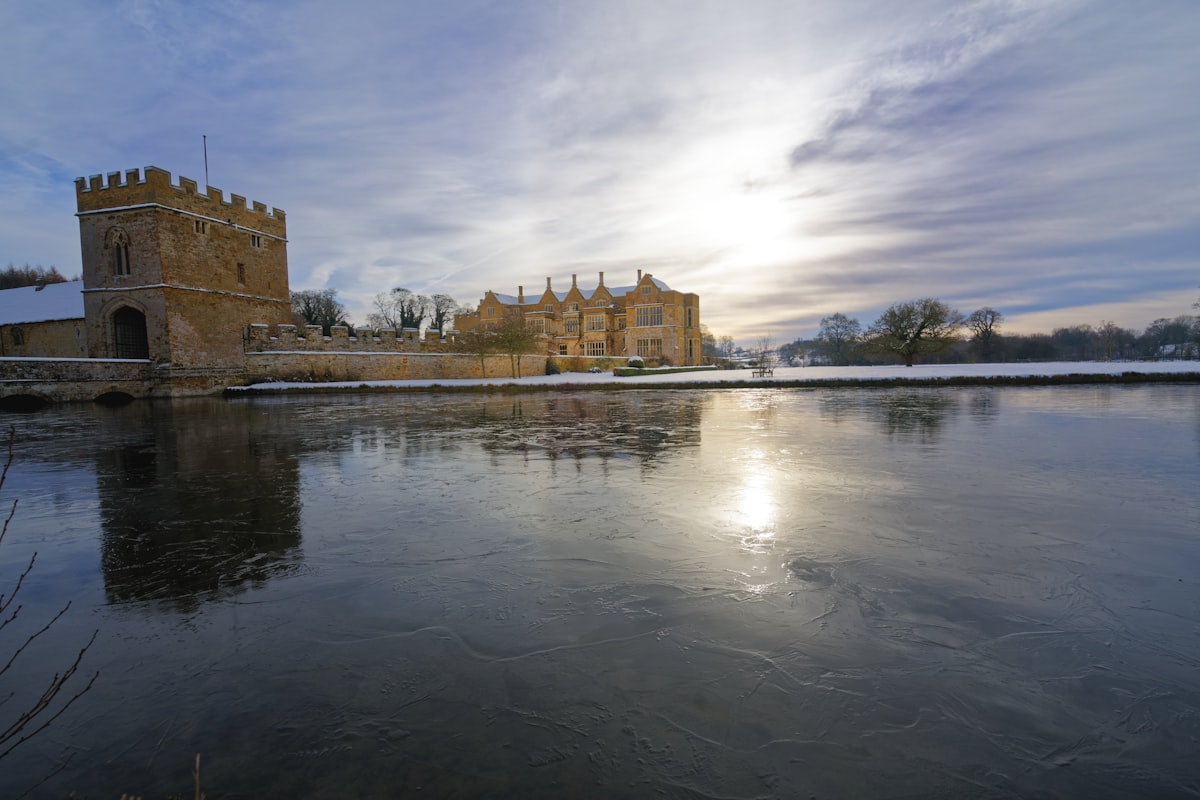
Understanding the daylight requirements in Cherwell is essential for anyone planning an extension, a new dwelling or a larger residential scheme in Banbury, Bicester, Kidlington or the surrounding villages. Cherwell District Council is the local planning authority (LPA) for the district. Although Oxfordshire County Council covers the wider county, it is not the planning authority for householder and residential development of this kind. This guide explains how daylight and sunlight are assessed locally, which adopted policies apply, and what evidence helps an application succeed.
Who decides planning applications in Cherwell?
Cherwell District Council determines planning applications across the district, including the market towns of Banbury and Bicester and the village of Kidlington. The county council deals with matters such as highways, minerals and waste, and education, but the assessment of how a building affects a neighbour's daylight, sunlight and amenity is firmly a district-level decision made against the adopted Local Plan.
The adopted Local Plan and its amenity policies
The principal development plan document is the Cherwell Local Plan 2011–2031 Part 1, adopted on 20 July 2015 (with Policy Bicester 13 re-adopted on 19 December 2016). It is supplemented by the Cherwell Local Plan 2011–2031 Part 2, adopted in September 2020, which provides additional development management policies and non-strategic site allocations.
The most relevant policy for daylight and sunlight is Policy ESD15 (The Character of the Built and Historic Environment) in Part 1. ESD15 requires new development to respect the form, scale, character and layout of existing development and, importantly, to consider the amenity of both existing and future occupiers. Protecting a neighbour's daylight and sunlight is a core element of that amenity test. Alongside this, Part 1 includes Policy ESD1 (Mitigating and Adapting to Climate Change) and Policy ESD3 (Sustainable Construction), which encourage layouts that make good use of natural light and passive solar gain — considerations that interact directly with daylight design.
Part 2 reinforces this framework through its development management policies, which carry forward the expectation that proposals will not cause unacceptable harm to the living conditions of neighbouring occupiers, including through loss of light or overshadowing.
The Cherwell Residential Design Guide SPD
Cherwell is notable for having a dedicated, adopted design document. The Cherwell Residential Design Guide Supplementary Planning Document (SPD), adopted in July 2018, sits alongside the Local Plan and gives detailed advice on residential schemes and householder extensions. It explains that the council seeks to protect daylight to neighbours' main living-room and habitable-room windows, and to safeguard reasonable garden sunlight — particularly during the winter months when the sun is low.
The SPD makes clear that each application is judged on its own circumstances, taking into account the property type (for example terraced or detached), the proximity of an extension to a boundary, orientation, height, the position of neighbours' windows and the rooms they serve, boundary treatment and garden size. For applicants this means a one-size-fits-all approach will not do: the design has to respond to the specific relationship between the proposed building and its neighbours.
Cherwell also operates within the wider Bicester Garden Town initiative — Bicester was designated a Garden Town in 2014 — and the Banbury and Bicester area strategies in the Local Plan place real emphasis on green infrastructure, healthy living and well-lit, well-spaced homes. Good daylight design is therefore not just a defensive exercise; it is part of the quality of place that Cherwell is actively pursuing.
How daylight requirements in Cherwell are measured
Where a daylight or sunlight question arises, the council and its officers refer to the recognised national methodology rather than a bespoke local metric. The starting point is the Building Research Establishment guidance:
- BRE BR 209 — Site Layout Planning for Daylight and Sunlight: A Guide to Good Practice (2022, third edition), which sets out the established tests, including the Vertical Sky Component (VSC), the No Sky Line / daylight distribution test, the Annual Probable Sunlight Hours (APSH) test and the overshadowing assessment for amenity areas.
- BS EN 17037 (Daylight in Buildings), which underpins the assessment of daylight provision within new habitable rooms.
- The National Planning Policy Framework (NPPF), which asks decision-makers to secure a good standard of amenity and to make efficient use of land, applied locally through the adopted Local Plan policies above.
In practice, where a proposal could materially affect a neighbour's light, a professional Daylight & Sunlight Report prepared to BRE BR 209 (2022) is the clearest way to demonstrate compliance and to address the amenity tests in Policy ESD15 and the Residential Design Guide SPD.
When you may need a daylight and sunlight report
You should consider commissioning a report if your proposal involves any of the following:
- A two-storey or rear extension close to a shared boundary in a tight Banbury or Bicester street pattern;
- A new dwelling or backland plot where existing neighbours look towards the development;
- A larger residential scheme where internal daylight to new homes must be demonstrated under BS EN 17037; or
- A case where a neighbour or planning officer has raised a specific concern about loss of light or overshadowing.
Submitting a clear, methodology-based assessment early can prevent delays at the validation stage and gives officers the evidence they need to reach a positive decision.
How Fortress Associates can help
Fortress Associates provides our daylight and sunlight report service for homeowners, architects and developers across Cherwell and the rest of the UK. Our reports are prepared to BRE BR 209 (2022) and BS EN 17037, and are written to address the amenity and design policies in the adopted Cherwell Local Plan. We work to a 4–5 working day turnaround and ask for no advance payment. You can also explore our full range of services or get in touch to discuss your site.
If your scheme also needs technical drawings, we produce Building Regulations Drawings to support the construction stage. For a related area, see our guide to daylight requirements in South Oxfordshire.
Sources & further reading
Need help with a UK planning project?
Fixed-fee daylight reports and Building Regulations drawings — delivered in 4–5 working days. No advance payment.
Request a free quote