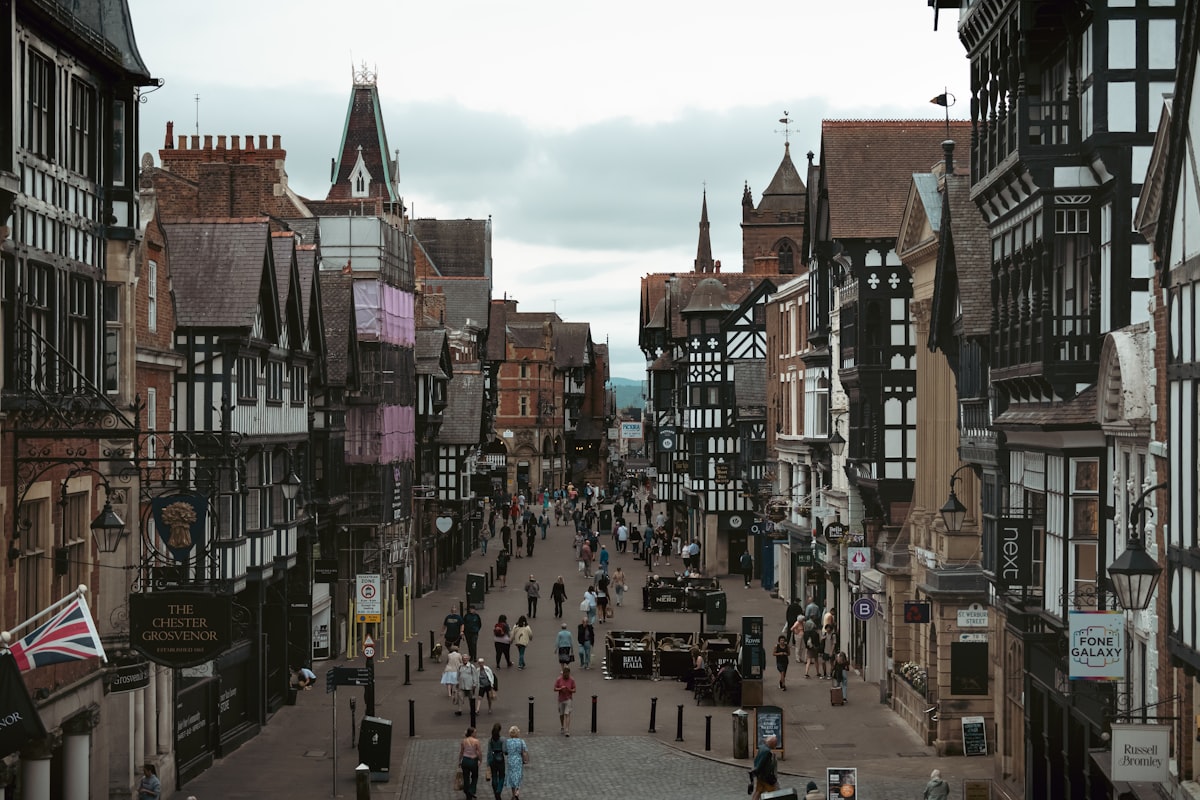
For homeowners, architects and developers working in the borough, the daylight requirements in Cheshire West and Chester are unusually well defined. Unlike many authorities, the council sets out explicit separation distances in its adopted plan and supplements them with detailed design guidance. Whether the project is a rear extension in a Chester suburb or a new apartment block near the city walls, understanding how the council treats loss of light is the first step to a smooth application.
How the development plan addresses daylight in Cheshire West and Chester
Cheshire West and Chester Council is a unitary authority and the local planning authority for the area. Its development plan comes in two adopted parts:
- The Local Plan (Part One) Strategic Policies, adopted on 29 January 2015, which sets the spatial strategy to 2030 and includes Policy SOC 5 requiring development to safeguard the quality of life of residents and neighbours.
- The Local Plan (Part Two) Land Allocations and Detailed Policies, adopted on 18 July 2019, which contains the detailed development management policies used day to day.
The decisive policy for light is Policy DM 2 'Impact on residential amenity'. It states that development will only be supported where it does not result in a significant adverse impact on the residential amenity of existing or future occupiers, and that in respect of light, regard will be had to loss of sunlight and daylight as well as the impact of artificial light. Two further policies routinely come into play: Policy DM 3 'Design, character and visual amenity' and, for works around a home, Policy DM 21 'Development within the curtilage of a dwellinghouse'.
The numerical separation standards
What sets this borough apart is that Policy DM 2 attaches specific spacing standards to protect light and privacy. Normally there should be:
A minimum distance of 21 metres between facing windows of main habitable rooms, and 13 metres between windows of main habitable rooms and blank walls.
The policy makes clear these are starting points rather than rigid rules: separation distances in the immediate surroundings, together with the orientation and heights of land and buildings, are also taken into account. That flexibility means a technical daylight and sunlight assessment is often the clearest way to show that an unusual layout still performs acceptably.
Supplementary guidance: the House Extensions and Domestic Outbuildings SPD
The council has adopted a House Extensions and Domestic Outbuildings Supplementary Planning Document, to be read alongside the Local Plan, which is a material consideration on relevant applications. As a general guide it indicates that extensions and outbuildings should not increase the size of the original dwelling by more than 30 per cent, and it gives practical advice on avoiding overbearing and overshadowing effects on neighbours. This SPD is the council's most direct piece of guidance for the type of householder project where loss of light most often arises.
Where the adopted policies and SPD describe light impacts qualitatively, the established technical benchmark applied through them is BRE BR 209 — Site layout planning for daylight and sunlight: a guide to good practice (2022 edition), read with BS EN 17037 and the National Planning Policy Framework. A BRE-based report is the recognised method of demonstrating that a scheme complies with Policy DM 2.
Local context: a historic city and active regeneration
Cheshire West and Chester combines an internationally significant historic environment with ongoing growth, and both raise distinct daylight considerations:
- Chester's heritage core. The city is defined by its near-complete Roman and medieval city walls and a dense historic centre protected by Policy CH 5 (Chester Conservation Area) and the conservation-area policy DM 46. In such tightly grained streets, even modest extensions can affect a neighbour's light, and a Heritage Impact Assessment is frequently required alongside any daylight evidence.
- Distinctive towns and regeneration areas. Beyond Chester, the borough includes Ellesmere Port — whose historic canal port is recognised by Policy EP 7 — and Northwich, covered by its own conservation policy N 6. Continued housing delivery and town-centre regeneration on constrained sites mean overlooking and overshadowing are regularly tested against the 21 metre and 13 metre standards.
In practice, the combination of explicit spacing standards and a sensitive historic setting means a robust daylight and sunlight assessment can make the difference between a contested application and a confident approval.
When a daylight and sunlight report helps
- An extension or new building falls short of the 21 metre or 13 metre separation distances and needs justification.
- A flatted or higher-density scheme must demonstrate good internal daylight for future occupiers.
- A proposal sits within a Chester, Ellesmere Port or Northwich conservation area where impacts are closely scrutinised.
- A neighbour has raised loss-of-light concerns that an objective BRE assessment can address.
How Fortress Associates can help
Fortress Associates offers our daylight and sunlight report service to clients across Cheshire West and Chester and throughout the UK. Every report is prepared to BRE BR 209 (2022) and BS EN 17037 and is structured to support compliance with Policy DM 2 and the council's design guidance. We work to a 4–5 working day turnaround with no advance payment required. Where a project is heading to site, we also produce Building Regulations drawings to the relevant Approved Documents. To talk through your site, contact our team.
If you would like the basics first, our guide to what a daylight report is explains what an assessment covers and when one is needed.
Sources & further reading
Need help with a UK planning project?
Fixed-fee daylight reports and Building Regulations drawings — delivered in 4–5 working days. No advance payment.
Request a free quote