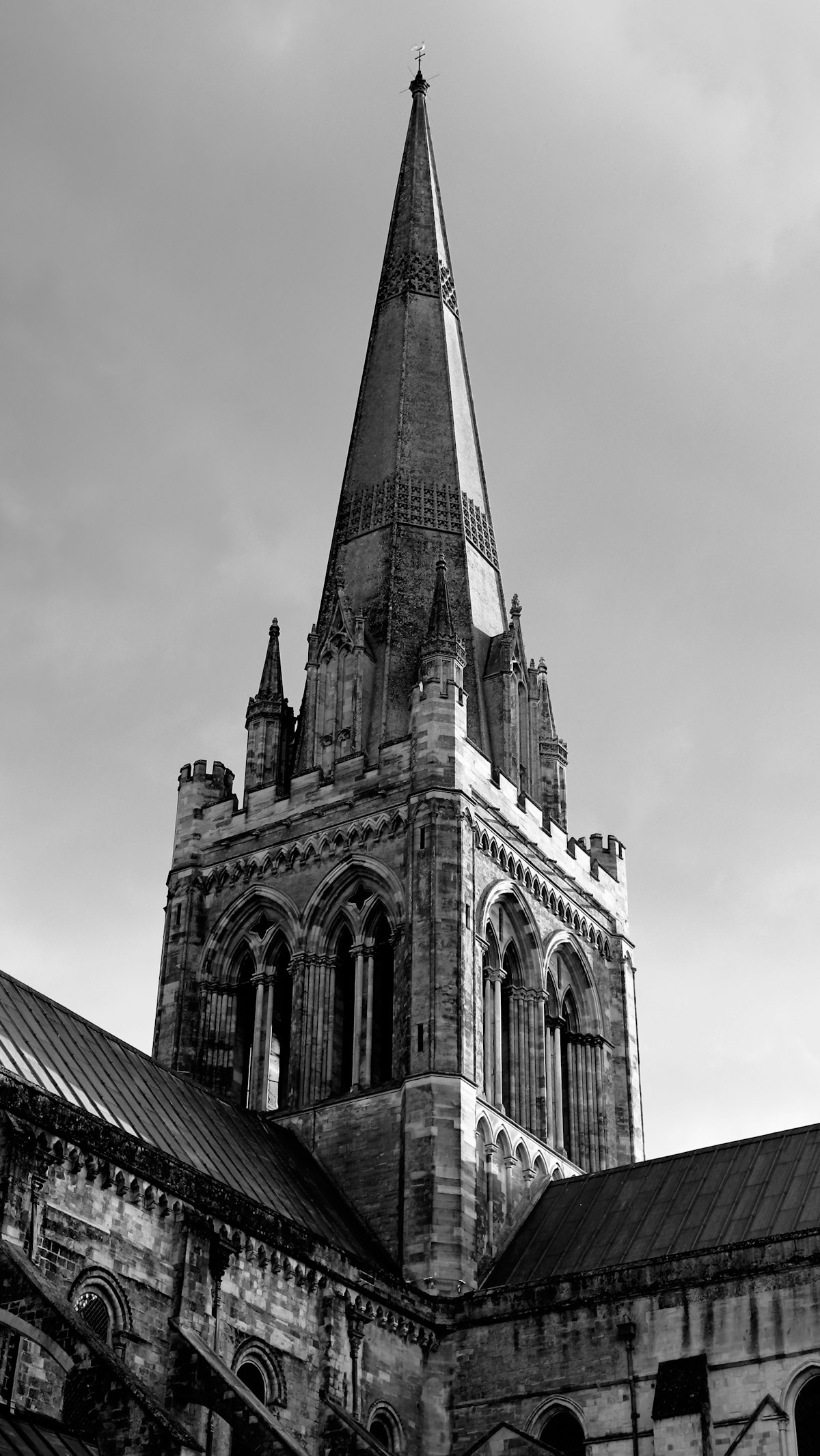
Whether you are extending a home in the city, building near the Manhood Peninsula coast, or bringing forward a larger residential scheme, understanding the daylight requirements in Chichester is an important early step. Chichester District Council is the local planning authority (LPA) for most of the district - the county council is not the planning authority - and it now assesses daylight and sunlight against a recently adopted Local Plan that addresses the issue directly. This guide explains the policy position, the council's stated approach to BRE guidance, and when a daylight and sunlight report will help your application.
Daylight requirements in Chichester: the policy framework
Chichester's statutory development plan is the Chichester Local Plan 2021-2039, which was adopted by Full Council on 19 August 2025, replacing the previous 2014-2029 plan. Because it is so recent, the new plan sets the current policy basis for assessing daylight and sunlight effects in the district.
The two most relevant policies are:
- Policy P1 (Design Principles) - the plan's overarching design policy, requiring high-quality, context-led development; and
- Policy P6 (Amenity) - the policy that deals specifically with the amenity of existing and future occupiers.
Policy P6 (Amenity) explains that, with greater pressure for higher densities and the intensification of uses, amenity considerations must be at the fore during design. It identifies the range of effects that can seriously affect residents, occupiers and users, including "space (internal and external, public and private), overlooking, aspect, layout, privacy, daylight, sunlight, outlook, microclimate and disturbance." Daylight and sunlight are therefore named expressly as matters the council will weigh.
Does Chichester refer to BRE guidance?
Yes - and this is what makes Chichester unusual compared with many neighbouring authorities. Rather than leaving the assessment method to be inferred, the adopted Local Plan states that the council will make use of established industry standards when assessing schemes, including Site Layout Planning for Daylight and Sunlight (BRE Trust), having regard to context and other material considerations. Policy P6 also seeks to ensure that development would not have an unacceptable impact on the levels of daylight of the host building or an adjoining property, including their gardens or outdoor spaces.
In practice this means a daylight and sunlight assessment in Chichester should follow the BRE methodology. The current edition of that guidance is BRE BR 209 (2022) - Site Layout Planning for Daylight and Sunlight, read together with BS EN 17037 (Daylight in buildings), and applied in line with the National Planning Policy Framework (NPPF) requirement to secure a high standard of amenity. A report prepared on this basis allows officers to test a scheme directly against Policy P6.
What the BRE methodology measures
- Vertical Sky Component (VSC) - skylight reaching a neighbour's window, benchmarked at 27%;
- Daylight distribution (No Sky Line) - how much of a room still receives sky light after development;
- Annual Probable Sunlight Hours (APSH) - sunlight to windows facing within 90 degrees of due south, including the winter total; and
- Overshadowing of gardens and amenity space - usually tested on 21 March, which links directly to Policy P6's concern for gardens and outdoor spaces.
For new homes, internal daylight is assessed against the targets in BS EN 17037 and the supporting BRE guidance.
Local factors that matter in Chichester
- The historic city and Cathedral setting. The compact, low-rise historic core around Chichester Cathedral and the Market Cross is highly sensitive to changes in height, massing and the daylight reaching neighbouring buildings. Design quality and amenity carry particular weight here under Policies P1 and P6.
- Two planning authorities across one district. A large part of the Chichester district lies within the South Downs National Park, where the South Downs National Park Authority - not the district council - is the LPA. If your site is in the downland north of the city, confirm which authority will determine the application, as the plan and policies differ. The Manhood Peninsula to the south, including areas around Selsey and the coast, remains within the district council's area and contains lower-density residential development where extensions can readily affect a neighbour's sunlight.
When you are likely to need a daylight and sunlight report
- New flats or houses close to existing residential windows;
- Two-storey or rear extensions where a neighbour raises concerns about loss of light or overshadowing;
- Higher-density or taller schemes, especially in or near the city centre; and
- Any application where the council, a neighbour or your planning consultant has asked for daylight/sunlight evidence to demonstrate compliance with Policy P6.
How Fortress Associates can help
Fortress Associates prepares our daylight and sunlight report service to BRE BR 209 (2022) and BS EN 17037, presented so that Chichester District Council officers can read the results directly against Policy P6 (Amenity). We work UK-wide with a 4-5 working day turnaround and ask for no advance payment. We can also produce Building Regulations drawings where a project needs them. To discuss your scheme, please get in touch.
Sources & further reading
Need help with a UK planning project?
Fixed-fee daylight reports and Building Regulations drawings — delivered in 4–5 working days. No advance payment.
Request a free quote