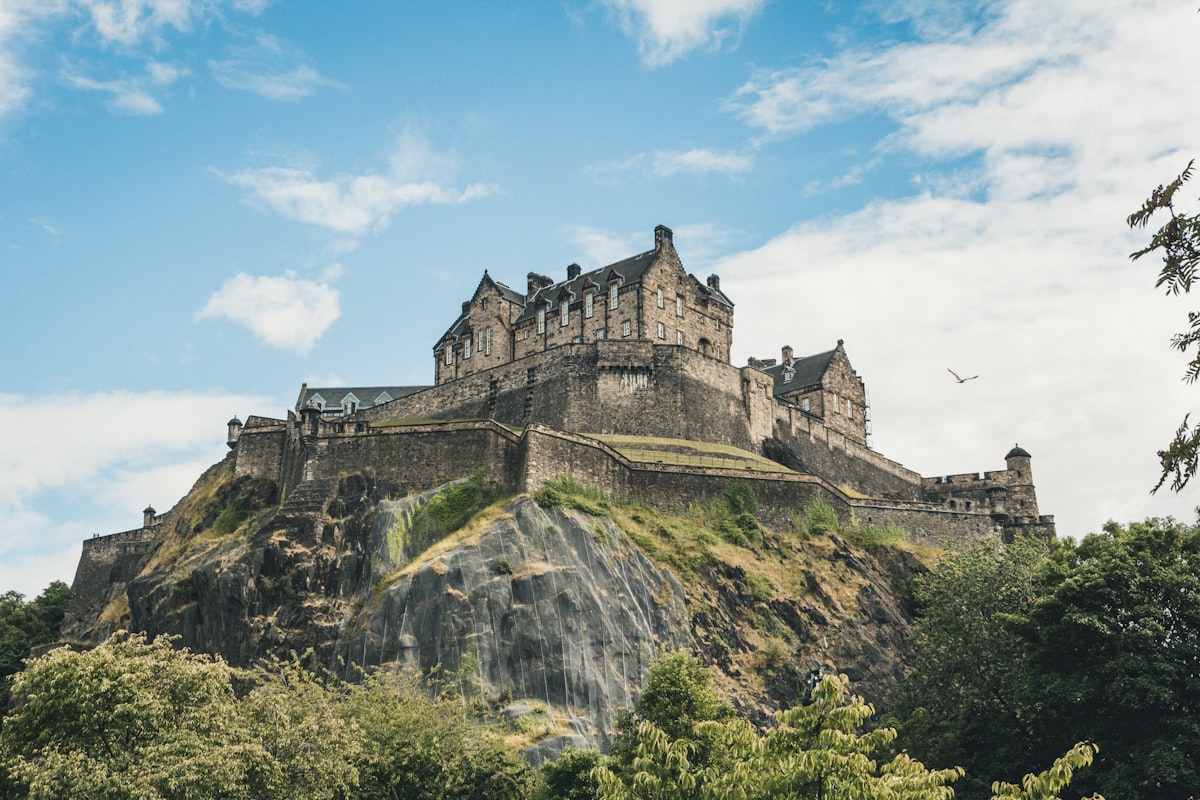
Daylight requirements in City of Edinburgh are among the most closely scrutinised in Scotland. The capital combines a UNESCO World Heritage Site covering the Old and New Towns, a dense fabric of Victorian and Georgian tenements, and a planning authority that has published unusually detailed numerical standards for daylight, sunlight and privacy. For anyone preparing a planning application here, getting the daylight and sunlight assessment right early is not optional.
This guide explains how the City of Edinburgh Council assesses daylight and sunlight, which adopted policies apply, and how the established BRE methodology fits with the council's own design standards.
The planning framework in Edinburgh
Planning decisions in Edinburgh are made against the statutory development plan, which has two parts:
- City Plan 2030 — the council's adopted Local Development Plan, adopted on 7 November 2024. It replaced the Edinburgh Local Development Plan of 2016 and, together with national policy, now sets the policy basis for determining applications across the council area.
- National Planning Framework 4 (NPF4) — adopted by the Scottish Government in February 2023. NPF4 is part of the statutory development plan and carries full weight alongside the Local Development Plan.
Two NPF4 policies are particularly relevant to daylight and amenity. Policy 14 (Design, quality and place) applies the “six qualities of successful places” to development and is explicit that proposals should not unacceptably undermine the amenity of existing homes and surrounding places. Policy 16 (Quality homes) seeks well-designed, good-quality homes, which in practice includes adequate internal daylight for new dwellings. These national policies sit above the council's own guidance, not instead of it.
Edinburgh Design Guidance: the council's own standards
What makes Edinburgh distinctive is the level of numerical detail in its non-statutory guidance. The Edinburgh Design Guidance, supported by the council's Guidance for Householders, sets out specific tests that officers apply when judging the effect of a development on a neighbour's daylight, sunlight and privacy. These are the figures that most often decide whether an extension or new building is acceptable.
Daylight to existing windows
The guidance treats reasonable daylight to an existing neighbouring window as maintained where the daylight falling on the affected wall — measured as the Vertical Sky Component (VSC) — does not fall below 27%. In practice this level can normally be achieved where new building work is kept below a 25° line taken from the mid-point of the existing window. Where development breaches that line, a more detailed assessment is expected to show the impact is acceptable.
The 45-degree test for householder development
For extensions and householder proposals, the council applies the familiar 45-degree test. A 45-degree line is drawn from the eaves of the proposed extension in both the plan and the elevation drawings. If that line encloses the centre point of a neighbouring window in both drawings, the development is likely to result in an unacceptable loss of daylight. Passing the 45-degree test will, in most circumstances, mean the proposal is acceptable in daylight terms — though it is only a first screen, not the whole assessment.
Privacy and separation distances
Edinburgh's guidance also sets clear privacy standards. Normally a distance of 18 metres is required between directly facing habitable-room windows, with each window set roughly halfway — about 9 metres — from the respective property boundary. A lesser distance may occasionally be acceptable where there are genuine mitigating factors, such as screening or an oblique relationship between windows. Importantly, windows on side or gable walls are not normally protected for privacy, because they are not set far enough back from the boundary.
In Edinburgh, a scheme can satisfy the 45-degree daylight test and still fail on privacy separation — the 18m / 9m standard is assessed in its own right. Both need to be designed in from the outset.
Why Edinburgh is more demanding than most
Several local factors make daylight and sunlight a higher-stakes issue in Edinburgh than in many other Scottish authorities:
- World Heritage tenement context. Large parts of the Old and New Towns — a UNESCO World Heritage Site — consist of tall tenement blocks set around shared back greens and narrow closes. Existing daylight to these flats can already be marginal, so even a modest addition can have a measurable effect on neighbours.
- Tall buildings and protected views. The council pays particular attention to height and massing in a city defined by its skyline, ridge lines and the silhouette of the Old Town and Castle. Schemes that add height are expected to demonstrate that they do not unacceptably overshadow neighbouring property or amenity space.
For these reasons, a robust daylight and sunlight report — one that tests VSC, the 25° and 45-degree lines, and sunlight to gardens and rooms — is frequently the difference between a smooth determination and a refusal or lengthy negotiation.
BRE BR 209 and BS EN 17037
The council's numerical tests sit within a wider, nationally recognised methodology. The standard reference for daylight and sunlight assessment in the UK is the Building Research Establishment guide BRE BR 209, Site Layout Planning for Daylight and Sunlight (2022 edition). It defines how the Vertical Sky Component, the No Sky Line / daylight distribution, and the Annual Probable Sunlight Hours (APSH) are calculated and interpreted. Alongside it, the British Standard BS EN 17037 (Daylight in Buildings) sets out best-practice targets for daylight provision within new dwellings.
In Edinburgh, the sensible approach is to apply BR 209 (2022) as the technical method while testing the results against the council's own thresholds — the 27% VSC figure, the 25° line and the 45-degree test — and the privacy separation standards. A report framed this way speaks directly to how Edinburgh planning officers actually assess proposals.
Practical tips for applicants in Edinburgh
- Commission the daylight and sunlight assessment before the design is fixed — it is far cheaper to adjust massing on paper than after a refusal.
- Identify every neighbouring habitable-room window and any shared back green or garden that could be affected.
- Check the 18m / 9m privacy relationships at the same time as the daylight tests; the two are assessed separately.
- In tenement and World Heritage contexts, expect officers to look closely at overshadowing of communal amenity space, not just windows.
How Fortress Associates can help
Fortress Associates provides our daylight and sunlight report service to BRE BR 209 (2022) and BS EN 17037, prepared so that the findings map directly onto City of Edinburgh Council's adopted policies and Edinburgh Design Guidance. We also prepare building warrant drawings to the Building (Scotland) Regulations where a project needs them. We work UK-wide with a 4–5 working day turnaround and ask for no advance payment. To discuss an Edinburgh proposal, please get in touch with our team.
Sources & further reading
- City of Edinburgh Council — City Plan 2030 (adopted Local Development Plan)
- City of Edinburgh Council — Edinburgh Design Guidance
- Scottish Government — National Planning Framework 4
- BRE — BR 209: Site Layout Planning for Daylight and Sunlight (2022)
- Fortress Associates — our services
- Daylight Requirements in Falkirk (sibling guide)
Need help with a UK planning project?
Fixed-fee daylight reports and Building Regulations drawings — delivered in 4–5 working days. No advance payment.
Request a free quote