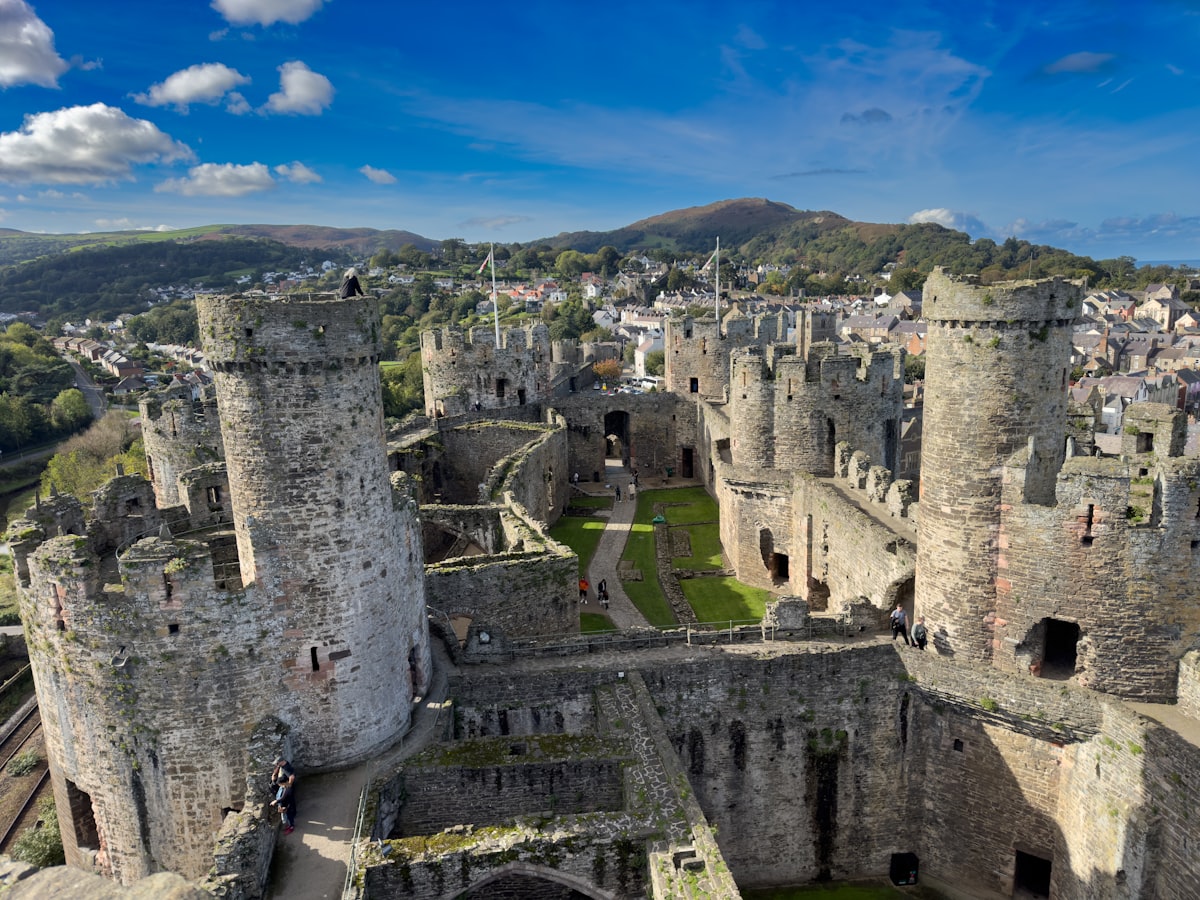
Daylight requirements in Conwy are governed by a combination of the council's adopted development plan, local design guidance and the wider Welsh planning framework. Whether you are extending a house in Llandudno, redeveloping a town-centre site in Colwyn Bay or building new homes near the Conwy estuary, demonstrating that a scheme protects daylight and sunlight to neighbouring properties, and provides good internal conditions for future occupiers, is an important part of securing planning permission. This guide explains how Conwy County Borough Council assesses daylight and sunlight, which policies apply, and how a professional report prepared to recognised standards can support an application.
The planning framework for daylight in Conwy
Planning decisions in Conwy are taken against the statutory development plan, supported by national policy. The relevant documents are:
- The Conwy Local Development Plan 2007–2022, adopted in October 2013 and still the adopted development plan for the county borough. The council is preparing a Replacement Local Development Plan (currently emerging, covering the period 2018–2033), but until that plan is adopted the 2013 LDP carries full weight in decisions.
- Planning Policy Wales (Edition 12, 2024), which sets national land-use policy and places strong emphasis on placemaking and good design.
- Future Wales: the National Plan 2040, the national development framework.
- Technical Advice Note 12: Design, which expands on the design and amenity principles in PPW.
It is important to note a jurisdictional point unique to this part of Wales: the western part of Conwy County Borough lies within Eryri (Snowdonia) National Park, and the Eryri National Park Authority is the separate planning authority for land inside the park boundary. If your site sits within the national park, the park authority — not Conwy County Borough Council — determines the application under its own plan. The guidance below applies to the area for which Conwy County Borough Council is the planning authority.
Which Conwy LDP policies deal with daylight and amenity?
The adopted Conwy LDP does not contain a single "daylight policy". Instead, daylight and sunlight are considered as part of broader design quality and residential amenity requirements:
- Policy DP/3 – Promoting Design Quality and Reducing Crime. This requires all new development to be of high-quality, sustainable design that is appropriate to and enhances its locality in terms of form, scale, massing, elevation detail and use of materials, and to have regard to the impact on adjacent properties and areas. The relationship between a new building and the light reaching its neighbours falls squarely within this assessment of scale, massing and impact.
- Policy DP/4 – Development Criteria. This states that planning permission will not be granted where proposals would have an unacceptable adverse impact on residential amenity, among other criteria. Loss of daylight, sunlight or outlook to an existing dwelling, or poor light to a proposed dwelling, can amount to an unacceptable impact on amenity under this policy.
These policies work together: DP/3 sets the design-quality bar, while DP/4 provides the amenity test that a scheme must pass.
The Conwy Householder Design Guide
For smaller proposals, the most directly relevant document is the council's Householder Design Guide (Supplementary Planning Guidance LDP1), adopted to support the LDP. It sets out practical, locally applied tests for protecting neighbours, including:
- A 45-degree guideline, under which an extension should generally be kept within a line taken at 45 degrees from the centre of the nearest ground-floor window of a principal room in an adjoining property, to protect daylight and outlook.
- Guidance that extensions and conservatories should not be overbearing to neighbours, with two-storey extensions discouraged very close to a boundary adjacent to a neighbour's garden.
- Controls on overlooking and privacy, requiring adequate separation distances where first-floor and above windows or balconies could overlook neighbouring houses or gardens.
The Householder Design Guide itself signposts the Building Research Establishment's published guidance on site layout planning for daylight and sunlight as a more detailed technical reference. The current edition of that guidance — BRE BR 209 (2022) — is the recognised methodology used by daylight and sunlight consultants today, and is the appropriate basis for a technical assessment in Conwy.
How daylight and sunlight are assessed
Where a scheme is larger than a modest householder extension, or where neighbour impact is contentious, the council and applicants rely on numerical daylight and sunlight assessment. The two recognised technical references are:
- BRE BR 209, Site Layout Planning for Daylight and Sunlight: A Guide to Good Practice (2022 edition). This sets out the established tests — Vertical Sky Component (VSC) and the daylight distribution / No Sky Line method for daylight to neighbours, and Annual Probable Sunlight Hours (APSH) for sunlight, together with overshadowing assessment of gardens and amenity areas.
- BS EN 17037 Daylight in buildings, which provides target illuminance levels and is increasingly used to assess daylight provision within proposed dwellings.
A report applies these methods to the specific geometry of the site and its neighbours, compares results against the BRE guideline values, and explains the outcome in plain terms so that the planning officer can weigh it against policies DP/3 and DP/4.
Common situations where a report is needed
- Two-storey side or rear extensions in the dense Victorian and Edwardian terraces of Llandudno and Colwyn Bay, where buildings sit close together.
- Backland and infill housing where new homes are introduced behind existing dwellings.
- Town-centre redevelopment and apartment schemes, where both neighbour impact and the internal daylight of new flats must be demonstrated.
How Fortress Associates can help
Fortress Associates prepares daylight and sunlight reports to the current BRE standard for sites across Conwy and throughout the UK. Our daylight and sunlight report service assesses your scheme against BRE BR 209 (2022) and BS EN 17037, and explains the results clearly for submission with your planning application. We offer a 4–5 working day turnaround and no advance payment. To discuss your project, see our services or get in touch.
Sources & further reading
Need help with a UK planning project?
Fixed-fee daylight reports and Building Regulations drawings — delivered in 4–5 working days. No advance payment.
Request a free quote