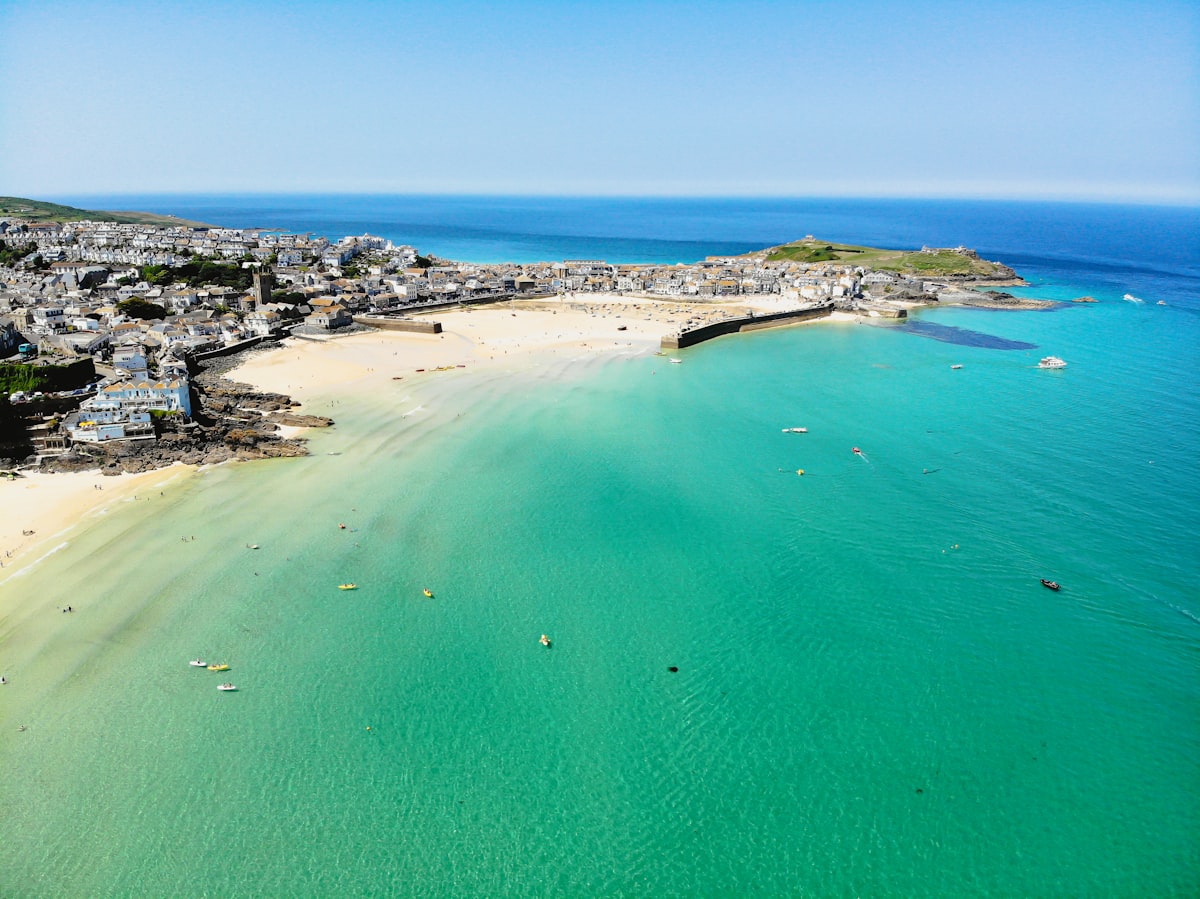
Understanding the daylight requirements in Cornwall is essential for anyone planning a home extension, a rooftop conversion, an infill plot, or a larger residential scheme anywhere from Truro and Camborne to the coastal towns of St Ives, Falmouth and Newquay. Cornwall is a single unitary authority, so Cornwall Council acts as the local planning authority (LPA) for the entire county, and the same planning framework applies whether your site sits inside a dense town centre, in a former china-clay village around St Austell, or within one of Cornwall's protected coastal landscapes. This article explains how daylight and sunlight are considered locally, which adopted policies are engaged, and how a professional report helps you demonstrate compliance.
Daylight requirements in Cornwall: the planning policy position
The development plan for the county is the Cornwall Local Plan Strategic Policies 2010–2030, formally adopted in November 2016. It does not set a single numerical daylight standard, but it does require new development to protect the living conditions and amenity of both existing and future occupiers. Two policies are particularly relevant when a proposal could affect light to neighbouring homes or the quality of accommodation it creates:
- Policy 12 (Design) commits the Council to achieving high quality, safe, sustainable and inclusive design in all developments, requiring schemes to maintain and enhance Cornwall's distinctive character and to provide good living conditions — which in practice includes adequate privacy, outlook and access to natural light for occupiers and neighbours.
- Policy 13 (Development standards) deals with the quality of new residential accommodation and the standards new homes must meet, supporting the principle that habitable rooms should enjoy reasonable levels of daylight and sunlight.
Because daylight and sunlight are not given a fixed local metric in the Local Plan, planning officers assess them against recognised national technical guidance, applied through the design and amenity policies above. The key reference is the Building Research Establishment guide BRE BR 209 (2022), Site Layout Planning for Daylight and Sunlight, alongside the daylighting standard BS EN 17037. The National Planning Policy Framework (NPPF) is the overarching national policy, and it expressly supports making efficient use of land while securing good living conditions — the balance that a daylight and sunlight assessment is designed to evidence.
The Cornwall Design Guide and other local guidance
Cornwall Council adopted the Cornwall Design Guide (developed using the Building with Nature framework) in December 2021. It is a material consideration in determining planning applications and reinforces the expectation that new development delivers high quality places to live, with healthy environments, good daylighting and a positive relationship to neighbouring properties. The Council has also progressed a Climate Emergency Development Plan Document, which raises the bar on energy and sustainable design; daylight and passive solar gain sit comfortably alongside those ambitions, since well-daylit homes typically rely less on artificial lighting.
Cornwall Council does not publish a standalone numerical daylight and sunlight SPD setting out target values. Where a scheme could materially affect neighbouring amenity — a two-storey rear extension close to a boundary, a backland plot, or a flatted development — a BRE BR 209 assessment remains the standard way to demonstrate that impacts are acceptable, and officers are familiar with its Vertical Sky Component, daylight distribution and Annual Probable Sunlight Hours methods.
Local context that affects daylight assessments in Cornwall
Cornwall has some distinctive characteristics that frequently shape how amenity and daylight are weighed:
- Protected landscapes and coastal settings. Large parts of Cornwall fall within the Cornwall National Landscape (formerly the Cornwall Area of Outstanding Natural Beauty) and the county has extensive Heritage Coast. In these areas, height, massing and roof form are scrutinised closely — and those same factors drive overshadowing and loss-of-light considerations for neighbours.
- Tight historic townscapes and the china-clay legacy. Conservation areas in places such as Truro, Falmouth and St Ives, and the dense former mining and china-clay settlements around St Austell, often have closely spaced buildings and narrow plots, which makes daylight and sunlight to existing windows a live issue when extensions or infill are proposed.
The Council's Validation Guide sets out the documents required to register an application. While a daylight and sunlight report is not an automatic validation requirement for every proposal, officers and neighbours will often request one where overshadowing or loss of light is a genuine concern, and submitting a clear BRE-based report proactively can save weeks of negotiation.
When you are likely to need a daylight and sunlight report
You should consider a professional assessment in Cornwall if your proposal involves any of the following:
- A two-storey or wraparound extension positioned close to a boundary shared with a neighbouring dwelling.
- A new dwelling on a backland or infill plot where existing houses face the development.
- A flatted scheme or building of three or more storeys in a town centre or coastal setting.
- A scheme attracting neighbour objections that specifically cite loss of light or overshadowing.
A BRE BR 209 report tests the impact on neighbouring windows and gardens, and — for new homes — the quality of daylight and sunlight the proposal itself would receive. Where targets are not fully met, a good report explains the context and the degree of any shortfall, which gives officers the evidence they need to reach a balanced decision under Policy 12 and the NPPF.
How Fortress Associates can help
Fortress Associates provides our daylight and sunlight report service to homeowners, architects, developers and planning consultants across Cornwall. Our assessments are prepared to BRE BR 209 (2022) and BS EN 17037, and are written to support your application under the relevant Cornwall Local Plan policies. We work nationwide with a 4–5 working day turnaround and no advance payment. We also prepare Building Regulations drawings to the Approved Documents (Parts A–S). To discuss your site, please get in touch.
Sources & further reading
Need help with a UK planning project?
Fixed-fee daylight reports and Building Regulations drawings — delivered in 4–5 working days. No advance payment.
Request a free quote