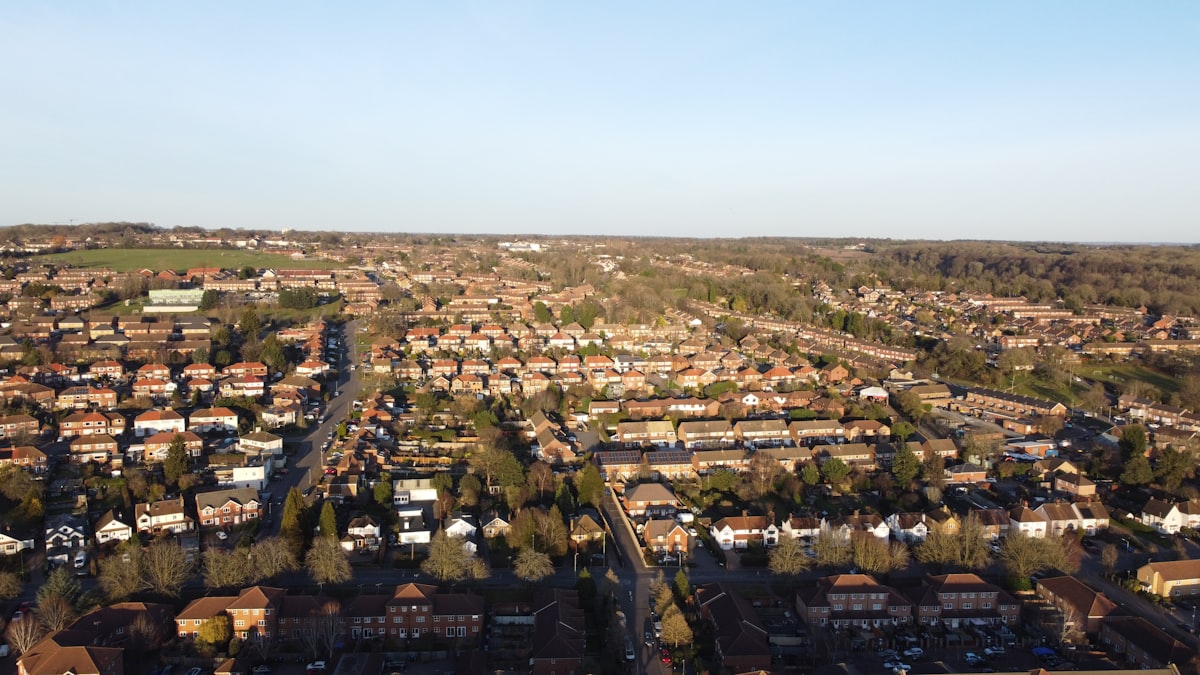
Daylight requirements in Dacorum are a frequent concern for anyone proposing a home extension, an infill plot or a larger residential scheme in Hemel Hempstead, Berkhamsted, Tring or the borough's villages. There is no single statutory "daylight rule", but Dacorum Borough Council weighs the effect of a proposal on the daylight, sunlight and amenity of neighbouring properties, and on the living conditions of future occupiers, when it decides an application. This guide explains how those judgements are made and which documents apply.
Dacorum Borough Council is the local planning authority (LPA). The borough lies within Hertfordshire, but the county council is not the planning authority for the householder and residential development discussed here; planning policy is set and applied by the borough council.
The adopted policy framework: Dacorum Core Strategy 2013
The principal adopted development plan document is the Dacorum Core Strategy, adopted on 25 September 2013, together with the saved policies and site allocations that accompany it. Two of its design policies are central to daylight and amenity assessments:
- Policy CS10 (Quality of Settlement Design) sets the borough-wide expectation for high-quality design that responds to the character of each settlement.
- Policy CS12 (Quality of Site Design) is the policy most directly relevant to daylight and sunlight. It requires that development on each site should avoid visual intrusion, loss of sunlight and daylight, loss of privacy and disturbance to surrounding properties, and should respect adjoining properties in terms of layout, scale, height, bulk, materials, landscaping and amenity space.
Because Policy CS12 names loss of daylight and sunlight expressly, it is the natural anchor for any daylight and sunlight assessment in the borough. It is read together with the design objectives of the National Planning Policy Framework (NPPF), which asks decision-makers to secure a good standard of amenity for existing and future occupiers.
Design guidance: the Dacorum Strategic Design Guide SPD
Dacorum supports its design policies with an adopted Strategic Design Guide Supplementary Planning Document (SPD), adopted on 24 February 2021. The SPD, including its Part 2 on design principles, sets out the design process and principles the council expects developers to follow, covering the relationship between buildings, layout, amenity space and the protection of neighbours' living conditions.
The SPD provides qualitative design direction rather than a bespoke numerical daylight test. For a measured, defensible assessment of light, the established technical reference is the Building Research Establishment guide BRE BR 209, Site Layout Planning for Daylight and Sunlight: A Guide to Good Practice (third edition, 2022), read alongside the daylight provisions of BS EN 17037. These technical documents are applied through Policy CS12, the Strategic Design Guide and the NPPF.
The emerging Dacorum Local Plan - not yet adopted
Dacorum has been preparing a new single Local Plan to replace the Core Strategy. The Pre-Submission Local Plan (to 2041) was published for consultation under the regulations in late 2024 and subsequently submitted for independent examination in 2025. At the time of writing it has not been formally adopted, so the Core Strategy 2013 remains the adopted basis for decisions and the emerging plan carries only limited weight, increasing as it advances. Applicants should always check the current status of the emerging plan on the council's website.
What BRE BR 209 actually measures
BR 209 provides objective tests that allow a loss of light to be assessed and explained, rather than argued impressionistically:
- Vertical Sky Component (VSC) at the centre of a neighbour's window, with a guideline value of 27%; a retained VSC of at least 0.8 times the former value is normally treated as keeping the change within acceptable limits.
- No Sky Line (daylight distribution) within affected rooms.
- Annual Probable Sunlight Hours (APSH) for windows with a significant southerly aspect, used to assess loss of sunlight.
- Overshadowing of gardens and amenity areas, often tested against the recommendation that at least half of the area should receive two hours of sunlight on 21 March.
BR 209 is clear that its figures are guidance rather than rigid limits and should be applied with regard to context. In the older, tightly built parts of Berkhamsted or Tring, a numerical shortfall against a suburban baseline may be acceptable where it reflects the established grain of the area.
Local context: a New Town, market towns and the Chilterns
Dacorum has an unusually varied built environment, and this shapes how daylight and amenity arguments are received:
- Hemel Hempstead was designated a New Town in 1947 and developed on planned principles of generous layout, neighbourhoods and open space; its post-war character is a material consideration in how spacing and light are judged.
- Berkhamsted and Tring are historic market towns with conservation areas and many listed buildings, where new development is assessed against a close-grained historic townscape rather than a suburban baseline.
- A large part of the borough lies within the Chilterns National Landscape (formerly the Chilterns Area of Outstanding Natural Beauty) and the surrounding countryside, where amenity, openness and sensitive design are closely linked.
The practical message is that a robust daylight and sunlight assessment in Dacorum must read the numbers against the specific context, whether that is a planned Hemel Hempstead estate or a historic Berkhamsted street.
How Fortress Associates can help
Fortress Associates prepares our daylight and sunlight report service to BRE BR 209 (2022) and BS EN 17037, presented so that a Dacorum case officer can read the results directly against Policy CS12 and the Strategic Design Guide. We work nationwide with a typical turnaround of four to five working days, and we ask for no advance payment. We also produce Building Regulations drawings where a scheme is moving towards construction. To discuss a project in Hemel Hempstead, Berkhamsted, Tring or anywhere in the borough, please get in touch.
Practical tips for applicants
- Test the effect on the most sensitive neighbouring windows and gardens early, before the design is fixed.
- Where your site is in a conservation area, near a listed building or within the Chilterns National Landscape, expect daylight to be weighed alongside heritage and landscape impact.
- Use the Strategic Design Guide SPD for the qualitative expectations, then support your case with a BRE assessment of the figures against Policy CS12.
- Check the current status and weight of the emerging Local Plan, and confirm the latest validation requirements on the council's website.
For related guidance, see our companion articles on daylight requirements in North Hertfordshire and daylight requirements in St Albans, plus the overview on our services page.
Sources & further reading
Need help with a UK planning project?
Fixed-fee daylight reports and Building Regulations drawings — delivered in 4–5 working days. No advance payment.
Request a free quote