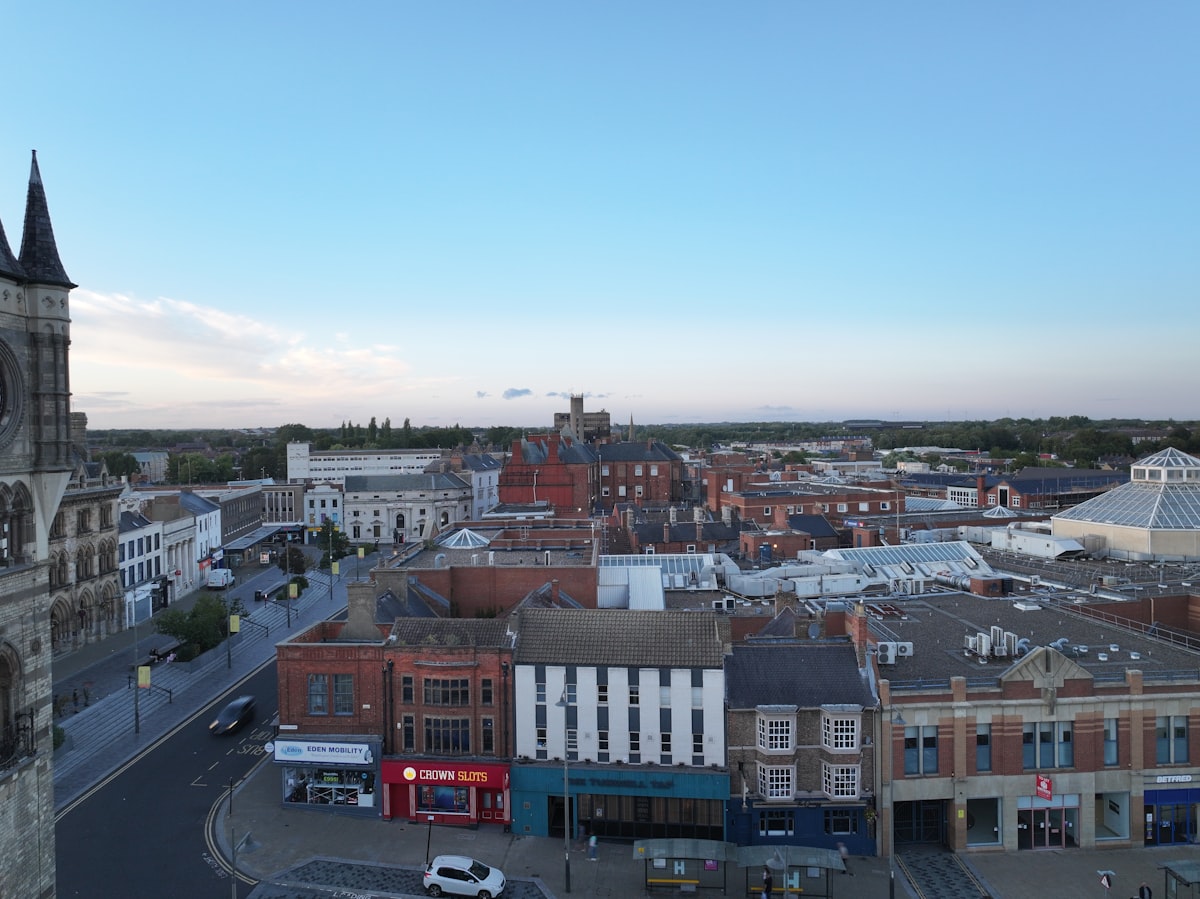
If you are planning a home extension, a backland plot, or a residential development anywhere in this market town and its surrounding villages, understanding the daylight requirements in Darlington will help you avoid delays and objections. Darlington Borough Council is a unitary authority, which means it is the local planning authority (LPA) for the whole borough and determines applications against its own adopted development plan and supplementary guidance. This article sets out how daylight and sunlight are assessed locally, which documents apply, and how a professional report can strengthen your case.
Daylight requirements in Darlington: the local policy framework
The development plan for the borough is the Darlington Borough Local Plan 2016–2036, adopted on 17 February 2022. Like most local plans, it does not set a single numerical daylight figure within the policy text itself. Instead, its design and amenity policies — set out in the plan's chapter on Design, Climate Change and Construction — require all development to deliver good design and to protect a good standard of amenity for existing and future occupiers. In practice this means a proposal must avoid causing unacceptable loss of daylight, sunlight, privacy or outlook to neighbouring properties, and must provide acceptable living conditions within any new homes it creates.
Crucially, the Local Plan directs applicants to the Council's supplementary guidance for the detailed standards. The plan states that guidance on separation distances between residential developments is provided in the adopted Design of New Development Supplementary Planning Document (SPD). This SPD is the single most important document for daylight and sunlight matters in Darlington.
The Design of New Development SPD
Darlington's Design of New Development SPD is a material consideration in planning decisions and contains the borough's practical guidance on residential amenity. It sets out recommended separation distances between dwellings — for example, distances between facing habitable-room windows and between windows and blank or two-storey elevations — which are used to safeguard privacy, daylight and sunlight. The SPD also addresses the relationship between new and existing buildings, expecting proposals to avoid arrangements that would harm the amenity of neighbours, such as locating habitable rooms where they would be unduly overshadowed or overlooked.
These local separation distances complement, rather than replace, the recognised national technical guidance. Where a proposal could materially affect light to an existing window or garden, planning officers will commonly expect the impact to be tested against the Building Research Establishment guide BRE BR 209 (2022), Site Layout Planning for Daylight and Sunlight, together with the daylighting standard BS EN 17037. The National Planning Policy Framework (NPPF) sits above both, supporting good design and good living conditions while encouraging efficient use of land — the very balance a daylight and sunlight assessment is designed to evidence.
Local context that shapes daylight assessments in Darlington
A few characteristics of the borough frequently influence how amenity and daylight are weighed:
- Compact market-town grain and conservation areas. Darlington has a historic town centre focused on its market place and a number of conservation areas. Closely spaced terraces and Victorian and Edwardian housing mean that facing windows and short rear gardens are common, so daylight, sunlight and privacy to existing homes are live issues whenever extensions or infill are proposed.
- Railway heritage and regeneration. As the birthplace of the modern passenger railway and home to ongoing regeneration around the station and former railway land, the borough sees taller and higher-density proposals come forward. Larger or multi-storey schemes are precisely the cases where overshadowing of neighbours and internal daylight quality must be demonstrated, often through a BRE BR 209 report.
When you submit an application, the Council's validation requirements determine what supporting information is needed. A daylight and sunlight report is not an automatic requirement for every minor proposal, but where there is a credible risk of loss of light or overshadowing — or where neighbours raise it — providing a clear BRE-based assessment up front can prevent requests for further information and reduce the risk of refusal.
When you are likely to need a daylight and sunlight report
Consider a professional assessment in Darlington if your proposal involves any of the following:
- A two-storey or rear extension close to a boundary shared with a neighbouring dwelling, especially where it falls below the SPD separation distances.
- A new dwelling on a backland or infill plot where existing houses face or back onto the site.
- A flatted or higher-density scheme, particularly in or near the town centre or regeneration areas.
- An application that has attracted, or is likely to attract, objections citing loss of light or overshadowing.
A BRE BR 209 assessment quantifies the effect on neighbouring windows and amenity space using established measures such as the Vertical Sky Component, daylight distribution and Annual Probable Sunlight Hours, and — for new homes — checks the daylight and sunlight the development itself would receive. Where a guideline is not fully met, a well-prepared report explains the context and the scale of any shortfall so that officers can make an informed, balanced judgement.
How Fortress Associates can help
Fortress Associates provides our daylight and sunlight report service to homeowners, architects, developers and planning consultants throughout Darlington. Our reports are prepared to BRE BR 209 (2022) and BS EN 17037 and are written to support your application under the adopted Local Plan and the Design of New Development SPD. We work nationwide with a 4–5 working day turnaround and no advance payment. We also prepare Building Regulations drawings to the Approved Documents (Parts A–S). To discuss your site, please get in touch.
Sources & further reading
Need help with a UK planning project?
Fixed-fee daylight reports and Building Regulations drawings — delivered in 4–5 working days. No advance payment.
Request a free quote