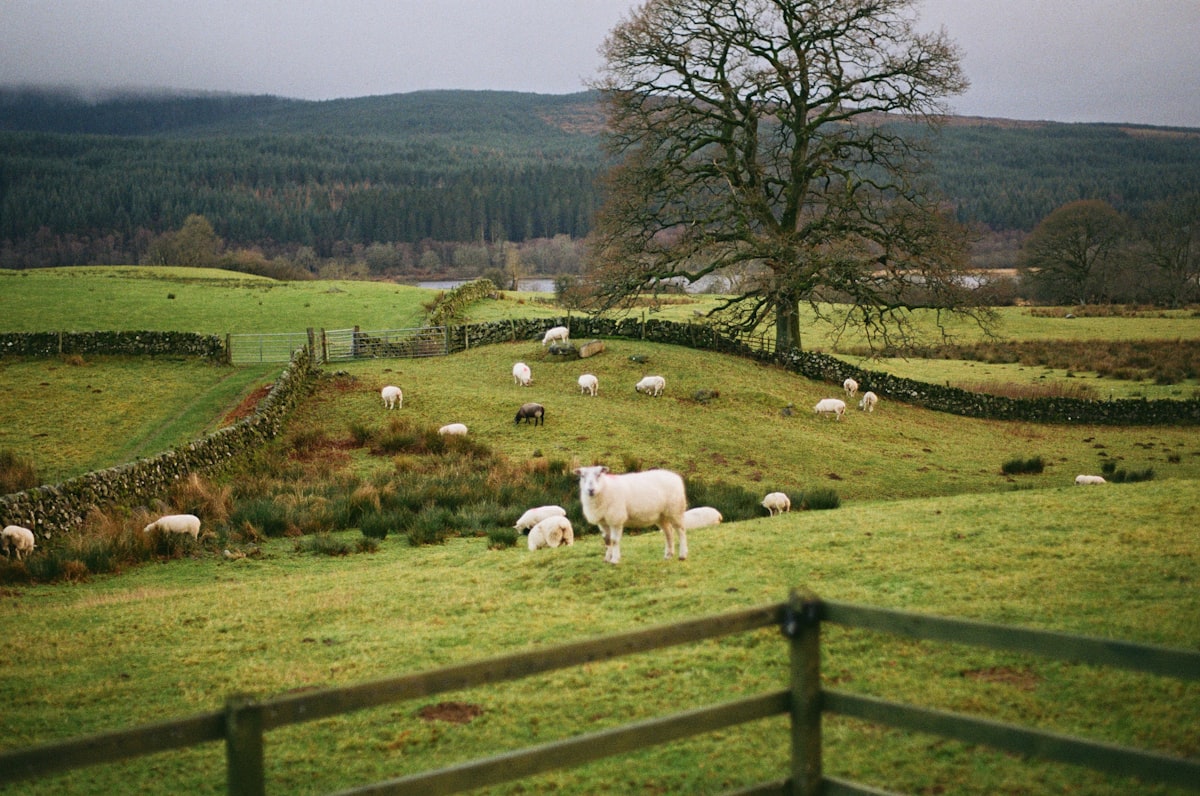
Understanding the daylight requirements in Dumfries and Galloway is essential for anyone planning a house extension, a new dwelling, or a larger residential scheme anywhere from Dumfries to Stranraer. Dumfries and Galloway Council is the planning authority for this large rural region, and it assesses the impact of development on daylight, sunlight and privacy through its adopted Local Development Plan together with national policy. This article sets out the framework that applies, the technical guidance used in practice, and how a professional daylight and sunlight assessment can support your application.
The planning framework in Dumfries and Galloway
In Scotland the statutory development plan has two parts: the council's adopted Local Development Plan (LDP) and the National Planning Framework 4 (NPF4), which Scottish Ministers adopted on 13 February 2023. Both must be read together, and planning applications across the region are determined against them as a whole.
For Dumfries and Galloway the relevant LDP is the Local Development Plan 2 (LDP2), which the council adopted on 3 October 2019. LDP2 covers the whole council area, including the principal towns of Dumfries, Stranraer, Annan, Lockerbie, Castle Douglas and Newton Stewart, and it remains the adopted plan while work continues on an emerging replacement. Where any policy in LDP2 or its supplementary guidance conflicts with NPF4, the council applies NPF4 as the more recent statement of national policy.
Which local policies deal with daylight and sunlight?
Daylight and sunlight are treated in Dumfries and Galloway as part of residential amenity. The two policies most relevant to a daylight assessment are:
- Policy OP1: Development Considerations – this is the council's main amenity policy. Under its General Amenity provisions, it requires development to be compatible with the character and amenity of the area, and it specifically identifies the potential loss of privacy, sunlight and daylight on nearby properties as a material consideration in the assessment of proposals, alongside matters such as noise, odour and light pollution.
- Policy OP2: Design Quality of New Development – supported by the adopted LDP2 Supplementary Guidance: Design Quality and Placemaking, this policy expects new development to be well designed and to respect the amenity of neighbouring properties, including the daylight and sunlight they receive.
For house extensions specifically, Policy H8 and the related supplementary guidance provide the council's general support for appropriate alterations and extensions to dwellinghouses, subject to design and amenity tests that include overshadowing and overlooking of neighbours.
It is worth being clear about one point that often causes confusion. Like most Scottish councils, Dumfries and Galloway does not set out a specific numerical BRE daylight or sunlight standard within LDP2. Instead, the plan establishes the amenity principle – protecting neighbours' daylight, sunlight and privacy – and leaves the technical method of demonstrating compliance to recognised best practice. That is where the BRE methodology comes in.
How daylight and sunlight are actually measured
The recognised best-practice method in the UK is set out in the Building Research Establishment guide BRE BR 209, Site Layout Planning for Daylight and Sunlight: A Guide to Good Practice (third edition, 2022), read together with the British and European Standard BS EN 17037 on daylight in buildings. Because Dumfries and Galloway has no competing local numerical standard, BR 209 is the methodology that planners and consultants apply to support the amenity and design objectives of Policy OP1, Policy OP2 and NPF4.
The main tests a report will typically address are:
- Vertical Sky Component (VSC) – a measure of the skylight reaching a neighbour's window. BR 209 uses a guideline figure of 27%, with a noticeable reduction generally indicated where the retained value falls below 0.8 times the previous level.
- No Sky Line / Daylight Distribution – how much of a room still receives direct skylight after a development is built.
- Annual Probable Sunlight Hours (APSH) – the sunlight reaching windows that face within 90 degrees of due south, assessed across the year and in winter.
- Overshadowing of gardens and amenity space – whether at least half of a garden or sitting-out area receives sunlight on the equinox.
For new homes, BS EN 17037 also informs the daylight provision within the proposed dwellings themselves – a consideration that supports NPF4's emphasis on good-quality residential environments.
NPF4 and the bigger picture
NPF4 carries significant weight in every Scottish planning decision. The policies most relevant to daylight and sunlight are Policy 14 (Design, quality and place), which seeks well-designed places that protect amenity, and Policy 16 (Quality homes), which promotes high-quality, well-designed housing. A BRE-based daylight and sunlight report is one of the clearest ways to demonstrate to Dumfries and Galloway Council that a scheme respects both the local LDP2 amenity policies and these national design and housing objectives.
When you are likely to need a daylight and sunlight report
A daylight and sunlight assessment is most often requested or advisable where:
- a two-storey extension, dormer or outbuilding could overshadow a neighbour's windows or garden;
- a new house or flatted development sits close to existing homes;
- a backland or infill plot is proposed in an established part of Dumfries, Stranraer or another town; or
- a planning officer or an objecting neighbour has raised loss of light as a concern.
Submitting a clear, BR 209-compliant report early can save time, address objections head-on, and give the case officer the evidence they need to apply Policy OP1 with confidence.
How Fortress Associates can help
Fortress Associates provides our daylight and sunlight report service to homeowners, architects and developers across Dumfries and Galloway and throughout the UK. Each report is prepared to BRE BR 209 (2022) and BS EN 17037 and is written to support the amenity and design policies in LDP2 and NPF4. We work to a 4–5 working day turnaround and ask for no advance payment. To discuss your project, see our services or get in touch.
Sources & further reading
Need help with a UK planning project?
Fixed-fee daylight reports and Building Regulations drawings — delivered in 4–5 working days. No advance payment.
Request a free quote