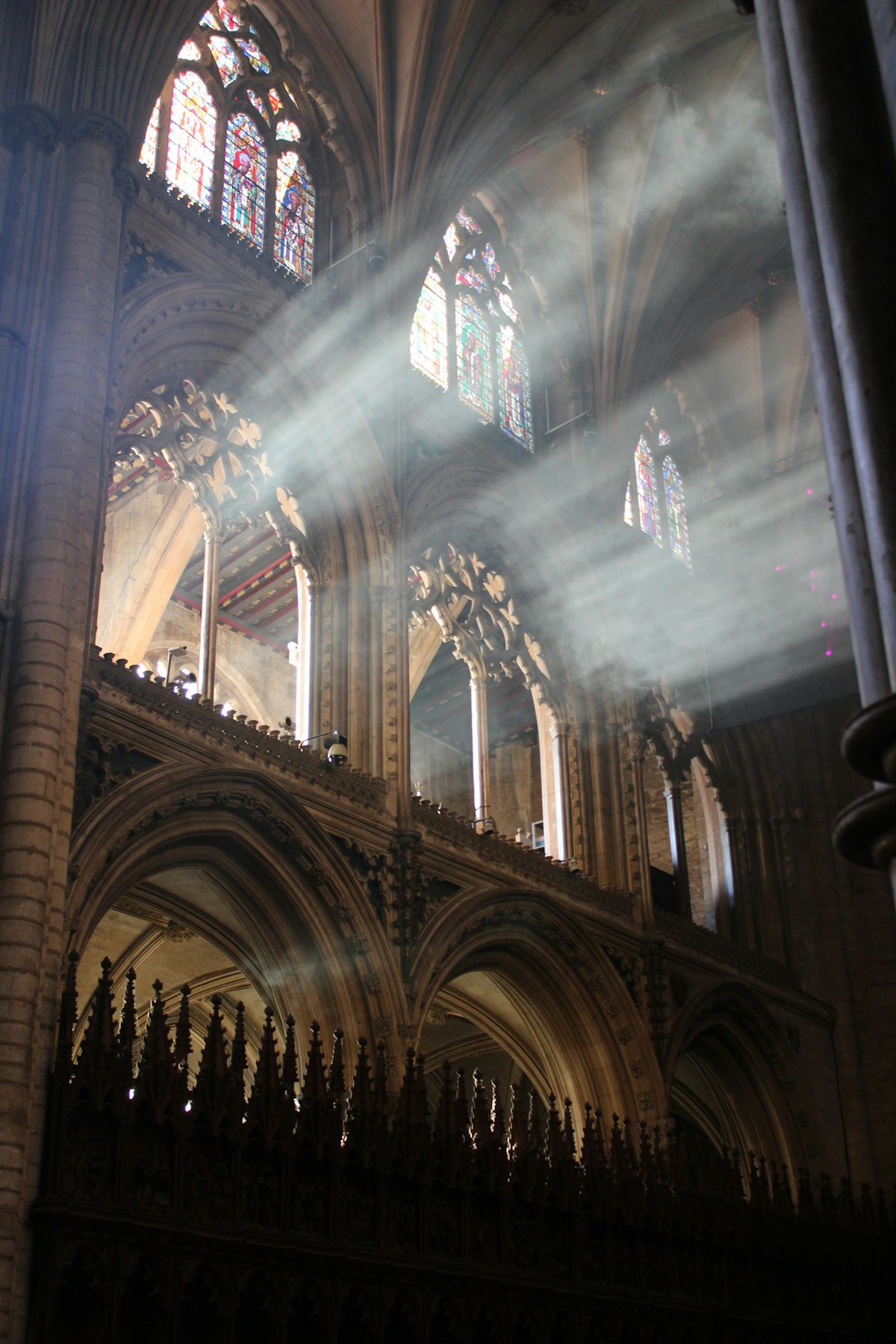
Whether you are extending a cottage near Ely Cathedral, building an infill plot in Soham or designing a new home in Littleport, the way the council treats natural light will shape your scheme. The daylight requirements in East Cambridgeshire are governed by the district's adopted Local Plan and its own Design Guide, applied with the help of recognised national technical standards. This article sets out who decides planning here, which policies apply, and how daylight, sunlight and overshadowing are actually assessed.
Who decides planning in East Cambridgeshire
East Cambridgeshire is a shire district, and the local planning authority is East Cambridgeshire District Council, based at The Grange, Nutholt Lane, Ely. Cambridgeshire County Council is not the planning authority for housing and householder applications — it handles matters such as minerals, waste and highways. So when you apply to extend or build a home in Ely, Soham, Littleport, Burwell or Haddenham, it is the district council that determines your application against its development plan.
The adopted Local Plan and residential amenity
The statutory plan is the East Cambridgeshire Local Plan, first adopted in April 2015 and now in force as the Local Plan 2015 (as amended 2023), the amended version having been adopted on 19 October 2023 following a single-issue review. Two policies do most of the work on daylight and amenity:
- Policy ENV2 (Design) requires all development to be designed to a high quality, enhancing and complementing local distinctiveness and public amenity. New proposals must respect the density and character of the surrounding area, with the location, layout, scale, form, massing, materials and colour of buildings relating sympathetically to the surroundings and to each other.
- Policy COM1 works with ENV2 to require that development causes no significantly detrimental effect on the residential amenity of nearby occupiers, and that occupiers of new buildings — especially dwellings — enjoy high standards of amenity.
It is the combination of ENV2 and COM1 that an officer will turn to when judging whether a proposed extension or new dwelling would unacceptably overshadow a neighbour's windows or garden, or would itself fail to give its own occupiers reasonable daylight.
East Cambridgeshire's daylight guidance: the Design Guide SPD
Unlike many districts, East Cambridgeshire has a dedicated design-guidance document. The council adopted a Design Guide Supplementary Planning Document in 2012, which remains a material consideration in determining applications. The Design Guide is explicit about light and privacy: it advises that the form and location of a building — including its height, its proximity to boundaries and its use of windows — should take into account the amenity of adjacent properties, so as to avoid detriment through overlooking, loss of privacy or overshadowing.
This gives applicants a clear local steer. However, the Design Guide is qualitative rather than a numerical daylight calculator. To decide whether an overshadowing or loss-of-light effect is ‘significant’ for the purposes of ENV2 and COM1, the council — like authorities across England — relies on the established national methodology in BRE BR 209 (2022), ‘Site layout planning for daylight and sunlight: a guide to good practice’, supported by the daylight standard BS EN 17037. These are read into the local decision through the amenity tests in the Local Plan and through the design and amenity expectations of the National Planning Policy Framework (NPPF).
The key BRE measures you are likely to meet are:
- Vertical Sky Component (VSC) — daylight at a neighbouring window, with a benchmark of at least 27% retained, or no more than a 20% relative reduction.
- No Sky Line / daylight distribution within affected rooms.
- Annual Probable Sunlight Hours (APSH) for windows facing within 90 degrees of due south.
- Overshadowing of gardens and amenity space, tested on the equinox.
Two local specifics worth noting
East Cambridgeshire has features that make daylight and design assessment more sensitive than the numbers alone suggest:
- Ely and its setting. Ely is a small city dominated by its medieval cathedral — the ‘Ship of the Fens’ — and surrounded by conservation areas. Within the historic core, the character and heritage considerations in Policy ENV2 and the Design Guide carry significant weight, and the council maintains conservation area appraisals for Ely, Soham, Littleport, Haddenham, Burwell and others. A scheme that affects daylight in these areas will be judged on heritage and townscape grounds as well as on amenity.
- The low, open fen landscape. Much of the district is flat, drained fenland with long open horizons and little natural screening. On open plots and edge-of-settlement sites in places such as Soham and Littleport, a two-storey extension or a tall new dwelling can have a more noticeable overshadowing and overlooking effect on neighbours than it would in more enclosed terrain, so the separation and orientation advice in the Design Guide is especially relevant.
Validating your application
East Cambridgeshire publishes validation requirements and a validation guidance document setting out what must accompany an application. A standalone daylight and sunlight report is not demanded for every householder scheme, but where a proposal sits close to a boundary, rises to two storeys beside single-storey neighbours, or could overshadow gardens or windows, a BRE-based assessment is the most direct way to demonstrate compliance with ENV2, COM1 and the Design Guide — and to head off neighbour objections.
How Fortress Associates can help
Fortress Associates prepares daylight and sunlight assessments for proposals throughout East Cambridgeshire and the wider region. Our our daylight and sunlight report service tests your scheme against BRE BR 209 (2022) and BS EN 17037, and frames the results around Policies ENV2 and COM1 and the council's Design Guide so your planning statement speaks the council's language. We work UK-wide with a 4 to 5 working day turnaround and no advance payment, and we also produce Building Regulations drawings to Approved Documents A to S. To discuss an East Cambridgeshire scheme, please contact us.
Sources & further reading
Need help with a UK planning project?
Fixed-fee daylight reports and Building Regulations drawings — delivered in 4–5 working days. No advance payment.
Request a free quote