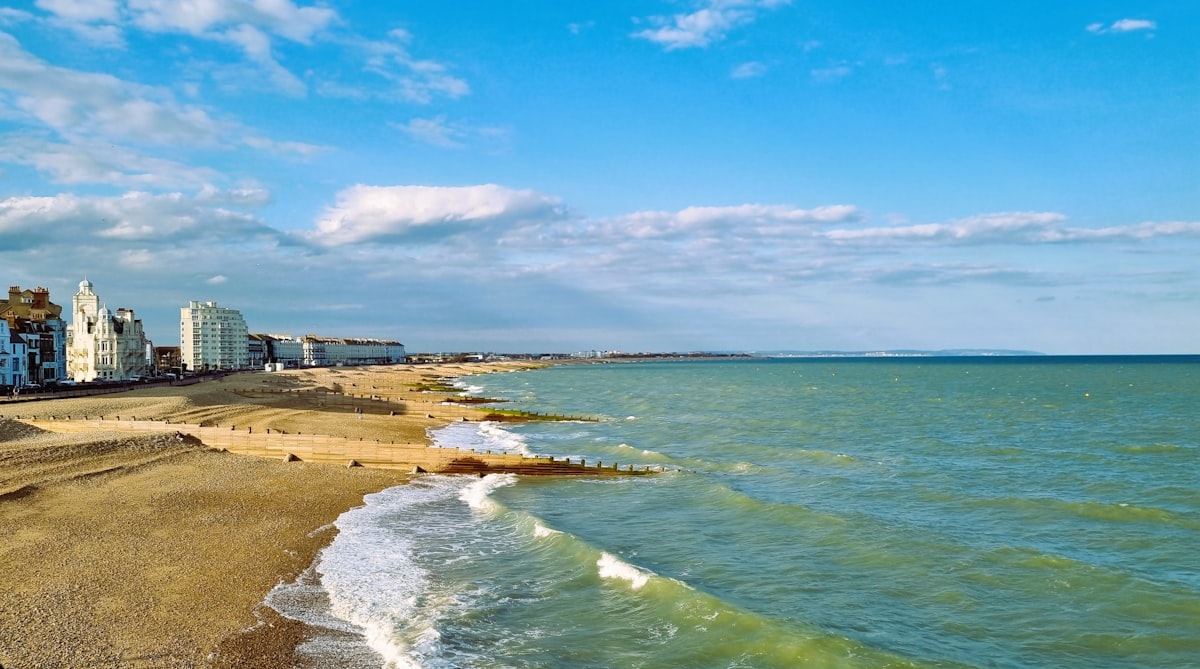
Understanding the daylight requirements in Eastbourne is essential for anyone planning to build or extend in this distinctive seafront town. Eastbourne combines a tightly packed Victorian and Edwardian resort core, a busy regenerating town centre, and a backdrop of the South Downs to the west around Beachy Head. In a town where terraces, mansion blocks and tall seafront buildings sit close together, the impact of new development on daylight and sunlight — both to neighbours and to the building's own future occupiers — is a routine and important planning consideration.
This article explains how Eastbourne Borough Council assesses daylight and sunlight, which adopted policies and guidance apply, and how a professional report to the national technical standards can strengthen your application.
The planning framework: who decides in Eastbourne
For development within the town, Eastbourne Borough Council is the local planning authority (LPA). East Sussex County Council is not the LPA for ordinary householder and residential proposals — its planning function is limited to matters such as minerals, waste and county council development. Eastbourne shares a planning policy team with neighbouring Lewes District Council under the Lewes and Eastbourne Councils partnership, but the two authorities have their own separate development plans, so it is important to apply Eastbourne's own policies to an Eastbourne site.
The statutory development plan for Eastbourne is currently made up of:
- the Eastbourne Plan: Core Strategy Local Plan, adopted by Full Council on 20 February 2013;
- the saved policies of the Eastbourne Borough Plan (2003); and
- the Employment Land Local Plan.
A new Eastbourne Local Plan looking ahead to 2042 has been published for public consultation (a draft consultation ran in spring 2026) and, once examined and adopted, will replace the existing suite of documents including the Core Strategy. Until then, applicants should rely on the adopted Core Strategy and saved Borough Plan policies, while keeping an eye on the emerging plan.
Local Plan policies on amenity and design
Eastbourne does not set a single numerical daylight or sunlight figure in its development plan. Instead, daylight, sunlight, outlook and privacy are protected through the council's design and amenity policies. The most directly relevant adopted policies are:
- Core Strategy Policy D10A (Design), which expects new development to make a positive contribution to the appearance of the townscape and urban heritage and to be of high design quality; and
- Core Strategy Policy B2 (Creating Sustainable Neighbourhoods), which is used to assess whether schemes provide adequate accommodation and amenity for future occupiers and respect the character and amenity of their surroundings.
These are supported by the saved Eastbourne Borough Plan (2003) policies on design and residential amenity, which remain part of the development plan and are regularly cited in decisions on extensions and new homes. Together these policies give officers the basis to resist development that would unacceptably overshadow neighbours, block sunlight to gardens or windows, or create an oppressive, enclosing effect on adjoining properties — loss of daylight and sunlight being a recognised element of residential amenity.
Validation requirements
Eastbourne publishes a Householder Planning Permission Validation Checklist and separate local validation lists for other application types, setting out the information needed to register a valid application alongside the national requirements. The council does not require a daylight and sunlight report on every scheme. However, where a proposal could reasonably affect neighbours' light — for example a deep two-storey rear extension, a flatted conversion, backland infill, or a taller building in the town centre or along the seafront — officers can request a daylight and sunlight assessment to demonstrate that amenity policy is met.
Which standards apply?
Because Eastbourne's Local Plan does not contain its own numerical daylight metric, daylight and sunlight are assessed against the recognised national technical guidance, applied through the local amenity and design policies:
- BRE BR 209 (2022) — Site Layout Planning for Daylight and Sunlight: A Guide to Good Practice, the standard reference used by planning authorities across England, covering the Vertical Sky Component (VSC), No Sky Line / daylight distribution, and Annual Probable Sunlight Hours (APSH);
- BS EN 17037 — the British and European standard on daylight provision within buildings; and
- the National Planning Policy Framework (NPPF), which requires planning to secure a high standard of amenity for existing and future occupiers.
A well-prepared report measures the scheme against BR 209 and BS EN 17037 and then relates the results back to Eastbourne Core Strategy Policies D10A and B2 and the saved Borough Plan, giving the case officer clear evidence on which to base a recommendation.
Local factors that affect daylight in Eastbourne
Two features of the town make daylight and sunlight a particularly live issue:
- Dense Victorian and Edwardian townscape. The resort core is characterised by closely spaced terraces, mansion blocks and tall seafront buildings, often with shared boundaries and rear additions. In this grain, even modest extensions can materially reduce daylight to neighbouring windows and gardens, so a BRE assessment is frequently decisive.
- Town-centre regeneration and taller buildings. Eastbourne's ongoing town-centre regeneration brings forward higher-density and taller schemes where the daylight and sunlight effects on surrounding homes — and the quality of daylight within the new units themselves — come under close scrutiny. Demonstrating compliance with BR 209 and BS EN 17037 early helps avoid redesign and refusal.
How Fortress Associates can help
Fortress Associates provides our daylight and sunlight report service for homeowners, architects and developers in Eastbourne and across the UK. Our reports assess your scheme against BRE BR 209 (2022) and BS EN 17037 and relate the findings directly to the relevant Eastbourne Core Strategy and Borough Plan policies, so your application is supported by the evidence officers expect. We work nationwide with a 4–5 working day turnaround and require no advance payment. We can also prepare Building Regulations drawings for your project. To discuss your site, get in touch with our team.
Sources & further reading
Need help with a UK planning project?
Fixed-fee daylight reports and Building Regulations drawings — delivered in 4–5 working days. No advance payment.
Request a free quote