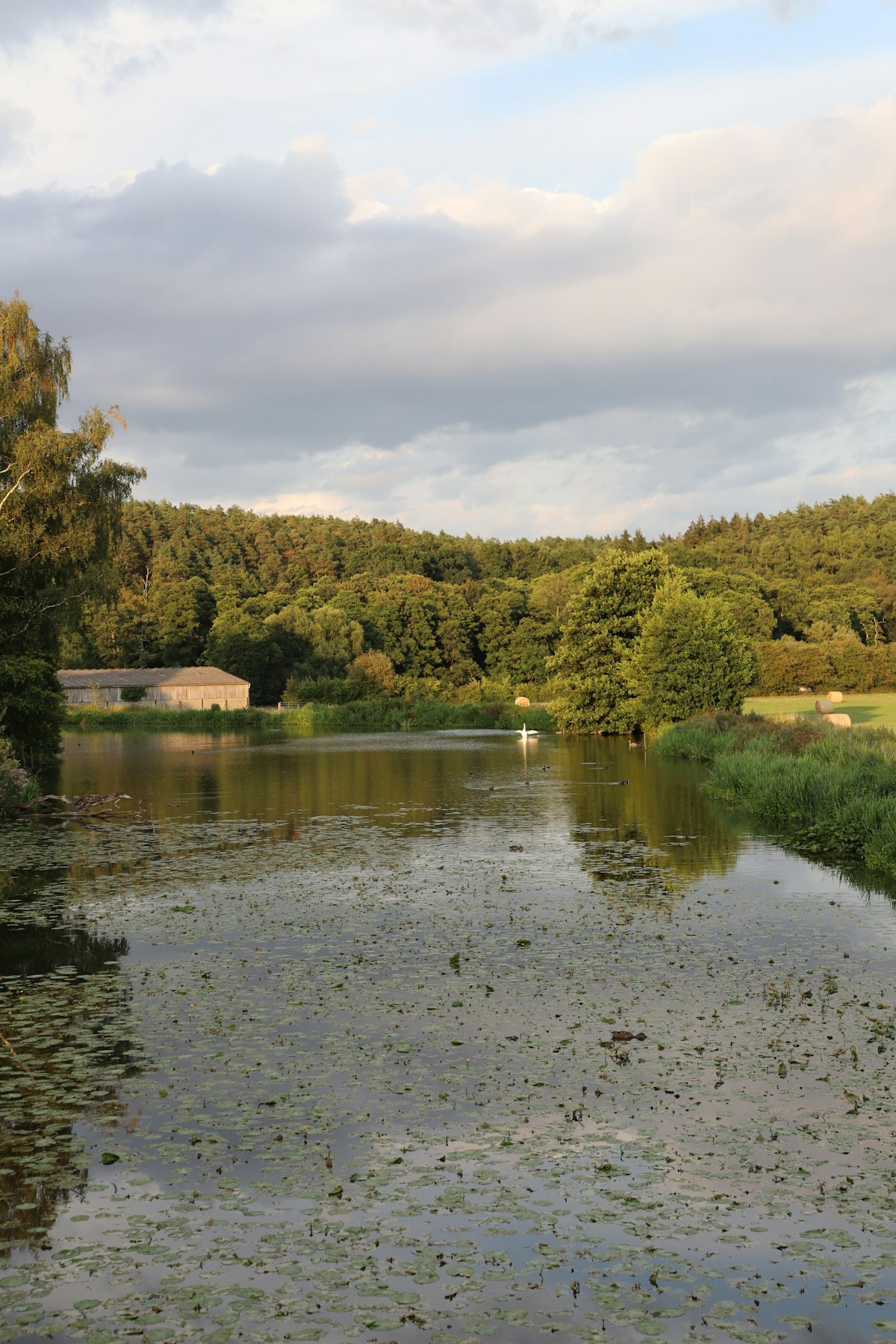
Understanding the daylight requirements in Elmbridge is essential for anyone planning a home extension, a backland infill or a larger residential scheme across the borough's Thames-side suburbs. From the riverside streets of Walton-on-Thames and Weybridge to the leafy plots of Esher, Claygate and Cobham, Elmbridge is characterised by generous gardens, mature trees and a high quality of residential amenity. That makes daylight, sunlight and overshadowing some of the most closely scrutinised issues when the local planning authority assesses a proposal.
This guide explains how Elmbridge Borough Council — the local planning authority for the area, not Surrey County Council — approaches daylight and sunlight, which adopted policies apply, and how a robust technical assessment can help your application progress smoothly.
The Local Plan framework in Elmbridge
Elmbridge's adopted development plan is made up of two documents that are read together: the Core Strategy (adopted 2011) and the Development Management Plan (adopted April 2015). These set out the planning policies the council uses to determine applications across the borough.
Two policy references are particularly relevant to daylight and sunlight:
- Core Strategy Policy CS17 (Local Character, Density and Design) requires new development to respond to local character and to be built to a high quality of design. This is the strategic hook for the more detailed amenity tests applied at application stage.
- Development Management Plan Policy DM2 (Design and Amenity) requires that development proposals are designed to offer an appropriate outlook and to provide adequate daylight, sunlight and privacy, so as to protect the amenity of adjoining and potential occupiers and users. The policy notes this is particularly important when considering windows, external staircases, balconies, raised terraces and roof gardens.
In practice, DM2 is the policy most often cited when a neighbour raises concerns about loss of light, and it is the standard against which an Elmbridge daylight and sunlight report is judged.
Daylight requirements in Elmbridge: the council's specific guidance
Elmbridge is unusually explicit about technical daylight and sunlight expectations compared with many authorities. The council's local validation checklist identifies when a daylight and sunlight assessment must accompany an application. It is required where there is a potential adverse impact on adjoining or nearby properties or buildings (including associated gardens or amenity space), or where there is a risk of low light levels for new dwellings.
The checklist states that any such assessment should be carried out in accordance with the Building Research Establishment (BRE) guide Site Layout Planning for Daylight and Sunlight: A Guide to Good Practice. It expects the analysis to cover daylight, vertical sky component (VSC), sunlight availability (annual probable sunlight hours), average daylight factor and shadow studies, each assessed against the criteria in the BRE document. The latest edition of that guidance is BRE BR 209 (2022), which sits alongside the British Standard BS EN 17037 on daylight in buildings.
Elmbridge also operates a Design Code Supplementary Planning Document (SPD), adopted on 17 April 2024, which became mandatory for applications submitted on or after 6 January 2025. Applicants must complete a Design Code Checklist confirming compliance with the relevant codes. The Design Code replaced the earlier Design and Character SPD (2012) and its companion guides — including the guide on home extensions — which still apply to applications submitted before that date. While the Design Code focuses on built form and character, its emphasis on quality outdoor space and well-orientated rooms reinforces the amenity tests in DM2.
The council recommends that applicants enter into pre-application discussions to agree the scope of any daylight and sunlight assessment before submission — useful advice in a borough where neighbour sensitivities are high and plots are often closely spaced.
What the BRE guidance actually tests
BR 209 sets out the established numerical tests that an Elmbridge officer or planning inspector will expect to see addressed:
- Vertical Sky Component (VSC): the proportion of sky visible at the centre of a neighbour's window. A retained VSC of 27% or more, or no worse than 0.8 times the former value, is generally considered to maintain good daylight.
- No Sky Line / daylight distribution: assesses how much of a room continues to receive direct sky light after development.
- Annual Probable Sunlight Hours (APSH): tests sunlight to windows facing within 90 degrees of due south, with separate winter and annual thresholds.
- Overshadowing of amenity space: gardens and sitting-out areas should ideally receive at least two hours of sunlight on 21 March across at least half their area.
For new dwellings, BS EN 17037 and the average daylight factor approach are used to confirm that habitable rooms achieve adequate internal daylight — a particular concern for the flatted and basement schemes that come forward in Esher and Weybridge.
Where daylight issues commonly arise in Elmbridge
Several recurring scenarios in the borough tend to trigger daylight scrutiny:
- Two-storey and first-floor rear extensions on tightly spaced suburban plots in Walton and Molesey, where the 45-degree and 25-degree assessment lines are often the deciding factor.
- Replacement dwellings and larger new-build homes on generous garden plots in Esher, Oxshott and Cobham, where massing can overshadow neighbouring gardens.
- Apartment schemes near Weybridge and Walton town centres, where internal daylight to lower-floor units must be demonstrated.
- Development at the urban edge near the Green Belt and the historic Brooklands area, where openness and amenity are both material considerations.
How Fortress Associates can help
Fortress Associates prepares clear, defensible daylight and sunlight assessments for sites across Elmbridge and the wider UK. Our reports are produced to BRE BR 209 (2022) and BS EN 17037, and are written to address the amenity tests in the council's adopted policies and validation checklist. Find out more about our daylight and sunlight report service, or browse our full range of services.
We work to a 4–5 working day turnaround and ask for no advance payment. If you have a scheme in Walton, Esher, Weybridge or anywhere else in the borough, get in touch to discuss your requirements. We also offer Building Regulations drawings to support your project from planning through to construction.
Practical tips for Elmbridge applicants
- Take up the council's offer of pre-application advice to agree the scope of any daylight and sunlight study early.
- Commission a BRE BR 209 (2022) assessment before finalising your design, so massing can be adjusted while changes are still cheap.
- Keep neighbours informed — many Elmbridge refusals and appeals turn on perceived loss of light to adjoining gardens and windows.
- Make sure your application also satisfies the Design Code Checklist if it is submitted on or after 6 January 2025.
For a related authority, see our guide to daylight requirements in Guildford.
Sources & further reading
Need help with a UK planning project?
Fixed-fee daylight reports and Building Regulations drawings — delivered in 4–5 working days. No advance payment.
Request a free quote