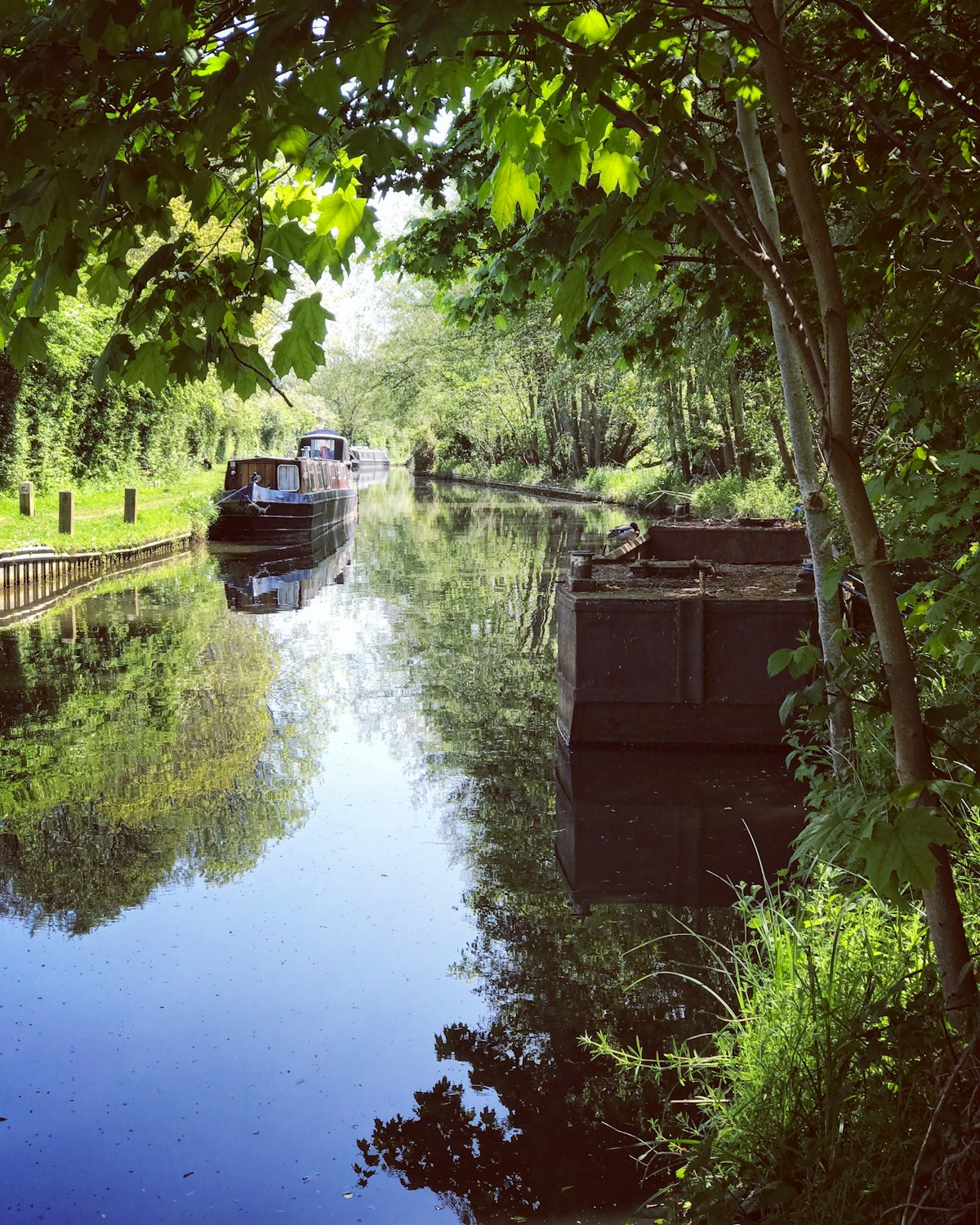
Whether you are extending a terraced home in Ilkeston, converting a property near the Erewash Canal in Long Eaton, or bringing forward a small residential scheme, understanding the daylight requirements in Erewash is the key to a smooth planning decision. Erewash Borough Council assesses daylight and sunlight through a combination of its adopted Core Strategy, saved Local Plan policies and an Extending Your Home design guide, all underpinned by recognised national standards. This guide sets out how those pieces fit together.
Who sets daylight requirements in Erewash?
The local planning authority is Erewash Borough Council, with its Town Hall in Long Eaton. The borough council determines householder extensions, new dwellings and most residential development; Derbyshire County Council deals only with strategic matters such as minerals, waste and education. So for daylight, sunlight and amenity on a typical application, it is the borough council's policies and guidance that apply.
Erewash is a compact, largely urban borough built around its two main towns, Ilkeston and Long Eaton, with the Erewash Canal forming a defining feature of its landscape and a frequent backdrop to development sites. The tight-knit Victorian terraces and the proximity of homes to one another mean that overshadowing and overlooking are common and important considerations in this borough.
The adopted Core Strategy: Policy 10
The strategic development plan is the Erewash Core Strategy 2011-2028, adopted in March 2014. It contains the borough's strategic planning policies. The most relevant policy for daylight and amenity is Policy 10: Design and Enhancing Local Identity, which requires new development to be of high design quality and to protect the amenity of neighbouring properties. In practice, Policy 10 is the policy under which proposals are tested for harm by reason of being overbearing, overshadowing or causing a loss of light, outlook or privacy to nearby homes. Schemes found to cause an unacceptable level of overshadowing or overbearing impact have been refused as contrary to Policy 10.
Saved Local Plan policies still in force
The Core Strategy did not replace every policy. A number of policies from the older Erewash Borough Local Plan have been formally saved and continue to form part of the development plan alongside the Core Strategy. For residential design and amenity, the most relevant saved policies are:
- Saved Policy DC2: Extensions to Dwellings, which permits extensions subject to criteria on scale, design and external materials being in keeping with the existing dwelling and not harming neighbouring amenity;
- Saved Policy DC10: Design, the general design control policy;
- Saved Policy LP1: Sustainable Development, which sets overarching principles including protecting the quality of the built environment;
- Saved Policy DC9: Designing Out Crime.
For a householder extension, an officer will typically assess the proposal against both Core Strategy Policy 10 and saved Policy DC2.
The Extending Your Home SPD: real local guidance
Erewash has also adopted an Extending Your Home Supplementary Planning Document (SPD), which supplements the saved Local Plan policies and gives applicants practical, locally specific advice on the design of home extensions. Importantly for daylight, it sets out genuine guidance on overshadowing and privacy:
- Overshadowing and orientation. The SPD advises applicants to "avoid designing an extension that overshadows your own or your neighbour's property, thus depriving areas of sunlight," noting that this is especially important where the extension is to the south of a neighbour and that the effect depends on the height, plan area, orientation and ground levels of the extension.
- Privacy and overlooking. To the rear of a property, the SPD states it is normal practice to require a minimum distance of around 20 metres between directly facing windows where one is at first-floor level, while making clear that each case is determined on its own merits.
Because the SPD expands on adopted and saved policies, designing in line with its overshadowing and separation guidance is the most effective way to avoid an amenity objection in Erewash.
Where BRE BR 209 and BS EN 17037 come in
The SPD's guidance is well suited to everyday householder cases, but it is not a full technical method for larger or more sensitive proposals. For flats, infill plots and any scheme where light to existing windows is genuinely in question, the recognised benchmark is the Building Research Establishment guide BRE BR 209, Site Layout Planning for Daylight and Sunlight: A Guide to Good Practice (2022 edition), together with the British Standard BS EN 17037. The National Planning Policy Framework (NPPF) requires a high standard of amenity for existing and future occupiers, and these technical standards are applied through Core Strategy Policy 10 and the saved Local Plan policies to give that requirement an objective footing.
A BR 209 (2022) assessment usually reports the Vertical Sky Component (VSC) at affected windows, daylight distribution within rooms, Annual Probable Sunlight Hours (APSH) for windows facing within 90 degrees of due south, and overshadowing of gardens against the BRE recommendation that at least half of an amenity space should receive some sunlight on 21 March. Read alongside the Extending Your Home SPD, this gives Erewash officers a complete and defensible picture.
Two local points worth remembering
- Dense terraced layouts raise the stakes. In the older parts of Ilkeston and Long Eaton, homes sit close together, so even a modest two-storey rear extension can breach the SPD's overshadowing and privacy expectations. Early daylight analysis pays off here.
- Two policies, one test. Because both Core Strategy Policy 10 and saved Policy DC2 apply to extensions, a proposal needs to satisfy both. Evidence framed against the SPD and BRE BR 209 helps demonstrate compliance with each.
How Fortress Associates can help
Fortress Associates provides our daylight and sunlight report service for homeowners, architects and developers in Erewash and across the UK. Our reports follow BRE BR 209 (2022) and BS EN 17037, address the Extending Your Home SPD's overshadowing and separation guidance, and are written to support your application under Core Strategy Policy 10 and the saved Local Plan policies. We work to a 4 to 5 working day turnaround with no advance payment, and we also prepare Building Regulations drawings to Approved Documents A to S. To discuss your scheme, please get in touch.
Sources & further reading
Need help with a UK planning project?
Fixed-fee daylight reports and Building Regulations drawings — delivered in 4–5 working days. No advance payment.
Request a free quote