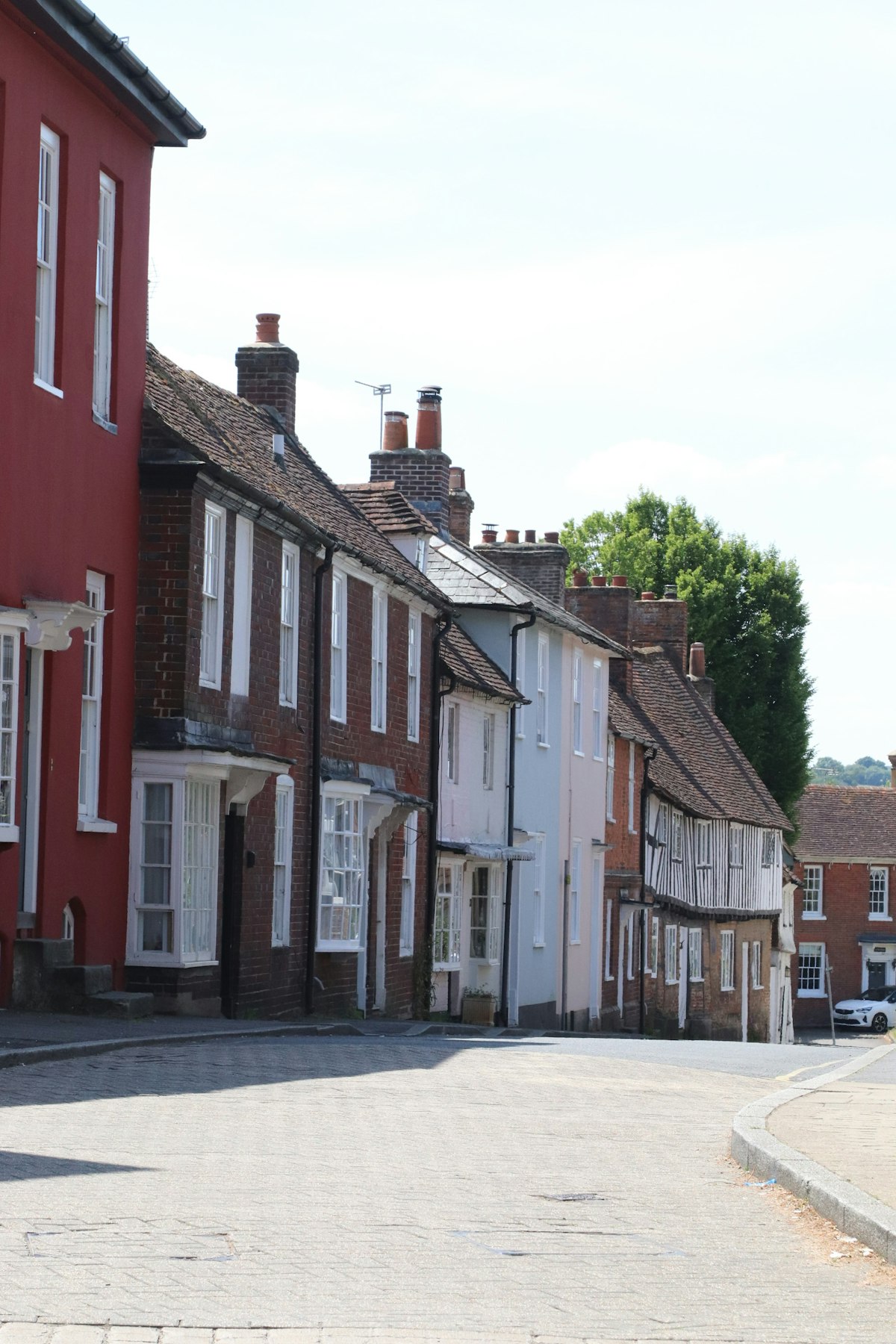
If you are planning an extension, a new home or a larger development in Fareham, understanding the daylight requirements in Fareham will help you avoid costly surprises during the planning process. Fareham Borough Council assesses how new development affects the daylight and sunlight enjoyed by neighbouring properties, and how much daylight new homes themselves receive. This guide sets out the council's adopted policy framework, the technical standards that apply, and how a professional daylight and sunlight report supports a well-evidenced application.
The planning framework for daylight in Fareham
Fareham sits between Portsmouth and Southampton on the south Hampshire coast, taking in the town itself together with settlements such as Portchester, Stubbington, Titchfield and Warsash, and the new community at Welborne. It is a borough under sustained pressure for housing, which makes the effect of new building on neighbours' living conditions a frequent and important planning issue.
The development plan for the borough is the Fareham Local Plan 2037, which was adopted on 5 April 2023. It replaced the previous Local Plan Part 1: Core Strategy and Local Plan Part 2: Development Sites and Policies, and now sits alongside the Local Plan Part 3: The Welborne Plan (adopted in 2015), which guides the Welborne Garden Village development to the north of the M27. Planning applications are determined in accordance with this development plan unless material considerations indicate otherwise.
Local Plan policies on living conditions and design
Two policies in the adopted Fareham Local Plan 2037 are directly relevant to daylight and sunlight:
- Policy D2 (Impact on Living Conditions) is the borough's core amenity policy. It seeks to protect the living conditions of existing and future occupiers, addressing issues such as loss of privacy, overlooking, overbearing impact and loss of light and outlook. Development that would cause unacceptable harm to the amenity of neighbours, or fail to provide acceptable conditions for future occupiers, conflicts with this policy.
- Policy D1 (High Quality Design) requires development to be well designed and to respond positively to its context, including the scale, height, massing and relationship of buildings to one another. Because spacing and massing are precisely what govern daylight and sunlight, this policy works hand in hand with D2 to secure good amenity outcomes.
Together, D1 and D2 give the council a clear basis to refuse schemes that would unacceptably reduce a neighbour's daylight or sunlight, and to require new homes to enjoy adequate light themselves.
The Fareham Borough Design Guidance SPD
The council has adopted a Fareham Borough Design Guidance Supplementary Planning Document (SPD), which provides more detailed visual guidance on the council's design expectations and supports the design policies of the Local Plan. As a material consideration, the SPD helps applicants and officers judge how a proposal sits alongside its neighbours in terms of scale, spacing and amenity. It supplements, rather than replaces, the policy tests in D1 and D2.
Notably, neither the Local Plan nor the SPD sets out bespoke numerical daylight or sunlight targets. Where light needs to be quantified, the council relies on the established national technical guidance described below.
How daylight requirements in Fareham are measured
Fareham's policies set the objective — protecting living conditions and securing high-quality design — while the technical assessment of light is carried out using nationally recognised standards:
- BRE BR 209 (2022), Site Layout Planning for Daylight and Sunlight: A Guide to Good Practice. This is the principal industry document. It sets out the Vertical Sky Component (VSC) and No Sky Line / Daylight Distribution tests for daylight to neighbouring windows, and the Annual Probable Sunlight Hours (APSH) test for sunlight, with the benchmark figures used to judge whether an impact is acceptable.
- BS EN 17037, the British and European standard Daylight in Buildings, used to assess the daylight provided within new dwellings.
- The National Planning Policy Framework (NPPF), which requires good design and a high standard of amenity for existing and future users of land and buildings, while supporting the efficient use of land.
This national guidance is applied through the Local Plan: Policy D2 provides the amenity hook, and the BRE methodology provides the measurable evidence. A report comparing the existing and proposed situations against the BRE benchmarks gives the case officer an objective basis on which to determine the application.
A note on validation
Fareham Borough Council's published local validation requirements do not list a daylight and sunlight assessment as a standard document for every application. That does not mean light can be ignored. Where a proposal sits close to neighbouring windows, increases height or massing, or attracts objections on loss of light, the council can and does expect the impact to be addressed — and Policy D2 gives it the basis to refuse a scheme on amenity grounds. Submitting a BRE-based report proactively is therefore often the most effective way to keep an application on track.
Local factors that matter in Fareham
Several characteristics of the borough make daylight and sunlight analysis particularly relevant:
- Welborne Garden Village. This major new community, guided by Local Plan Part 3, brings substantial new housing where daylight within new homes (BS EN 17037) and the relationship between new dwellings both demand careful evidence.
- Established suburban streets. In areas such as Portchester, Stubbington and central Fareham, closely spaced semi-detached and terraced homes mean even modest rear or two-storey extensions can measurably affect a neighbour's daylight, making VSC and APSH testing valuable.
- Coastal and conservation sensitivity. Waterside settlements around the Solent and parts of the borough's conservation areas place a premium on a design that protects light while respecting local character.
When you need a daylight and sunlight report
A daylight and sunlight assessment is commonly advisable in Fareham where:
- a proposal sits close to neighbouring residential windows or gardens;
- an extension or new building would add height, depth or bulk that a neighbour could argue is overbearing or light-reducing;
- a flatted or higher-density scheme must demonstrate adequate internal daylight under BS EN 17037; or
- loss of light is raised as a concern during the application.
Providing the evidence up front, against Policy D2 and the BRE benchmarks, helps the council reach a confident decision more quickly.
How Fortress Associates can help
Fortress Associates offers our daylight and sunlight report service to homeowners, architects and developers across Fareham and the whole of the UK. We prepare assessments to BRE BR 209 (2022) and BS EN 17037, framed by the adopted Local Plan, so your application is backed by clear, defensible evidence. We work to a 4 to 5 working day turnaround and require no advance payment. We can also produce Building Regulations drawings for your project. To discuss your scheme, please get in touch.
Sources & further reading
- Fareham Borough Council – Fareham Local Plan 2037
- Fareham Borough Council – Fareham Borough Design Guidance SPD
- BRE – BR 209 Site Layout Planning for Daylight and Sunlight (2022)
- GOV.UK – National Planning Policy Framework
- Fortress Associates – daylight and sunlight reports | See also our guide to daylight requirements in Gosport.
Need help with a UK planning project?
Fixed-fee daylight reports and Building Regulations drawings — delivered in 4–5 working days. No advance payment.
Request a free quote