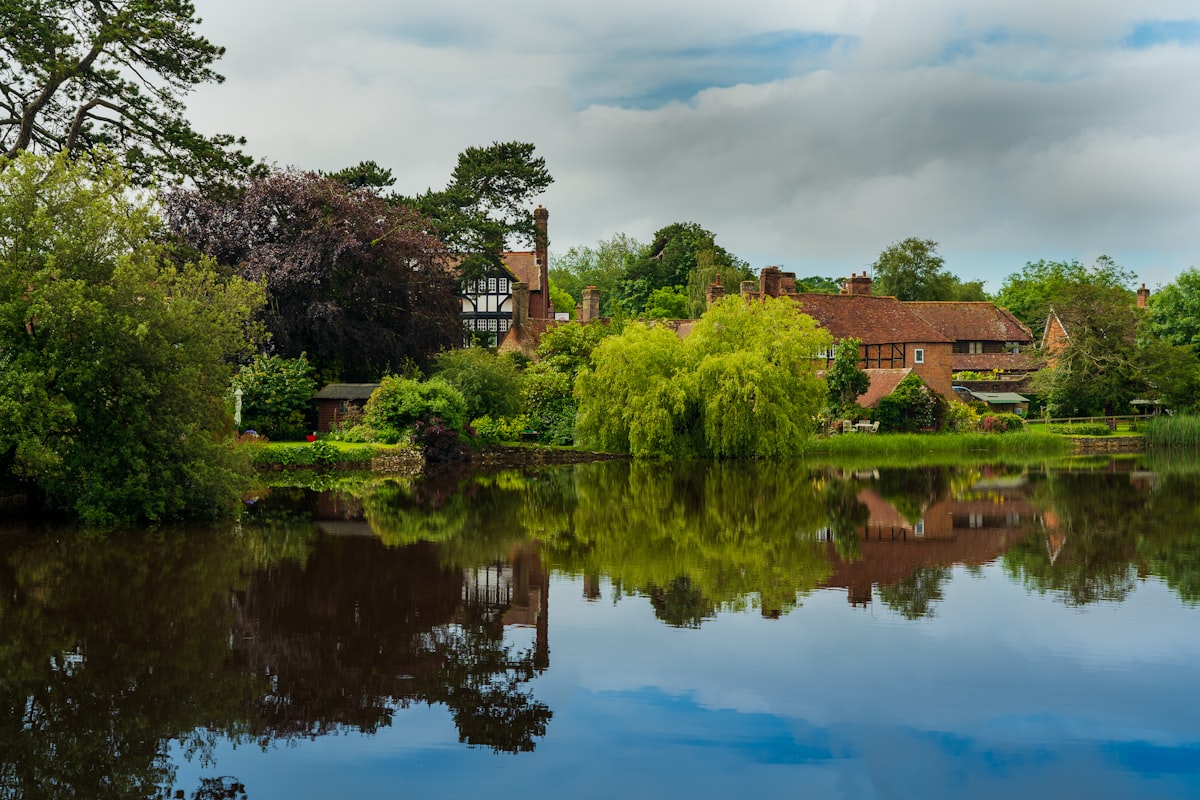
Daylight requirements in Hart matter for a wide range of residential proposals across this sought-after Hampshire district, from rear and side extensions in Fleet and Yateley to new homes at sites such as Hartland Village. Hart District Council expects development to protect the daylight, sunlight, privacy and amenity of neighbouring homes, and it has published a clear technical advice note explaining exactly how it tests these impacts. This guide sets out the adopted policy framework, Hart's 45 and 25 degree guidelines, and how a professional assessment supports a strong application.
Daylight requirements in Hart: the policy framework
Hart District Council is the local planning authority for the district. Hampshire County Council is the upper-tier authority but is not the planning authority for householder and most residential applications, so it is Hart's own adopted plan and guidance that govern daylight and sunlight matters.
The adopted development plan is the Hart Local Plan (Strategy and Sites) 2032, adopted in April 2020, covering the period to 2032. It replaced the bulk of the older saved policies and is the principal document against which applications are now assessed.
Policy NBE9: Design
Policy NBE9 (Design) requires that all developments should seek to achieve a high quality design and positively contribute to the overall appearance of the local area. It supports development that promotes, reflects and incorporates the distinctive qualities of its surroundings in terms of the proposed scale, density, mass and height of development. The relationship of a new building or extension to its neighbours - including the scale and massing that drive overshadowing and loss of light - is assessed under this policy. NBE9 also expects proposals to take account of relevant local supplementary guidance.
Policy NBE11: Pollution and amenity
Policy NBE11 (Pollution) requires development to protect and, where possible, improve upon the amenity of existing and future residents and building occupants. The plan explains that development should not cause unacceptable harm to the health, well-being and quality of life of individuals and communities. Loss of daylight and sunlight, overshadowing and loss of privacy are weighed within this amenity test alongside NBE9.
Hart's Privacy, Daylight and Sunlight technical advice note
Hart is unusually explicit about its method. The council publishes a dedicated Planning Technical Advice Note: Privacy, Daylight and Sunlight - The 45 and 25 Degree Guideline, which explains how the impact of a development on privacy, daylight and sunlight will be assessed, including for extensions to existing homes. The key elements are:
- The 45 degree guideline (in plan). For a main window to a habitable room in a rear or front elevation, development will not normally be allowed to intrude over a line drawn at an angle of 45 degrees in the horizontal plane from the midpoint of the nearest window.
- The 25 degree guideline (in section). From that same window, a line is also taken rising at an angle of 25 degrees in the vertical plane from the cill; development intruding above this line is likely to harm daylight. Where a main habitable-room window is in a side elevation, the 45 degree line is applied in the vertical plane from the cill.
- What counts as a habitable room. The note defines habitable rooms to include kitchens as well as living rooms, dining rooms, studies, bedrooms and playrooms, and treats patio doors and glazed French doors as windows for the purpose of the guidelines.
- Context matters. The note stresses that many factors affect adequate daylight and sunlight - the amount of visible sky, the function of the room or garden, whether other windows serve the room, and existing features such as boundary walls, trees and changes in ground level between sites.
Because these guidelines are framed as a first test rather than an absolute, borderline schemes are often best supported by a fuller technical assessment that goes beyond the simple geometry.
How national and technical standards apply in Hart
For larger residential schemes, or where the 45 and 25 degree lines do not fully resolve a case, daylight and sunlight are assessed using the recognised national methodology, applied through Hart's adopted policies:
- BRE BR 209, Site Layout Planning for Daylight and Sunlight: A Guide to Good Practice (2022, third edition) - covering daylight to existing windows (vertical sky component and daylight distribution), sunlight (annual probable sunlight hours) and overshadowing to gardens and amenity space. The numeric criteria behind the 25 degree rule of thumb are part of this guidance.
- BS EN 17037 Daylight in buildings - used to assess daylight provision within new dwellings.
- The National Planning Policy Framework (NPPF) - which promotes well-designed places and efficient use of land, applied locally through Policies NBE9 and NBE11.
Hart does not set its own numerical BRE-style targets; the BRE guide and BS EN 17037 are applied via the amenity and design tests in the Local Plan, supported by the council's technical advice note.
Local considerations across Hart
- Low-density, leafy character. Hart is one of the most desirable rural districts in the country, with spacious plots and mature landscaping in towns such as Fleet, Yateley, Hook and Odiham. The council's 45 and 25 degree guidelines, together with the relationship of trees and boundary features to windows, are frequently decisive when neighbours are well separated but extensions are sizeable.
- The Thames Basin Heaths Special Protection Area. Large parts of the north and east of the district fall within the Thames Basin Heaths SPA, which heavily influences where and how new housing comes forward - including higher-density allocated sites where good internal daylight and sunlight to gardens become important design considerations.
For a comparison with neighbouring Hampshire authorities, see our guides to daylight requirements in East Hampshire and daylight requirements in Havant.
How Fortress Associates can help
Fortress Associates prepares our daylight and sunlight report service to BRE BR 209 (2022) and BS EN 17037, addressing the design and amenity tests in Hart Local Plan Policies NBE9 and NBE11 and the council's 45 and 25 degree technical advice note. We work UK-wide with a 4 to 5 working day turnaround and no advance payment required. We also provide Building Regulations drawings. To discuss a Hart scheme, contact our team.
Sources & further reading
Need help with a UK planning project?
Fixed-fee daylight reports and Building Regulations drawings — delivered in 4–5 working days. No advance payment.
Request a free quote