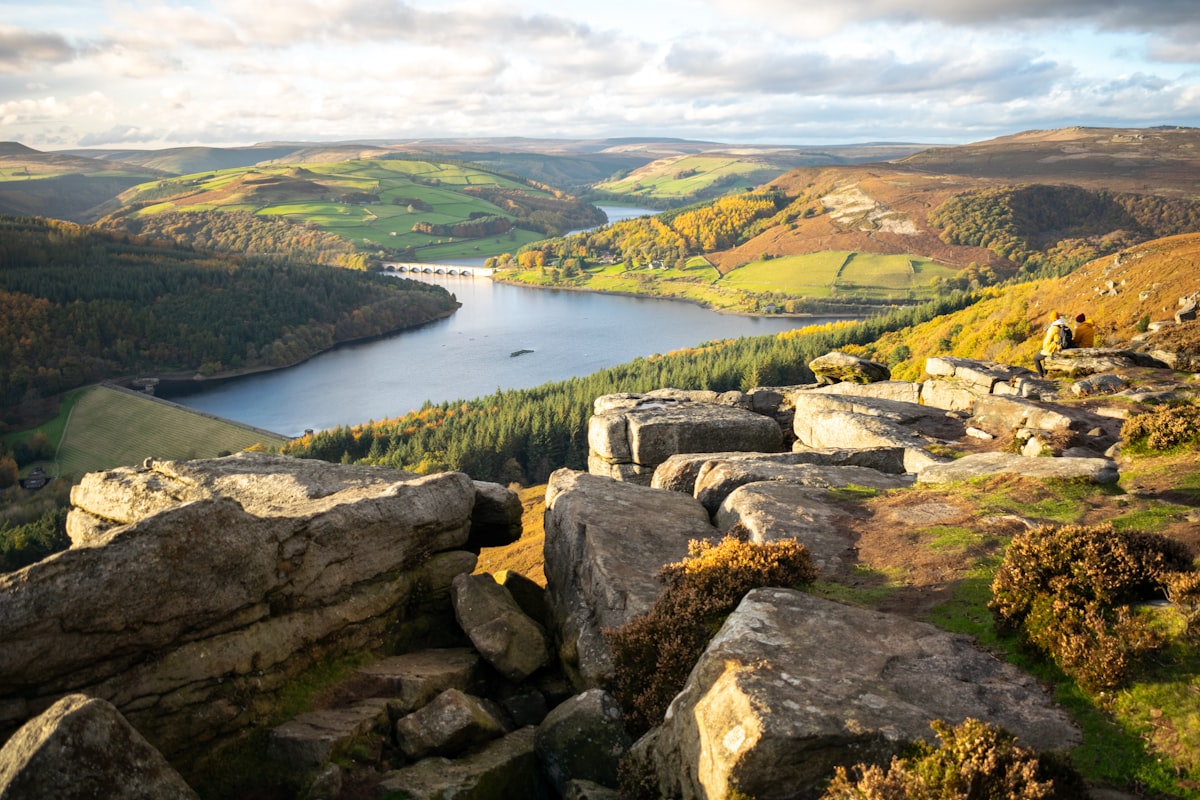
If you are planning an extension in Buxton, an infill home in Glossop or a new dwelling in New Mills, the way the council treats natural light will shape what you can build. The daylight requirements in High Peak are not a single numerical code; they flow from the borough's adopted Local Plan and its design guidance, applied with recognised national technical standards. This article explains who decides planning here, which policies apply, and how daylight, sunlight and overshadowing are actually assessed — including the important point about the Peak District National Park.
Who decides planning in High Peak (and who does not)
High Peak is a shire district in Derbyshire, and for most development the local planning authority is High Peak Borough Council, with offices split between Buxton Town Hall and the Municipal Buildings in Glossop. Derbyshire County Council is not the planning authority for housing and householder applications — it deals with minerals, waste, education and highways.
There is a second, crucial distinction here that does not arise in most districts. Large parts of the High Peak lie within the Peak District National Park, and within that boundary the statutory planning authority is the Peak District National Park Authority, not High Peak Borough Council. The two are entirely separate bodies, each with its own development plan, although the borough appoints councillors to the National Park Authority. Before applying, you must establish which authority your site falls under: the towns of Buxton, Glossop and New Mills sit largely outside the Park and are dealt with by the borough council, while many surrounding villages and open areas are within the Park and follow its policies and its own daylight and design approach. This article concerns the area administered by High Peak Borough Council.
The adopted Local Plan and residential amenity
The statutory plan for the borough is the High Peak Local Plan, adopted in April 2016. The key policy for daylight and overshadowing questions is Policy EQ6, ‘Design and Place Making’, which sets the borough's standards for good design and the protection of amenity. Among other things, EQ6 requires development to preserve the residential amenity of neighbouring properties — the test officers reach for when judging whether an extension or new dwelling would unacceptably overshadow a neighbour's windows or garden, or cause harmful overlooking. Officer reports across the borough routinely apply EQ6 to refuse or condition schemes that would harm residential amenity through loss of light or overbearing impact. The borough is also progressing a new development plan (the emerging Borough Plan / Local Plan review), but until that is adopted the 2016 Local Plan remains the framework against which daylight is assessed.
High Peak's daylight guidance: design SPDs and the BRE method
High Peak supports Policy EQ6 with a suite of design guidance. The most directly relevant documents are:
- The Adopted Residential Design SPD (December 2005), which addresses housing design and layout, including how new development should relate to neighbours.
- The High Peak Design Guide SPD, the borough's overarching design-quality reference, which aligns with the design objectives of the National Planning Policy Framework.
- Place-specific guidance including the Buxton Design and Place Making Strategy and the Glossop Design and Place Making Strategy, plus the Landscape Character SPD (2006).
These documents set qualitative expectations on scale, layout, separation and amenity rather than a bespoke numerical daylight formula. To decide whether an overshadowing or loss-of-light effect is ‘significant’ under EQ6, the council — like authorities across England — relies on the established national methodology in BRE BR 209 (2022), ‘Site layout planning for daylight and sunlight: a guide to good practice’, supported by the daylight standard BS EN 17037. These benchmarks are read into local decisions through the amenity tests in the Local Plan and through the design and amenity expectations of the NPPF.
The headline BRE measures you are likely to encounter are:
- Vertical Sky Component (VSC) — daylight at a neighbouring window, with a benchmark of at least 27% retained, or no more than a 20% relative reduction.
- No Sky Line / daylight distribution within affected rooms.
- Annual Probable Sunlight Hours (APSH) for windows facing within 90 degrees of due south.
- Overshadowing of gardens and amenity space, tested on the equinox.
Why the High Peak landscape matters
High Peak is one of the most dramatically topographical districts in England, and that has real consequences for daylight assessment:
- Steep slopes and changes in level. Towns such as Glossop and New Mills are built across hillsides, so a new building uphill of an existing home can have a far greater overshadowing and overbearing effect than the same building on flat ground — and the existing levels must be modelled carefully in any BRE assessment. Conversely, downhill positions can sometimes mitigate impacts. Cross-sections and accurate ground-level surveys are often decisive in High Peak applications.
- Buxton's historic and constrained townscape. Buxton is a Georgian and Victorian spa town with tightly grouped buildings, conservation areas and a strong townscape character. Here the design and heritage expectations of EQ6, the High Peak Design Guide and the Buxton Design and Place Making Strategy weigh heavily alongside the daylight tests, and the dedicated Water in Buxton SPD reflects the town's special characteristics.
Validating your application
A standalone daylight and sunlight report is not required for every householder scheme, but where a proposal sits close to a boundary, rises above its single-storey neighbours, or is on a sloping plot where overshadowing is likely, a BRE-based assessment is the clearest way to demonstrate compliance with Policy EQ6 and the residential design guidance — and to pre-empt neighbour objections. Always confirm first whether your site is within the National Park, as that changes which authority and which policies apply.
How Fortress Associates can help
Fortress Associates prepares daylight and sunlight assessments for proposals throughout High Peak and across the UK. Our our daylight and sunlight report service tests your scheme against BRE BR 209 (2022) and BS EN 17037, models the sloping levels that are so common in this district accurately, and frames the results around Policy EQ6 and the borough's design guidance for your planning statement. We work UK-wide with a 4 to 5 working day turnaround and no advance payment, and we also produce Building Regulations drawings to Approved Documents A to S. To discuss a High Peak scheme, please get in touch.
Sources & further reading
Need help with a UK planning project?
Fixed-fee daylight reports and Building Regulations drawings — delivered in 4–5 working days. No advance payment.
Request a free quote