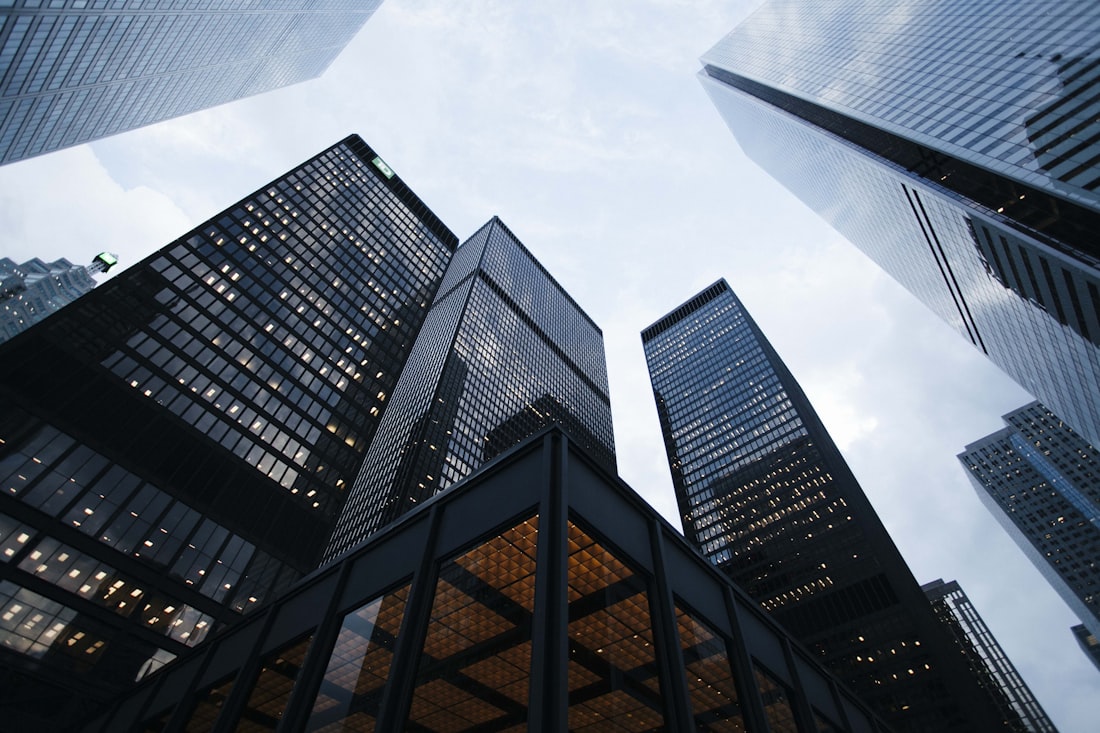
Lambeth is a borough of dramatic contrasts - from the cultural and office quarter around Waterloo and the South Bank to the dense Victorian terrace neighbourhoods of Brixton, Stockwell, and Clapham, and on to the rapidly transforming riverside corridor of Vauxhall, Nine Elms, and Battersea. Nowhere is the tension between high-density regeneration and established residential amenity more apparent than in the Nine Elms Opportunity Area, where a cluster of tall residential towers is reshaping the skyline and raising significant questions about daylight and sunlight impacts on surrounding lower-rise housing. Understanding Lambeth's approach to daylight reports is essential for anyone bringing forward a planning application in the borough.
This guide sets out the planning context, the daylight and sunlight policy framework, and the circumstances in which a formal daylight report will be required for planning applications in Lambeth.
Planning context in Lambeth
Lambeth spans a broad arc of inner south London from Waterloo in the north to Streatham in the south. The northern part of the borough - including the South Bank, Waterloo, and Vauxhall - is characterised by high-density commercial, cultural, and increasingly residential development. The Vauxhall Nine Elms Battersea (VNEB) Opportunity Area, which straddles the boundary between Lambeth and Wandsworth, is one of the largest regeneration zones in London. Nine Elms in particular has seen the delivery of numerous tall residential towers, creating one of the most significant new tall building clusters outside central London and placing Lambeth at the forefront of complex daylight impact assessments.
To the south, the picture changes entirely. Brixton, Stockwell, Clapham, and Streatham contain some of the most extensive areas of Victorian and Edwardian terrace housing in south London. The tight urban grain, narrow rear gardens, and closely-spaced rear windows that characterise these neighbourhoods mean that even householder-scale extensions can have meaningful impacts on the daylight enjoyed by neighbouring residents. Brixton town centre and its conservation area add a further layer of planning sensitivity, requiring that development respects the historic character and scale of the surroundings.
Lambeth's Local Plan and the Lambeth Design Guide SPD (adopted 2023) set the framework for assessing development across the borough. The Design Guide provides detailed guidance on the design of buildings and their relationship to neighbouring properties, including expectations around daylight, sunlight, and the protection of residential amenity. Lambeth has a well-established track record of commissioning and scrutinising daylight assessments as part of its development management function.
Daylight and sunlight policy in Lambeth
Lambeth Council applies BRE BR 209 (2022) - Site Layout Planning for Daylight and Sunlight: A Guide to Good Practice - as the principal technical benchmark for daylight and sunlight assessments. The council is known for applying the BRE targets rigorously and expects that assessments submitted with planning applications clearly demonstrate vertical sky component (VSC), no-sky line (NSL), and annual probable sunlight hours (APSH) outcomes for both proposed and affected existing properties. Reports should be prepared by qualified professionals with relevant expertise.
The VNEB Opportunity Area presents the most challenging daylight assessment context in the borough. The cluster of tall towers at Nine Elms casts shadows across a wide area, including existing residential streets in Battersea and Lambeth. Lambeth's approach, consistent with London Plan guidance, recognises that BRE targets should be applied with flexibility in dense urban and opportunity area settings, but the council expects comprehensive cumulative impact assessments that account for consented as well as existing development in the baseline. Applicants for tall buildings in or near Nine Elms should expect detailed scrutiny of their daylight methodology and assumptions.
For householder and smaller development applications, Lambeth expects compliance with BRE targets to be demonstrated wherever there is potential for impact on neighbouring residential windows. The Lambeth Design Guide SPD reinforces the importance of protecting residential amenity and makes clear that design solutions should seek to minimise daylight impacts as part of the iterative design process. Applications within the Brixton conservation area and other designated heritage areas will be assessed with additional sensitivity given the importance of natural light in historic townscapes.
When is a daylight report required in Lambeth?
In Lambeth, a daylight and sunlight assessment is typically required in the following circumstances:
- Major residential or mixed-use development, particularly in the VNEB Opportunity Area and other tall building zones
- New buildings or extensions where the height or massing could overshadow neighbouring habitable room windows
- Rear extensions to Victorian or Edwardian terrace houses in Brixton, Stockwell, Clapham, or Streatham where the proposed structure would be close to a neighbouring window
- Loft conversions with dormers or raised ridge lines where adjacent properties may be affected
- Residential conversions, including office-to-residential and house-to-flat conversions, where internal daylight to proposed rooms requires assessment
- HMO applications where the daylight performance of proposed habitable rooms is a planning consideration
- Applications within or adjoining conservation areas, including the Brixton, Clapham, and Stockwell conservation areas
- Development adjacent to the South Bank or Waterloo where cumulative impacts on mixed-use development need assessment
Lambeth's local validation checklist sets out the information required with planning applications, including when a daylight and sunlight assessment must be provided. Applicants should consult the checklist at the earliest stage of pre-application preparation.
Common daylight challenges in Lambeth
The most complex daylight challenges in Lambeth arise from the interaction between the tall building clusters at Nine Elms and Vauxhall and the existing residential streets to their south and east. The affected properties are often Victorian terrace houses or early twentieth-century mansion blocks whose residents already live at high urban densities. Demonstrating that additional tall development will not cause unacceptable further daylight reductions requires careful baseline measurement and sophisticated cumulative assessment, particularly where multiple consented schemes have not yet been built out.
In the lower-density residential areas of Brixton, Streatham, and Clapham, the most common challenge is the rear extension on a Victorian terrace. Ground-floor rear rooms in this housing typology frequently receive limited daylight even before any proposed development. The combination of narrow rear gardens, low window cill heights, and closely-spaced back-of-house boundaries means that a relatively modest rear extension to a neighbouring property can breach BRE targets for the affected rooms. Applicants should commission an early daylight assessment to inform scheme design rather than treating the report as a post-design validation exercise.
Office-to-residential conversions in the Waterloo, Brixton, and Clapham areas also present significant internal daylight challenges. Commercial buildings are often designed with deep floor plans and windows sized for workspace rather than residential use. Demonstrating that proposed residential rooms will achieve adequate daylight - particularly BRE target VSC values and adequate natural light distribution - can require fundamental redesign of the floor plan and window strategy.
How Fortress Associates can help
At Fortress Associates, we prepare daylight and sunlight reports for planning applications in Lambeth and across the UK. Our assessments comply with BRE BR 209 (2022) and include VSC, NSL, and APSH calculations. Reports are delivered within four to five working days with no advance payment required. Contact us to discuss your project, or visit our services page for more information.
Sources & further reading
Need help with a UK planning project?
Fixed-fee daylight reports and Building Regulations drawings — delivered in 4–5 working days. No advance payment.
Request a free quote