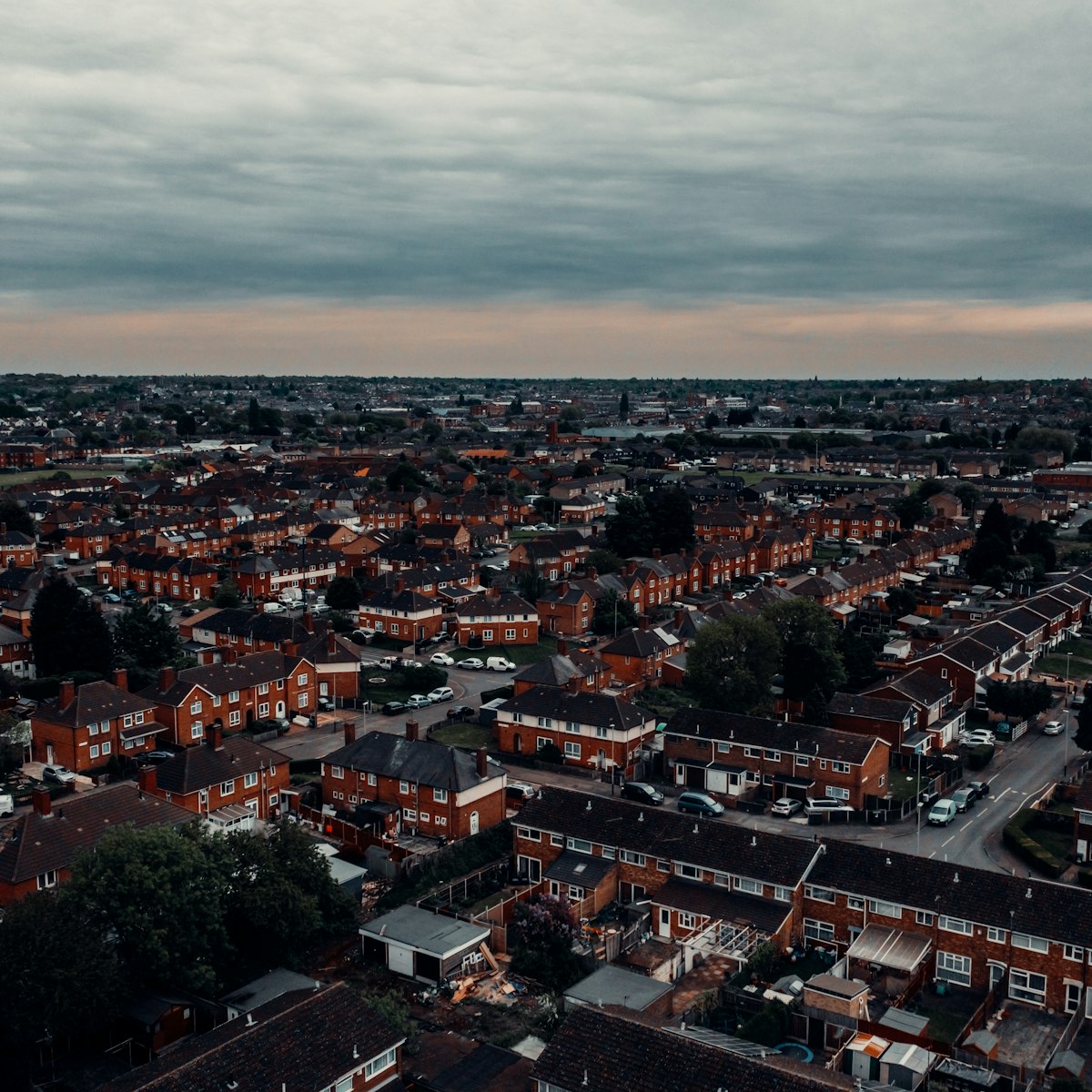
If you are extending a home, converting a building into flats, or building new homes in the city, understanding the daylight requirements in Leicester is an important early step. Leicester City Council assesses how new development affects the daylight, sunlight and outlook of neighbouring properties, and the city has unusually detailed adopted guidance on the subject. This guide explains the Leicester planning framework, the council's specific daylight and sunlight standards, and how a professional assessment can help your application run smoothly.
The planning framework for daylight in Leicester
Leicester is a unitary authority, so Leicester City Council is the local planning authority for the whole city. Planning applications are determined against the development plan and supporting guidance. The council's new Leicester Local Plan 2020 to 2036 was adopted at Full Council on 26 March 2026, following examination by the Planning Inspectorate. It sits alongside long-standing development management principles that the council has applied through its adopted supplementary guidance.
Whichever policy your proposal is assessed against, the underlying tests on residential amenity are consistent. They require new development to avoid an unacceptable loss of daylight, sunlight, outlook and privacy to existing homes, and to provide a good standard of amenity for future occupiers. These amenity tests have historically been expressed in Leicester through policies such as PS10 (Residential amenity and new development), which asks the council to weigh privacy and overshadowing, and H15 (House extensions), which resists extensions that cause an unacceptable loss of outlook, light or amenity to neighbouring homes. Design quality and the efficient use of natural light are also addressed through urban design policies such as UD01 (High quality building design and local context) and UD04 (Energy efficiency), the latter specifically referencing the efficient use of natural light through siting, form, orientation and layout.
Leicester's policies are read alongside the National Planning Policy Framework (NPPF), which expects development to secure a high standard of amenity for existing and future users.
Leicester's daylight and sunlight guidance: the Residential Amenity SPD
Unlike many authorities, Leicester has its own adopted supplementary planning document dealing directly with the issue. The Residential Amenity Supplementary Planning Document (adopted February 2008) sets out detailed, practical guidance and identifies seven guiding principles, one of which is daylight/sunlight. It remains a key reference for how the council assesses amenity impacts. The SPD makes a particularly useful and unambiguous statement on assessment:
"Sun path diagrams should be submitted with planning applications if there is potential impact to the daylight/sunlight of adjoining properties."
The SPD also sets out clear numerical standards that are specific to Leicester:
- The 45-degree rules for rear extensions. A single-storey rear extension deeper than 3 metres, on or close to a boundary, should not project beyond a line taken at 45 degrees from the centre of the ground-floor window of any principal room in an adjoining property. A two-storey rear extension on or close to the boundary should not go beyond a 45-degree line taken from the nearest point of that window. These rules are designed to prevent undue loss of daylight, avoid excessive overshadowing of gardens, and preserve a reasonable standard of outlook.
- Separation distances to protect privacy and outlook. Where a principal-room window faces a similar window on a neighbouring property, the distance between them should not be less than 21 metres. Where direct overlooking is avoided by window positioning, a minimum of 18 metres may be acceptable. A wall with no windows facing a window to a principal room should be at least 15 metres away, and there should be at least 11 metres to a boundary with undeveloped land or gardens.
- Building-height-to-street-width ratios. The SPD applies different enclosure ratios across the city's three density areas: 1:1 in the central area, 1:1.5 in the inner urban areas, and 1:3 in the outer area. These help safeguard outlook between principal windows.
Importantly, the SPD stresses that sunlight should be considered even where an extension complies with the 45-degree rule, because the actual effect depends on orientation, layout and changes in level, and that each case will be considered on its own merits. Where standard plans cannot fully resolve a daylight or sunlight issue, the technical assessment in England follows the methodology in BRE BR 209 (2022), "Site layout planning for daylight and sunlight: a guide to good practice", supported by the daylight recommendations in BS EN 17037. A BRE assessment typically uses measures such as the Vertical Sky Component (VSC) for skylight to windows, daylight distribution within rooms, Annual Probable Sunlight Hours (APSH) for sunlight, and the recommendation that at least half of a garden or amenity area should receive sunlight on 21 March.
Local factors that affect daylight in Leicester
Several features of Leicester make daylight, sunlight and overshadowing recurring issues:
- A compact, historic city centre. Around landmarks such as the Clock Tower, the central area has buildings of typically four to six storeys and a tight urban grain. The Residential Amenity SPD notes that higher-density city-centre schemes need careful consideration of the overall impact on the immediate environment and the loss of daylight and sunlight to existing buildings, and recommends placing taller elements towards the north of a site to avoid blocking sun and causing undue shadowing.
- Conservation areas and listed buildings. Leicester has many conservation areas and several hundred listed buildings, where extensions and infill are assessed not only for amenity but also for their effect on heritage character, often with permitted development rights restricted by Article 4 directions.
- Student and city-living demand. With two universities, Leicester sees significant pressure for flats, conversions and purpose-built accommodation, where balancing daylight, sunlight and overshadowing against higher densities is a central planning judgement.
Because the council assesses each scheme on its merits, and because the SPD expressly calls for sun path diagrams where neighbours may be affected, early engagement and a robust daylight and sunlight assessment can make a real difference. If your project is elsewhere, our companion guide to daylight requirements in Kingston upon Hull shows how another unitary authority handles the same questions.
How Fortress Associates can help
Fortress Associates produces clear, policy-compliant daylight and sunlight reports to BRE BR 209 (2022), BS EN 17037 and the relevant Local Plan, ready to submit with your Leicester City Council application, including the sun path diagrams the Residential Amenity SPD calls for. We work nationwide with a typical turnaround of four to five working days and no advance payment. We also prepare Building Regulations drawings to the Approved Documents where your project requires them. To discuss a property in Leicester, get in touch with our team.
Sources & further reading
Need help with a UK planning project?
Fixed-fee daylight reports and Building Regulations drawings — delivered in 4–5 working days. No advance payment.
Request a free quote