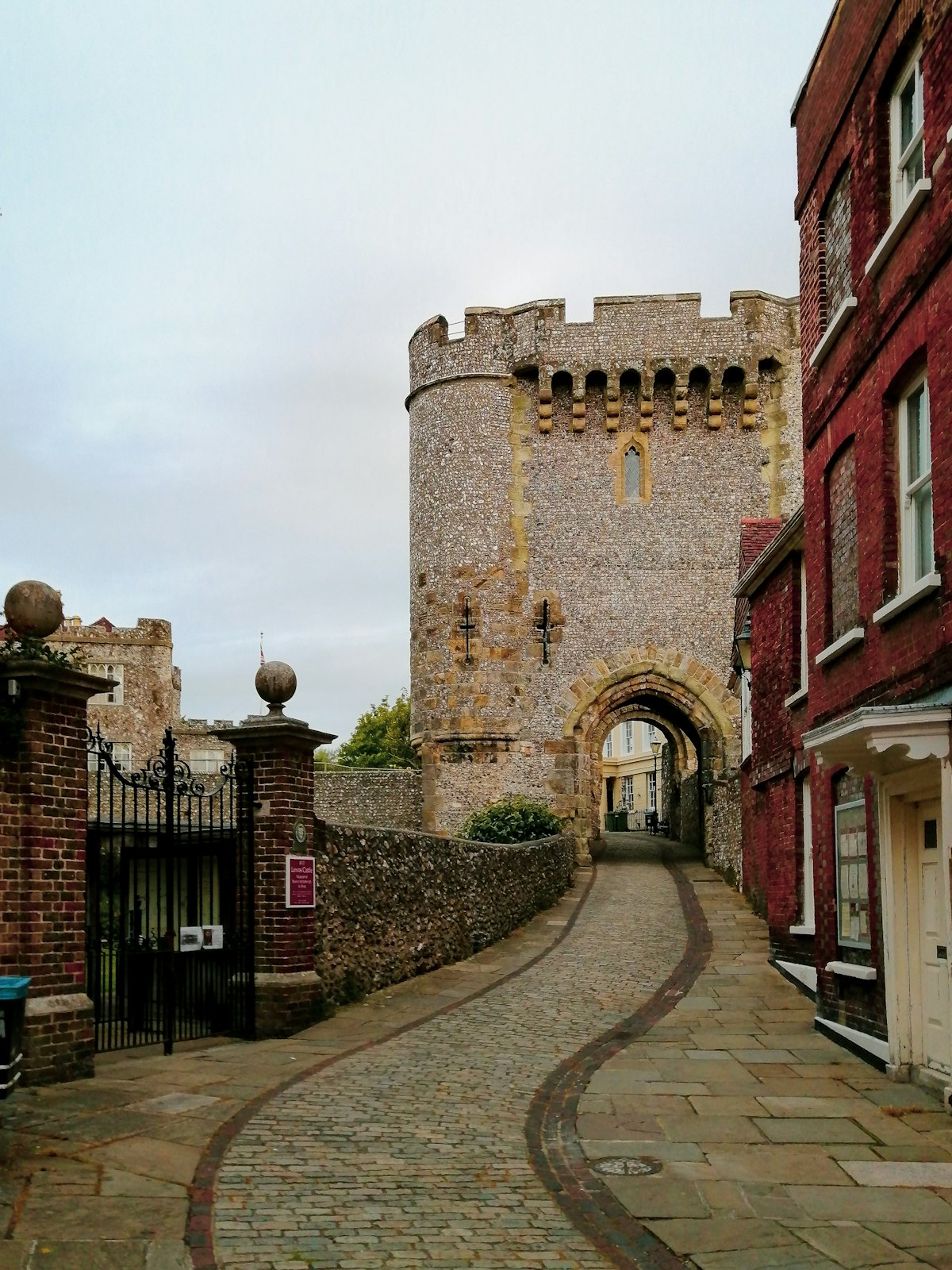
Understanding the daylight requirements in Lewes matters more than in many districts, because Lewes is one of the few East Sussex authorities whose adopted Local Plan sets out an explicit daylight test for extensions. From the steep, historic streets of Lewes town to the coastal communities of Newhaven, Peacehaven and Seaford, the way a development affects daylight and sunlight — to neighbours and to its own occupiers — is a defined planning consideration with measurable criteria. This article explains how the system works and how a professional assessment can support your scheme.
The planning framework: who decides in Lewes
Planning jurisdiction in the Lewes District area is split, and getting this right at the outset is essential:
- Lewes District Council is the local planning authority (LPA) for the parts of the district outside the South Downs National Park — which includes much of the coastal strip such as Newhaven, Peacehaven and Telscombe.
- The South Downs National Park Authority (SDNPA) is the LPA for the parts of the district inside the National Park — which includes Lewes town itself, as well as places such as Kingston near Lewes and Ditchling.
East Sussex County Council is not the LPA for ordinary householder and residential development; its planning role is limited to matters such as minerals, waste and county council development. Because Lewes town sits within the National Park, many applications there are determined by the SDNPA under the South Downs Local Plan, while sites on the coast fall to Lewes District Council. Always confirm which authority and which plan applies to your site before you begin.
The Lewes development plan and its daylight policies
For the area administered by Lewes District Council, the statutory development plan comprises:
- the Lewes District Local Plan Part 1: Joint Core Strategy, adopted on 11 May 2016 (prepared jointly with the South Downs National Park Authority for the district); and
- the Lewes District Local Plan Part 2: Site Allocations and Development Management Policies, adopted on 24 February 2020.
Unusually, Lewes District Local Plan Part 2 contains policies that address daylight and sunlight in explicit terms. The two most directly relevant are:
Policy DM25 (Design)
Policy DM25 sets the overarching expectation that development is of high design quality and respects the character and amenity of its surroundings, requiring that there is no unacceptable adverse impact on the amenities of neighbouring properties in terms of privacy, outlook, daylight, sunlight and related matters. This is the principal policy hook for daylight and sunlight on new-build and infill schemes.
Policy DM28 (Residential Extensions)
For extensions, Policy DM28 goes further and sets a specific, measurable daylight test. It requires that:
extensions would not result in unacceptable overlooking of, or loss of daylight to, the nearest habitable rooms or private amenity space of neighbouring dwellings. They should normally be restricted to within a line drawn from the mid-point of the nearest ground floor window of a habitable room of the neighbouring property. The line should be projected 60° for single storey extensions and 45° for two storey extensions.
This “45/60 degree rule” gives applicants and officers a clear, repeatable benchmark. Where a proposal breaches that line, a more detailed daylight and sunlight assessment is the proper way to demonstrate whether the actual impact is acceptable.
Validation and the role of the national standards
Lewes District Council publishes validation lists (including a householder checklist) setting out the information required to register a valid application alongside the national requirements. A daylight and sunlight report is not demanded on every application, but where a scheme breaches the DM28 line, affects neighbouring windows, or involves backland or flatted development, officers can require one.
Although DM28 provides the local angular test, the detailed, quantified assessment of daylight and sunlight is carried out against the recognised national technical guidance, which applies through the Lewes Local Plan policies:
- BRE BR 209 (2022) — Site Layout Planning for Daylight and Sunlight: A Guide to Good Practice, covering the Vertical Sky Component (VSC), No Sky Line / daylight distribution, and Annual Probable Sunlight Hours (APSH);
- BS EN 17037 — the British and European standard on daylight provision within buildings; and
- the National Planning Policy Framework (NPPF), which requires a high standard of amenity for existing and future occupiers.
A robust report measures the scheme against BR 209 and BS EN 17037 and then relates the findings back to Policies DM25 and DM28, giving the case officer a clear evidence base.
Local factors that affect daylight in Lewes
- Steep topography and historic grain. Lewes town climbs the chalk slopes of the Ouse valley, with tightly packed terraces, twittens (narrow alleys) and listed buildings clustered around the castle. On sloping sites, a relatively modest extension can have a disproportionate effect on a downhill neighbour's daylight, making the DM28 angular test and a BRE assessment especially important.
- Coastal regeneration. Newhaven, Peacehaven and the wider coastal strip are areas of change and higher-density development, where the daylight and sunlight effects on surrounding homes — and the internal daylight of new flats — are routinely examined. Demonstrating compliance with BR 209 and BS EN 17037 early helps avoid redesign and refusal.
How Fortress Associates can help
Fortress Associates provides our daylight and sunlight report service for homeowners, architects and developers in Lewes and across the UK. Our reports assess your scheme against BRE BR 209 (2022) and BS EN 17037 and relate the results directly to Lewes Local Plan Policies DM25 and DM28 (and the South Downs Local Plan where the National Park applies), so your application arrives with the evidence officers expect. We work nationwide with a 4–5 working day turnaround and require no advance payment. We can also prepare Building Regulations drawings for your project. To discuss your site, get in touch with our team.
Sources & further reading
Need help with a UK planning project?
Fixed-fee daylight reports and Building Regulations drawings — delivered in 4–5 working days. No advance payment.
Request a free quote