Whether you are extending a home in the cathedral city, building on an infill plot in Burntwood, or bringing forward a larger residential scheme in one of the district's villages, understanding daylight requirements in Lichfield is an important early step. Lichfield District Council, as the local planning authority (the LPA), assesses how a proposal affects the daylight and sunlight enjoyed by neighbouring homes and gardens, and the levels of natural light reaching any new accommodation. This guide explains the local policy position, the technical standards that apply, and how a well-prepared daylight and sunlight report can help your application succeed.
For planning purposes Lichfield is a shire district: the District Council determines householder and residential applications, while Staffordshire County Council handles separate matters such as minerals, waste and highways. The relevant planning policies therefore come from the District, not the County.
Daylight requirements in Lichfield: the policy framework
The statutory development plan is the Lichfield District Local Plan Strategy 2008-2029, adopted by the Council on 17 February 2015. It sets out the strategy for growth across the district, including the cathedral city of Lichfield and the town of Burntwood, and remains the plan against which applications are decided. The Council is also progressing a new Local Plan 2040, which has been through examination by the Planning Inspectorate; until it is formally adopted, the 2015 strategy continues to apply.
Two policies are particularly relevant to daylight and sunlight:
- Policy BE1 – High Quality Development. This policy seeks to ensure, among other things, that development protects the amenity of residents. In practice, protecting amenity means avoiding unacceptable loss of daylight, sunlight, outlook and privacy to neighbouring homes — the core questions a daylight and sunlight assessment answers.
- Core Policy 14 – Our Built & Historic Environment. This policy requires development to protect and enhance the character and distinctiveness of the district and to respect the character of the surrounding area. Design decisions about height, massing and roof form, which flow from this policy, directly determine a scheme's daylight and sunlight impact on neighbours.
These policies are routinely cited together by case officers when weighing the design quality and neighbour impact of residential proposals.
The Lichfield District Design Code SPD
Lichfield District has invested heavily in design guidance. The Lichfield District Design Code Supplementary Planning Document (SPD) was adopted in December 2024 and is one of the first district-wide design codes in the country. It identifies a series of area types — including the city centre, cathedral precinct, suburban, village, urban and employment areas — and sets out how new development should look and relate to its surroundings in each.
Alongside the Design Code, the Council's earlier design and residential guidance, including its Sustainable Design SPD, continues to inform decisions. These documents address how buildings relate to one another, which in turn governs overlooking, overshadowing and outlook. They do not, however, set out the detailed numerical daylight and sunlight tests; for those, the recognised national technical benchmarks are applied through the Local Plan's amenity requirements under Policy BE1.
Which technical standards apply?
Where the Local Plan and design guidance require amenity to be protected, the technical assessment is carried out against nationally recognised guidance:
- BRE BR 209 (2022) — Site Layout Planning for Daylight and Sunlight: A Guide to Good Practice. This is the standard reference for assessing impact on neighbours, using tests such as the Vertical Sky Component (VSC), the No Sky Line / daylight distribution within rooms, and the Annual and Winter Probable Sunlight Hours (APSH).
- BS EN 17037 — Daylight in Buildings, used to assess the daylight provided to new dwellings.
- The National Planning Policy Framework (NPPF), which requires good design and a high standard of amenity for existing and future occupiers, applied locally through the adopted Local Plan.
The 45-degree guideline is a helpful early check on whether an extension is likely to harm a neighbour's daylight; where the position is borderline or disputed, a formal BRE BR 209 assessment supplies the objective evidence the Council needs.
When is a daylight and sunlight assessment needed?
Many straightforward householder applications in Lichfield need only limited information. A daylight and sunlight assessment becomes important when:
- an extension is close to a boundary with neighbouring habitable rooms;
- a two-storey or taller addition could overshadow an adjoining garden or windows;
- an apartment, infill or backland scheme is proposed on a constrained plot; or
- a neighbour has objected on grounds of loss of light, and objective evidence is required.
Local context that shapes daylight assessments
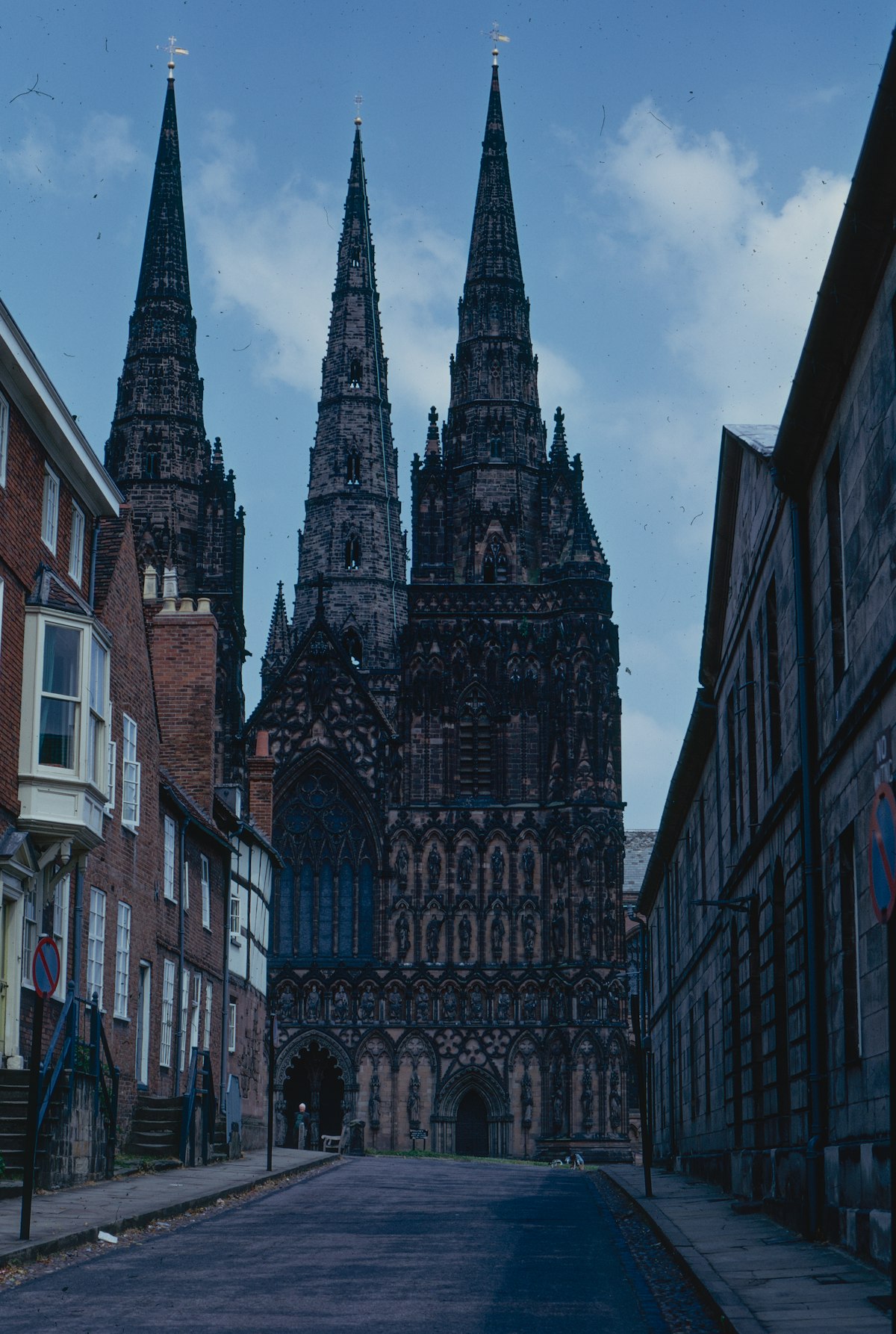
Two features of Lichfield make local knowledge valuable. First, the district is defined by the historic Lichfield Cathedral, the only medieval cathedral in England with three spires, and by the sensitive cathedral-precinct and conservation-area townscape around it. Schemes within these settings must reconcile light, amenity and heritage character together, exactly the balance the Design Code's area-based approach is built to handle. Second, the district pairs the compact cathedral city with the more suburban character of Burntwood and a network of villages, so the right daylight and sunlight approach varies markedly with the local context and the area type identified in the Design Code.
Considering daylight and sunlight early helps avoid redesign, refusal or delay, and demonstrates to officers and neighbours that the impact on light has been assessed objectively against the relevant standards.
How Fortress Associates can help
Fortress Associates prepares our daylight and sunlight report service to BRE BR 209 (2022) and BS EN 17037, written with the Lichfield District Local Plan Strategy and District Design Code SPD in mind. We work nationwide with a 4 to 5 working day turnaround and ask for no advance payment. We also produce Building Regulations drawings to support your project. To discuss a Lichfield or Burntwood scheme, see our services or contact us via our contact page. You may also like our companion guides on daylight requirements in Tamworth and daylight requirements in West Oxfordshire.
Sources & further reading
Need help with a UK planning project?
Fixed-fee daylight reports and Building Regulations drawings — delivered in 4–5 working days. No advance payment.
Request a free quote