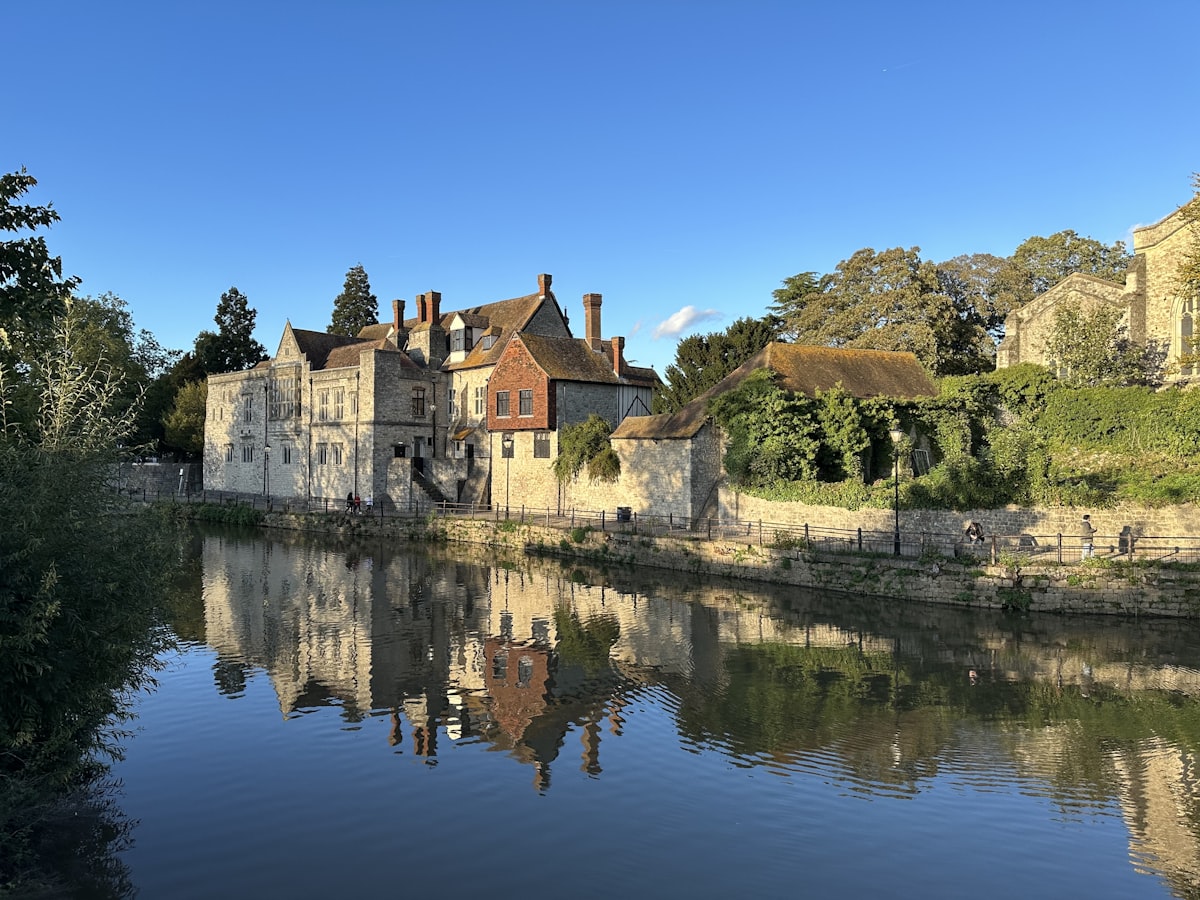
For anyone extending a home or bringing forward a residential scheme in the county town of Kent, understanding the daylight requirements in Maidstone is an important early step. The local planning authority is Maidstone Borough Council (a shire district covering Maidstone town and surrounding villages along the River Medway such as Bearsted, Coxheath, Marden and Headcorn), not Kent County Council. This guide explains the current policy framework, the technical standards the council uses to judge light impacts, and how a robust assessment can keep your proposal on track.
The adopted Maidstone development plan
Maidstone has an up-to-date development plan. The Maidstone Borough Local Plan Review 2021-2038 was adopted on 20 March 2024, following examination and a series of main modifications found sound by the appointed Inspector. The Review updates and builds on the previous Maidstone Borough Local Plan (adopted 25 October 2017); importantly, it does not sweep the older plan away entirely – a number of the 2017 policies remain relevant and have been retained as part of the development plan.
For applicants this means decisions are now taken against the strategic framework of the 2021-2038 Review together with the retained development management policies. Because policy status has changed relatively recently, it is worth confirming on the council's current Local Plan pages which policy applies to your specific proposal before you submit.
Policy DM1 and residential amenity
The headline development management design policy is Policy DM1 – Principles of Good Design, which the council uses to assess all development requiring planning permission. DM1 is the route through which daylight, sunlight and overshadowing impacts are weighed. In summary, it requires that development:
- respects the amenities of occupiers of neighbouring properties and uses – including by avoiding excessive overlooking and visual intrusion; and
- does not result in an unacceptable loss of privacy or light enjoyed by the occupiers of nearby properties.
In practice, when applying DM1 the council assesses outlook, sunlight, daylight and privacy in relation to adjoining properties, with separation distances and the angles between buildings being key factors. That makes the relationship between a new or extended building and its neighbours – its height, depth, position relative to boundaries and windows – central to whether a scheme is acceptable.
The Residential Extensions SPD
Maidstone supports its design policy with a Residential Extensions Supplementary Planning Document (SPD), which gives more detailed, practical guidance for householder schemes. The SPD makes clear that extensions should respect the amenities of adjoining residents in terms of privacy, daylight, sunlight and the maintenance of a pleasant outlook, and it offers guidance on matters such as the depth of ground-floor rear additions and keeping first-floor additions set off a common boundary. If you are planning a rear or side extension close to a neighbour, this is the local guidance a case officer is likely to have in mind. As with all guidance, confirm the current published version on the council's website before you rely on it.
How daylight and sunlight are actually assessed
Maidstone's policy tests on daylight and sunlight are not expressed as bespoke numerical targets in DM1 itself. Instead the policy's "unacceptable loss of light" judgement is informed by nationally recognised technical guidance, applied through the Local Plan:
- BRE BR 209 (2022) – "Site layout planning for daylight and sunlight: a guide to good practice", the standard reference for assessing impacts on neighbouring properties. It sets out the Vertical Sky Component (VSC) and daylight distribution (No Sky Line) tests for daylight, Annual Probable Sunlight Hours (APSH) for sunlight to existing windows, and the two-hours-on-21-March test for overshadowing of gardens and amenity space.
- BS EN 17037 – "Daylight in buildings", which addresses the daylight provided to habitable rooms within the new development itself – relevant to ensuring future occupiers enjoy a good standard of amenity.
- The National Planning Policy Framework (NPPF), which requires high-quality design and a good standard of amenity for existing and future occupiers, while advising that daylight and sunlight standards should be applied flexibly rather than used to prevent otherwise acceptable development.
A BRE-based assessment, read alongside the SPD's separation-distance and outlook guidance, is therefore the clearest way to demonstrate that a scheme complies with DM1.
Local context that affects light
As the county town, central Maidstone has a dense and varied urban grain – terraced streets, the historic core around the River Medway and the parish church, and a number of conservation areas – where plots are often tight and back-to-back relationships close. In these settings even modest changes in height or depth can materially affect a neighbour's light, so the BRE tests and the SPD's separation guidance carry real weight. By contrast, the borough's many rural villages and large-garden settings can support greater separation distances and a higher expectation of privacy, which again influences how DM1 is applied. Tailoring the assessment to your particular context is essential.
What this means for your project
If your proposal is a two-storey or first-floor extension near a boundary, a roof addition, a backland or infill dwelling, or a flatted development, daylight and sunlight are likely to be live issues under Policy DM1. Commissioning a BRE BR 209 (2022) assessment early allows you to test the design against recognised benchmarks, refine massing or window positions before submission, and present clear technical evidence that answers the council's loss-of-light test directly. It also gives you a credible footing if a neighbour objects or the matter goes to appeal.
How Fortress Associates can help
Fortress Associates prepares our daylight and sunlight report service to BRE BR 209 (2022), BS EN 17037 and the relevant national and local policy, so your evidence speaks to Policy DM1 and the Residential Extensions SPD. We work nationwide with a 4 to 5 working day turnaround and require no advance payment. We also produce Building Regulations drawings where a project needs them. To discuss a Maidstone scheme, please contact our team.
Sources & further reading
Need help with a UK planning project?
Fixed-fee daylight reports and Building Regulations drawings — delivered in 4–5 working days. No advance payment.
Request a free quote