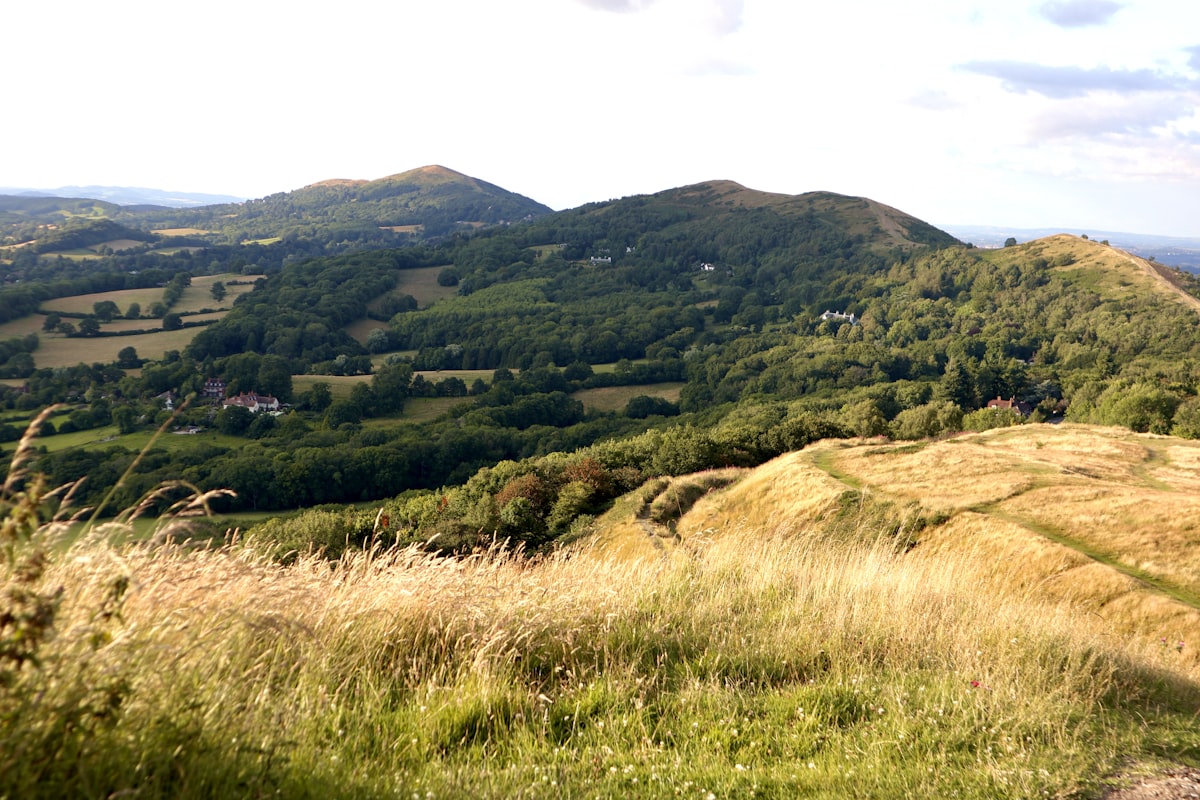
The daylight requirements in Malvern Hills apply to extensions, conversions and new homes across a largely rural district that takes in Great Malvern, the smaller market town of Tenbury Wells, Upton-upon-Severn and a string of villages beneath the famous ridge. Malvern Hills District Council is the local planning authority (LPA), and it assesses daylight, sunlight and amenity through a development plan it shares with two neighbouring councils. This guide sets out the position accurately.
The joint plan covering Malvern Hills
Malvern Hills District Council does not have a standalone local plan. Its adopted development plan is the South Worcestershire Development Plan (SWDP), adopted in February 2016. The SWDP is a joint plan prepared together by three authorities — Malvern Hills District Council, Worcester City Council and Wychavon District Council — giving south Worcestershire a single, consistent planning framework to 2030.
In practice this means the headline policy wording used to judge daylight and amenity in Great Malvern is identical to that used in the city of Worcester or in Wychavon's towns. What differs is the local context: Malvern Hills is dominated by a nationally protected landscape and by distinctive spa-town and rural character, and that context strongly shapes how the shared policies are applied. The councils are taking the plan through a review (the SWDP Review), but the adopted 2016 SWDP remains the plan in force.
SWDP Policy 21: Design and neighbouring amenity
The central policy for daylight and sunlight in Malvern Hills is Policy SWDP 21 (Design). It requires development to be of high design quality and lists the matters an application must address. Criterion B(iv), headed Neighbouring Amenity, states:
"Development should provide an adequate level of privacy, outlook, sunlight and daylight, and should not be unduly overbearing."
This is the test a Malvern Hills case officer applies to the impact of a scheme on its neighbours. The policy's reasoned justification confirms that a development will not be acceptable where it causes "unacceptable detrimental impact on the amenity of existing or new residents or occupants". Related criteria — on siting and layout, on scale, height and massing, and on the relationship to surroundings — matter too, because the form and position of a building determine its effect on light reaching neighbouring windows and gardens.
The Malvern Hills National Landscape (AONB) dimension
What makes Malvern Hills genuinely different from the rest of south Worcestershire is the Malvern Hills Area of Outstanding Natural Beauty — now styled the Malvern Hills National Landscape following the national rebranding of AONBs in 2023. A significant part of the district lies within, or in the setting of, this protected landscape, and development here is held to a higher standard of design and landscape sensitivity.
For daylight and sunlight, the AONB context has practical consequences:
- Building height and massing are constrained. The Malvern Hills AONB partnership publishes guidance on building design in the AONB, which encourages forms that sit comfortably in the landscape. Lower, well-proportioned buildings tend to have a gentler effect on the light reaching their neighbours, so good landscape-led design and good daylight outcomes often point in the same direction.
- Tree cover and topography matter. The steep slopes beneath the ridge and the mature wooded character of much of Great Malvern mean existing levels and planting already influence light to many properties — a factor a BRE assessment must take into account rather than assume a flat, open site.
- Spa-town heritage adds sensitivity. Great Malvern's Victorian villas, terraces and conservation areas, built around the spa, create tightly framed plots where the relationship between buildings is important for both character and amenity.
The South Worcestershire Design Guide SPD
Policy SWDP 21 is supported by the South Worcestershire Design Guide Supplementary Planning Document, adopted in March 2018 and covering Malvern Hills, Worcester City and Wychavon. The SPD explains in more detail how the SWDP's design policies should be interpreted in the layout and design of new development, and it is a material consideration in decisions. There is, however, no numerical daylight or sunlight standard set out in the council's own policies.
Where a technical light assessment is required, the recognised methodology is the Building Research Establishment guide, BRE BR 209: Site Layout Planning for Daylight and Sunlight (2022 edition), with BS EN 17037 used for daylight provision inside new dwellings. National policy applies through the plan via the National Planning Policy Framework (NPPF), which seeks good design and the avoidance of poor living conditions.
What a daylight and sunlight report should demonstrate in Malvern Hills
A thorough assessment for a Malvern Hills proposal — whether in Great Malvern, Tenbury Wells or a village — will usually:
- Test daylight to neighbouring windows using BR 209's Vertical Sky Component, and rooms using the No Sky Line (daylight distribution) method.
- Assess sunlight to neighbouring rooms and gardens using Annual Probable Sunlight Hours, including the winter test.
- Confirm adequate internal daylight for new homes against BS EN 17037.
- Account for the genuine context of the site — sloping ground, trees and existing buildings — rather than an idealised flat plot, and relate the findings back to SWDP 21 criterion B(iv), the Design Guide SPD and, where relevant, AONB design considerations.
How Fortress Associates can help
Fortress Associates prepares our daylight and sunlight report service to BRE BR 209 (2022) and BS EN 17037, aligned to the SWDP 2016, the South Worcestershire Design Guide SPD and the Malvern Hills National Landscape context. We also produce Building Regulations drawings. We work nationwide with a 4–5 working day turnaround and no advance payment. To discuss a Great Malvern or Tenbury Wells project, please contact our team.
Sources & further reading
- Planning Policy — Malvern Hills District Council
- South Worcestershire Development Plan (SWDP) official site
- BRE BR 209: Site Layout Planning for Daylight and Sunlight (2022)
- National Planning Policy Framework (gov.uk)
- Fortress Associates daylight and sunlight reports and our related guides, Daylight Requirements in Worcester and Daylight Requirements in Adur
Need help with a UK planning project?
Fixed-fee daylight reports and Building Regulations drawings — delivered in 4–5 working days. No advance payment.
Request a free quote