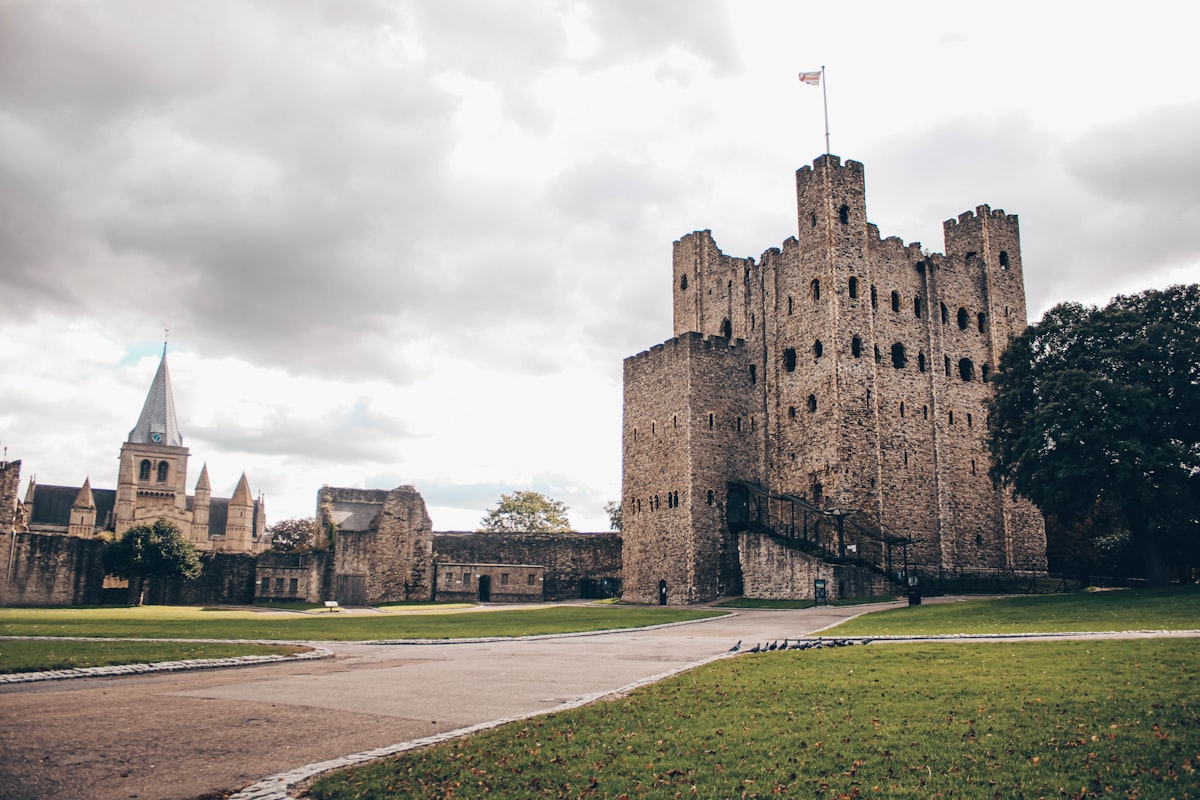
Understanding the daylight requirements in Medway matters whether you are extending a terraced house in Gillingham, converting a building in Chatham town centre, or bringing forward a sensitive scheme near the historic core of Rochester. Medway is a unitary authority, so Medway Council is the Local Planning Authority (LPA) for the whole area, including the Medway Towns of Chatham, Gillingham, Rochester, Strood and Rainham. There is no separate county tier, which means the council's own development plan and the national technical guidance together set the framework against which the daylight and sunlight effects of a proposal are judged.
This guide explains how daylight and sunlight are handled in Medway: the saved policies of the long-standing adopted plan, the emerging new Local Plan, and the recognised national guidance the council relies on. It is written for homeowners, developers, architects and agents who want clarity before they submit an application.
Daylight requirements in Medway: the policy framework
Medway is unusual among English authorities in that its adopted development plan is now more than two decades old. The Medway Local Plan was adopted on 14 May 2003, replacing the earlier Medway Towns Local Plan. A number of its policies were formally saved and they continue to form the adopted development plan for the area today. In other words, the council still determines planning applications principally against the saved policies of the Medway Local Plan 2003, supported by the National Planning Policy Framework.
Two saved policies are central to daylight and sunlight matters:
- Policy BNE1 (General Principles for Built Development) sets out the council's broad design expectations for new development, including how a proposal should relate to its surroundings, scale, layout and context.
- Policy BNE2 (Amenity Protection) is the key amenity policy. It expects development to secure the amenities of its future occupiers and to protect those enjoyed by neighbouring properties, having regard to matters that expressly include privacy, daylight and sunlight, as well as noise and disturbance.
Importantly, these policies are written qualitatively. They do not set out a local numerical daylight or sunlight standard, such as a target Vertical Sky Component value or a specific overshadowing threshold. Instead, when a technical measure of light is needed, the council and planning inspectors turn to the established national guidance to apply the principle of amenity protection set out in BNE2.
Is there a daylight or sunlight SPD in Medway?
Medway Council does not publish a dedicated daylight and sunlight Supplementary Planning Document, nor a standalone residential extensions design guide that fixes its own numerical light standards. Because there is no local formula, the recognised national benchmark applies. The Building Research Establishment guidance, BRE BR 209 – Site Layout Planning for Daylight and Sunlight: A Guide to Good Practice (2022 edition), is the document used to measure daylight and sunlight effects on neighbours and within new dwellings. It is complemented by the daylight provision recommendations of BS EN 17037 and sits within the wider National Planning Policy Framework (NPPF) expectation that development should secure a good standard of amenity for existing and future occupiers. These tests are applied in Medway through the amenity wording of Policy BNE2.
The emerging Medway Local Plan 2041
Medway Council is preparing a new plan, the Medway Local Plan 2041, to replace the 2003 plan. The Proposed Submission Draft reached Regulation 19 stage in June 2025, with formal consultation running from 30 June to 11 August 2025, after which representations are submitted to the Planning Inspectorate for examination. This emerging plan is significant for daylight and sunlight because it includes a modern design and amenity policy, Policy T1 (High Quality Design and Amenity), which requires development to be of high-quality design that responds to the character of its surroundings and to demonstrate, as a minimum, the provision of sufficient natural light to satisfy healthy living standards, with single-aspect homes avoided where possible.
Until the new plan is adopted, the saved Medway Local Plan 2003 remains the development plan and BNE1 and BNE2 continue to apply. However, as the emerging plan advances through examination it can carry increasing weight as a material consideration, so applicants should be aware of the more explicit daylight expectations signalled in Policy T1.
What this means for your application
Two local features make daylight and sunlight a frequent issue across Medway. First, Chatham is the focus of major town-centre regeneration, where denser and taller residential schemes routinely raise questions about daylight to new flats and about overshadowing of neighbours and public space. Second, the historic core of Rochester, with its castle, cathedral and conservation areas, is a sensitive townscape where amenity and design are scrutinised closely and where new development must respect both heritage and the living conditions of existing residents. Across the wider Medway Towns, much of the housing stock is in tightly built Victorian and Edwardian terraces where rear extensions, loft conversions and infill plots can readily affect a neighbour's windows and gardens.
A daylight and sunlight assessment is most likely to be needed where your proposal:
- is a multi-storey or town-centre development in Chatham or Strood that adds height or massing;
- is a rear or side extension close to a boundary where neighbouring habitable-room windows could be affected;
- creates new dwellings, including flat conversions and backland infill, where the daylight and sunlight available to future occupiers must be demonstrated;
- lies within or adjoining a Rochester conservation area or other sensitive setting; or
- has attracted a neighbour objection citing loss of light, overshadowing or an overbearing effect.
Even where the council does not formally require a report to validate the application, a clear assessment prepared to BRE BR 209 (2022) is often the most persuasive way to demonstrate compliance with Policy BNE2 and to address objections. It can also flag a straightforward design change, such as reducing a projection or repositioning a window, that resolves a concern before it becomes a reason for refusal.
How Fortress Associates can help
Fortress Associates is a UK daylight and sunlight consultancy working nationwide, including across Chatham, Gillingham, Rochester, Strood and Rainham. We prepare our daylight and sunlight report service to BRE BR 209 (2022) and BS EN 17037, with clear results that planning officers, neighbours and committees can rely on. We typically turn reports around in 4 to 5 working days, and we ask for no advance payment. We also produce Building Regulations drawings covering Approved Documents A to S. To discuss a Medway project, please get in touch with our team.
Sources & further reading
- Medway Council – Medway Local Plan 2003 (current planning policies)
- Medway Council – Medway Local Plan 2041 (emerging plan)
- BRE BR 209 – Site Layout Planning for Daylight and Sunlight (2022)
- National Planning Policy Framework (NPPF)
- Daylight Requirements in Luton – our companion guide for Luton
Need help with a UK planning project?
Fixed-fee daylight reports and Building Regulations drawings — delivered in 4–5 working days. No advance payment.
Request a free quote