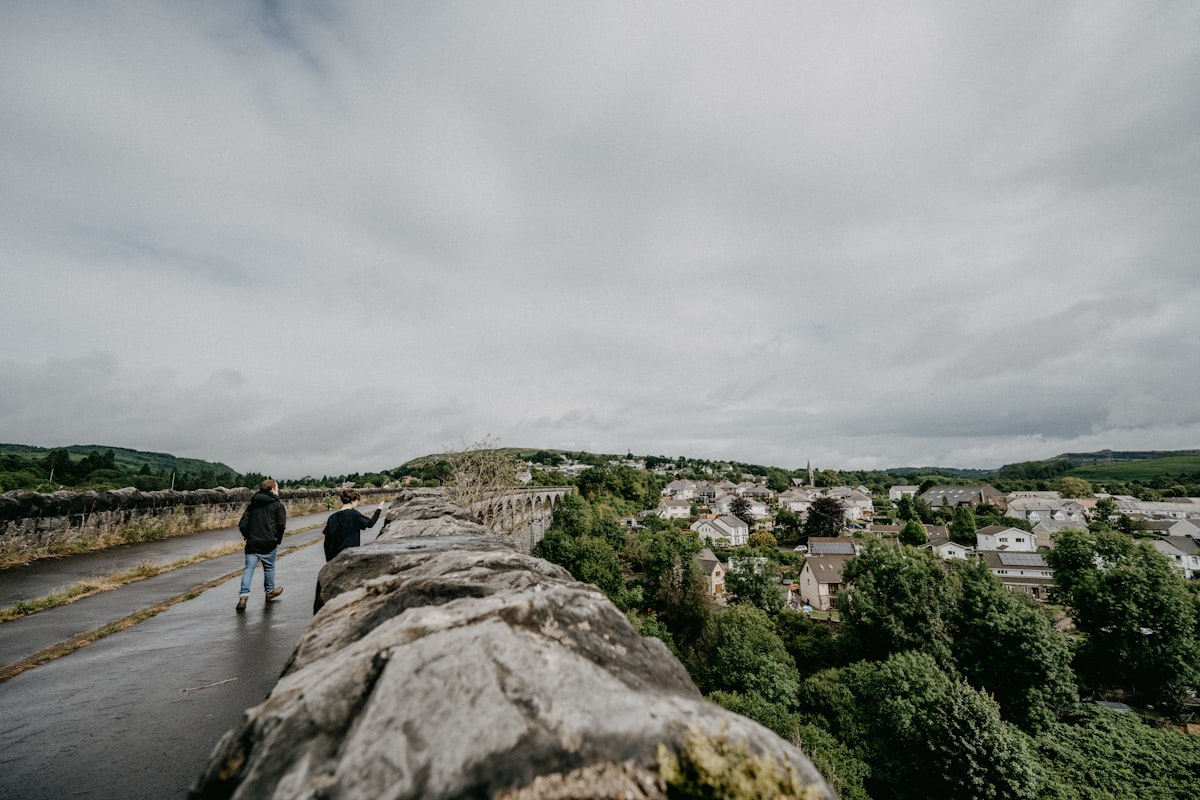
Daylight requirements in Merthyr Tydfil are shaped by the steep Valleys topography, the close-knit terraced streets of the County Borough and the policies of the council's adopted development plan. Whether you are extending a terrace in Dowlais, building flats near the town centre or designing a new dwelling on sloping ground, understanding how the local planning authority assesses daylight and sunlight is essential to a smooth application.
This guide explains the policy framework that Merthyr Tydfil County Borough Council applies, the best-practice methodology used to measure daylight and sunlight, and how a professional report supports your planning submission.
The planning framework in Merthyr Tydfil
Planning decisions in the County Borough are made against the Merthyr Tydfil Replacement Local Development Plan 2016-2031, which was adopted by the Council on 29 January 2020. The Replacement LDP is the statutory development plan for the area and forms the basis for land use planning decisions across the County Borough, with the exception of the part of the area that falls within the separately administered Bannau Brycheiniog (Brecon Beacons) National Park.
Sitting above the LDP is the Welsh national planning framework. Planning Policy Wales (Edition 12, 2024) sets the national policy on placemaking and good design, supported by Future Wales: the National Plan 2040 and the relevant Technical Advice Notes. Together these documents require new development to create attractive, healthy and sustainable places, which includes protecting the amenity of existing and future occupiers.
The policies that matter for daylight
Two adopted LDP policies are central to how daylight and sunlight are considered in Merthyr Tydfil:
- Policy SW11: Sustainable Design and Placemaking. This is the principal design policy. It requires development to contribute to attractive, sustainable places through high quality design, and at criterion 3 it states that development must "not result in an unacceptable impact on local amenity, loss of light or privacy, or visual impact, and incorporate a good standard of landscape design." The explicit reference to loss of light is the policy hook on which daylight and sunlight assessments turn.
- Policy EnW4: Environmental Protection. This policy requires proposals to demonstrate that they will not result in an unacceptable impact on people, residential amenity, property and the natural environment, reinforcing the protection of living conditions for neighbouring occupiers.
The Council also applies its Supplementary Planning Guidance (SPG) No. 6: A Design Guide for Householder Development and SPG No. 4: Sustainable Design, which expand on the design and amenity expectations behind Policy SW11 and are routinely referenced when householder and minor applications are determined.
How daylight and sunlight are measured
Welsh and UK planning policy set the requirement to protect light and amenity, but they do not contain numerical daylight tests. Instead, planning authorities across Wales, including Merthyr Tydfil, look to the recognised best-practice methodology in the Building Research Establishment guidance.
The current standard is the BRE guide Site Layout Planning for Daylight and Sunlight: A Guide to Good Practice (BR 209, 2022 edition), which works alongside the British Standard BS EN 17037 on daylight in buildings. The principal numerical tests are:
- Vertical Sky Component (VSC) - a measure of the amount of skylight reaching a neighbouring window. A retained VSC of 27% or more is generally considered good; where an existing value is reduced to less than 0.8 times its former value, the loss is likely to be noticeable.
- No Sky Line (NSL) / daylight distribution - assesses how much of a room still receives direct sky after development.
- Annual Probable Sunlight Hours (APSH) - used to assess sunlight to windows facing within 90 degrees of due south, and to gardens and amenity areas.
It is important to remember that the BRE guide is advice, not a rigid rule. It expressly encourages flexible application that takes account of local context - and in Merthyr Tydfil, context matters a great deal.
Why Merthyr Tydfil's topography is different
Merthyr Tydfil sits at the head of the Taff Valley, and its housing stock is dominated by densely packed Victorian terraces stepping up steep valley sides. Two local characteristics shape daylight assessments here:
- Steep valley gradients. Properties are frequently built into sloping ground, so a proposed extension or new dwelling uphill of an existing home can have a greater overshadowing effect than the same scheme on flat land. Conversely, downhill development may have far less impact. The relationship between levels must be modelled accurately rather than assumed.
- Tight terraced layouts. Closely spaced terraces in areas such as Dowlais, Penydarren and Treharris already have modest separation distances, so even minor rear extensions can materially affect a neighbour's existing daylight. Realistic baseline modelling is essential.
The County Borough also contains the Cyfarthfa Heritage Area, protected under Policy CW2, where the historic setting around Cyfarthfa Castle and the former ironworks adds design sensitivity on top of the standard amenity considerations.
When you are likely to need a daylight and sunlight report
A professional assessment is most often required where a proposal could affect light to neighbouring homes, or where the quality of internal daylight for future occupiers is in question. Typical triggers in Merthyr Tydfil include:
- Two-storey or rear extensions close to a shared boundary in a terraced street.
- Flat conversions and new apartment schemes near the town centre.
- Infill or backland development on sloping plots.
- Any scheme where a neighbour has raised loss of light as an objection, or where the case officer requests evidence under Policy SW11.
A clear, BRE-based report helps the case officer weigh the proposal against Policy SW11 and EnW4, and can resolve objections before they delay a decision.
How Fortress Associates can help
Fortress Associates provides our daylight and sunlight report service for householders, architects and developers across Merthyr Tydfil and the wider Valleys. Our reports are prepared to BRE BR 209 (2022) and BS EN 17037, and are written to address the amenity and design tests in the adopted LDP. We work UK-wide with a 4-5 working day turnaround and no advance payment required. We also prepare Building Regulations drawings where your project needs them. To discuss your scheme, get in touch with our team. If your project is in a neighbouring authority, see our guide to daylight requirements in Monmouthshire.
Sources & further reading
Need help with a UK planning project?
Fixed-fee daylight reports and Building Regulations drawings — delivered in 4–5 working days. No advance payment.
Request a free quote