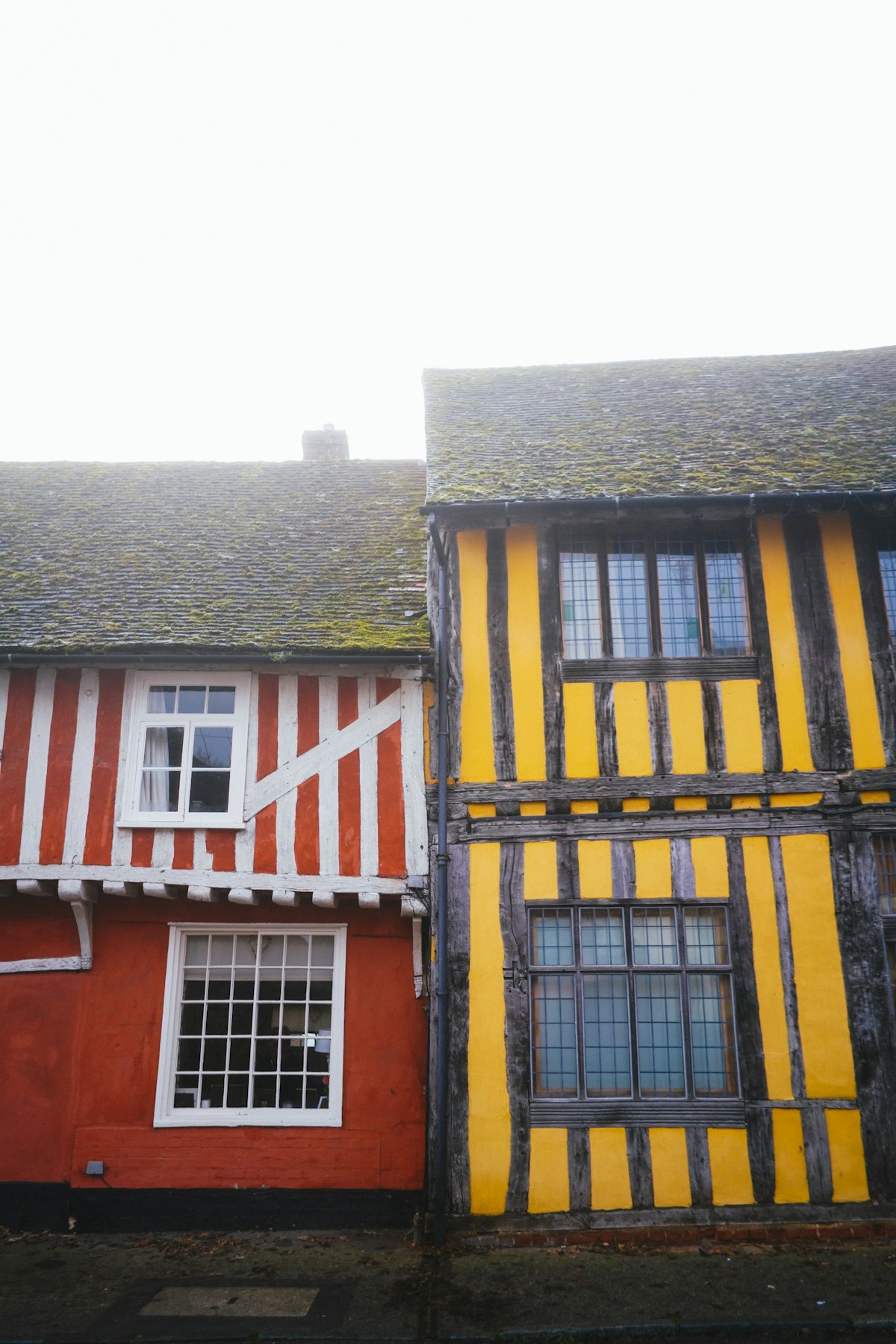
Understanding the daylight requirements in Mid Suffolk is essential for anyone planning a house extension, infill dwelling or larger residential scheme in towns such as Stowmarket and Needham Market, or in the district's many rural villages. Mid Suffolk District Council is the local planning authority (LPA) for the area — not Suffolk County Council — and it determines planning applications against its adopted development plan and national policy. This guide explains the local policy framework, the technical guidance that applies, and how a professional daylight and sunlight assessment can support an application.
The planning framework for daylight in Mid Suffolk
Development in the district is guided by the Babergh and Mid Suffolk Joint Local Plan – Part 1, adopted in November 2023. The plan was prepared jointly with Babergh District Council and sets the strategy for both districts to 2037. It superseded the earlier Mid Suffolk Core Strategy and a number of saved local plan policies. When you submit an application in Stowmarket, Needham Market, Eye, Stowupland or any of the surrounding parishes, this is the plan the council assesses it against.
The key policy for daylight and amenity is Policy LP24 – Design and Residential Amenity. It requires all new development to be of high-quality design and, among other things, to:
"Protect the health and amenity of occupiers and surrounding uses by avoiding development that is overlooking, overbearing, results in a loss of daylight, and/or unacceptable levels of light pollution, noise, vibration, odour, emissions and dust, including any other amenity issues."
LP24 also expects schemes to provide appropriate long-term measures for privacy and adequate garden space, to respond to the surrounding character, and to be appropriate in terms of scale, mass, form and siting. In practice this means that proposals which would cast significant new shadow over a neighbour's garden or windows, or which would feel overbearing when viewed from an adjoining property, can be refused on amenity grounds even where other aspects of the scheme are acceptable.
A second relevant policy is Policy LP15 – Environmental Protection and Conservation, which deals with the efficient use of land and resources and specifically refers to not prejudicing “the free flow of air, and daylight” to neighbouring and future sites. Read together, LP24 and LP15 give the council a clear basis to scrutinise daylight, sunlight and overshadowing impacts.
Is there a daylight and sunlight SPD in Mid Suffolk?
Mid Suffolk does not have a standalone supplementary planning document (SPD) dealing solely with daylight and sunlight. The council's adopted SPDs include a Housing SPD (2024), a Biodiversity and Trees SPD (2025) and several site-specific development briefs, but none sets numerical daylight or sunlight targets.
Instead, LP24 directs applicants towards the Suffolk Design Guide for Residential Areas and the wider Suffolk Design guidance endorsed by the Suffolk authorities, alongside the Building for a Healthy Life design assessment framework. These documents promote well-designed, healthy places but are not technical daylight calculation methods. For the numerical assessment of daylight, sunlight and overshadowing, the council — like most English LPAs — relies on the recognised national methodology applied through the Local Plan and the National Planning Policy Framework (NPPF):
- BRE BR 209 (2022) – Site Layout Planning for Daylight and Sunlight: A Guide to Good Practice, the standard reference for assessing daylight to neighbours (the Vertical Sky Component and No Sky Line tests), sunlight (Annual and Winter Probable Sunlight Hours) and overshadowing of amenity space.
- BS EN 17037 (Daylight in Buildings) – the British/European standard increasingly used to demonstrate adequate daylight provision within new dwellings themselves.
- The NPPF – which asks authorities to make efficient use of land while securing well-designed places and avoiding unacceptable harm to living conditions.
Because Mid Suffolk has no local numerical standard of its own, a well-prepared BRE-based report is usually the most persuasive way to demonstrate that a scheme is acceptable in daylight and sunlight terms.
Validation and when an assessment is needed
Mid Suffolk publishes a Local Validation List setting out the documents required to register a planning application. Where a proposal is likely to have an adverse effect on the daylight or sunlight enjoyed by neighbouring properties — for example a two-storey extension close to a boundary, a backland dwelling, or a flatted scheme in a town-centre plot — the council can reasonably expect a daylight and sunlight assessment to be submitted with the application. Providing this proactively can prevent delays, avoid requests for further information, and address objections from neighbours before they escalate.
Local context that affects daylight assessments
Two features of the district shape how daylight issues arise in practice:
- Historic and tightly-grained settlements. Mid Suffolk contains numerous conservation areas and listed buildings, from the medieval centre of Needham Market with its famous hammerbeam-roofed church to the historic streets around Stowmarket. In these closely-built settings, even modest extensions can have a noticeable effect on a neighbour's light, and the council will weigh amenity carefully alongside heritage considerations.
- Rural and village infill. Much development in the district takes the form of infill plots and small sites within or adjoining villages. Here the relationship to existing dwellings, garden orientation and boundary planting all influence overshadowing, and a clear BRE assessment helps demonstrate that established amenity is protected.
How Fortress Associates can help
Fortress Associates provides our daylight and sunlight report service for householders, designers and developers across Mid Suffolk and the rest of the UK. Our reports are prepared to BRE BR 209 (2022) and BS EN 17037, and are written to address the requirements of Policy LP24 and the Babergh and Mid Suffolk Joint Local Plan directly. We offer a 4–5 working day turnaround and ask for no advance payment. We can also prepare Building Regulations drawings to support your project. Contact us to discuss your site.
Practical tips before you apply
- Check whether your site sits within a conservation area or affects the setting of a listed building — this is common in Mid Suffolk and adds weight to amenity and design considerations.
- Consider the orientation of neighbouring windows and gardens early in the design, so daylight and overshadowing are designed in rather than corrected later.
- Where impacts are possible, commission a BRE BR 209 assessment before submission and reference it in your design and access statement.
- Read this alongside our companion guide on daylight requirements in West Suffolk if your project spans the wider Suffolk area.
Sources & further reading
Need help with a UK planning project?
Fixed-fee daylight reports and Building Regulations drawings — delivered in 4–5 working days. No advance payment.
Request a free quote