If you are planning an extension, a new house or a larger residential scheme around Cookstown, Dungannon or Magherafelt, the daylight requirements in Mid Ulster will shape how your proposal is judged. Since planning functions transferred to Northern Ireland's eleven councils in 2015, Mid Ulster District Council has been the planning authority, deciding applications under the Planning Act (Northern Ireland) 2011. Daylight, sunlight, overshadowing and the privacy of neighbouring homes are routine considerations in that process.
This guide sets out which plans and policies apply here, what the separation-distance and daylight benchmarks are, and how a technical report demonstrates that a scheme is acceptable.
The planning policy position in Mid Ulster
Mid Ulster is preparing a new Local Development Plan (the LDP 2030) under the two-stage process in the Planning Act (Northern Ireland) 2011: a Plan Strategy followed by a Local Policies Plan. As at June 2026 the LDP has not yet been adopted. The Council published its Draft Plan Strategy on 22 February 2019 and, following a procedural matter, re-consulted with that consultation closing in September 2020. The Draft Plan Strategy has since been submitted to the Department for Infrastructure and is awaiting Independent Examination. Until the new LDP is adopted, the operative development plan is made up of the retained legacy area plans covering the district: the Cookstown Area Plan, the Dungannon and South Tyrone Area Plan, and the Magherafelt Area Plan.
Because the LDP is not yet adopted, the regional policy layer carries particular weight in Mid Ulster decisions:
- The Strategic Planning Policy Statement (SPPS), 2015, which requires planning to create quality, sustainable places and to protect amenity.
- Planning Policy Statement 7 (PPS 7): Quality Residential Environments and its Addendum, together with the design guide "Creating Places". PPS 7 Policy QD1 requires development to respect the amenity of existing and prospective residents, and "Creating Places" supplies the measurable design expectations that officers apply.
Separation distances and overshadowing under Creating Places
"Creating Places" is the reference Mid Ulster planning officers use when weighing privacy, overlooking and daylight. Its key benchmarks are:
- Around 20m between opposing rear first-floor windows of new houses on green-field and lower-density sites (paragraph 7.15).
- Where development abuts the private gardens of existing properties, a separation greater than 20m, with a minimum of around 10m from the rear of new houses to the common boundary (paragraph 7.16).
- For apartments with upper-floor living rooms or balconies, a separation of around 30m, or a minimum of around 15m to a common boundary with private gardens (paragraph 7.17).
- An above-eye-level boundary treatment for around 3m from the back of the house to safeguard privacy (paragraph 7.19).
On daylight and sunlight, paragraph 7.21 advises that "layouts and dwellings should be planned to provide acceptable levels of daylight into interiors," noting that the spacing required for privacy will normally secure satisfactory daylight and an acceptable minimum of sunlight. Paragraph 2.26 requires the site's orientation and sun paths to be assessed so that overshadowing is alleviated and "unreasonable obstructions to daylight and sunlight for existing buildings and spaces" are avoided. The guide is explicit that a more flexible approach can be appropriate where it reflects traditional building forms or protects heritage and landscape, which is relevant across this largely rural district.
Local context: the Sperrins, Beaghmore and historic settlements
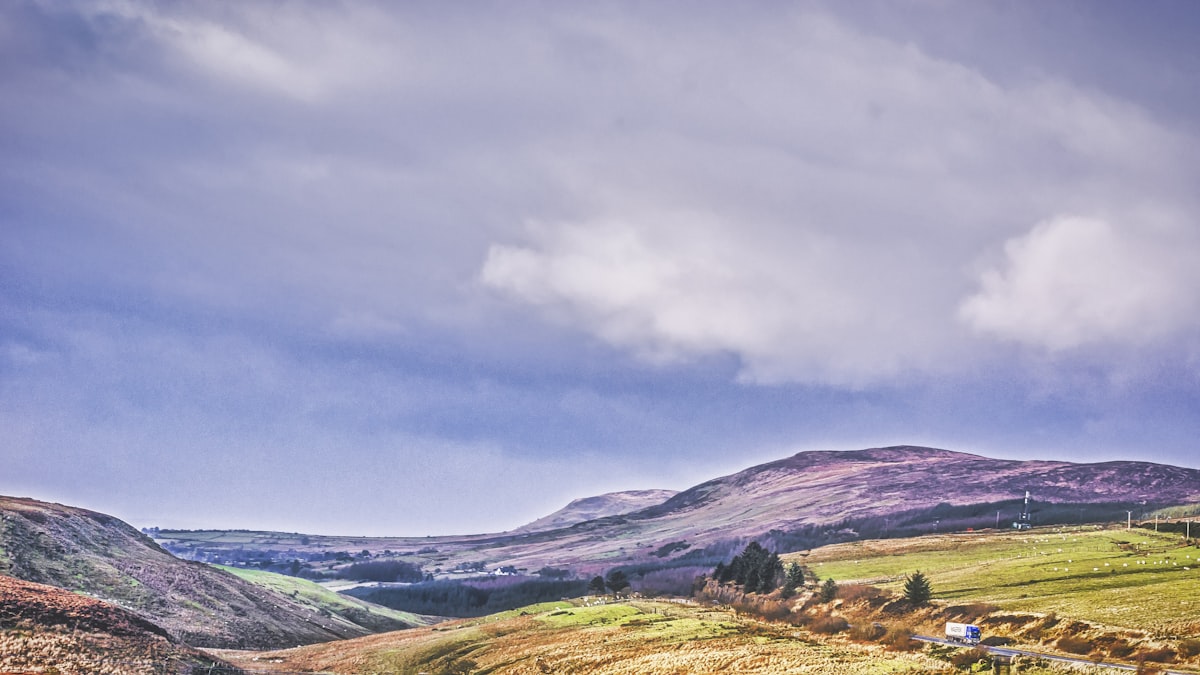
Mid Ulster is a predominantly rural district whose northern edge rises into the Sperrin Mountains, designated an Area of Outstanding Natural Beauty, with the Glenshane Pass forming a well-known gateway to the uplands. The district holds significant heritage assets, including the Bronze Age Beaghmore Stone Circles on the south-east edge of the Sperrins north-west of Cookstown, and the Hill of the O'Neill in Dungannon, the historic seat of the O'Neill dynasty. A Tourism Conservation Zone applies in the Sperrins, where new tourism development is tightly restricted.
In these settings, the scale, spacing and orientation of new buildings are assessed carefully, both to protect neighbouring amenity and to preserve the open, rural character of the landscape. A proposal that would overshadow gardens, obstruct light to existing windows or crowd a neighbouring dwelling faces a harder route to consent, and a clear daylight and sunlight assessment is the most effective way to address such concerns early.
How daylight and sunlight are measured
The recognised technical methodology is the Building Research Establishment guide BRE BR 209, "Site layout planning for daylight and sunlight: a guide to good practice" (2022 edition), applied with the European standard BS EN 17037. The main tests are:
- Vertical Sky Component (VSC) and the no-sky line (daylight distribution) check, for daylight reaching neighbouring and proposed windows.
- Annual Probable Sunlight Hours (APSH), measuring winter and total sunlight to windows facing within 90 degrees of due south.
- Overshadowing of amenity space, usually tested against the 21 March sunlight-on-ground criterion for gardens and shared open space.
This numerical evidence supports and complements the qualitative separation-distance approach in "Creating Places", and is especially useful on constrained or sloping sites.
When you are likely to need a report
- Rear and two-storey extensions in established residential areas of Cookstown, Dungannon and Magherafelt where overlooking or loss of light is raised.
- Infill and backland housing where separation distances are tight.
- Apartment and higher-density schemes, where the 30m and 15m "Creating Places" benchmarks apply.
- Development near the Sperrins, heritage assets or sensitive rural landscapes where amenity and character must both be protected.
How Fortress Associates can help
Fortress Associates provides our daylight and sunlight report service to homeowners, architects and developers across Mid Ulster and throughout Northern Ireland. Our reports are prepared to BRE BR 209 (2022) and BS EN 17037 and are written to address PPS 7 and "Creating Places" directly. We work nationwide with a 4-5 working day turnaround and ask for no advance payment. We also prepare Building Regulations drawings to the Building Regulations (Northern Ireland). To discuss your scheme, please contact us.
Related reading
For a neighbouring authority, see our companion guide to daylight requirements in Derry City and Strabane.
Sources & further reading
Need help with a UK planning project?
Fixed-fee daylight reports and Building Regulations drawings — delivered in 4–5 working days. No advance payment.
Request a free quote