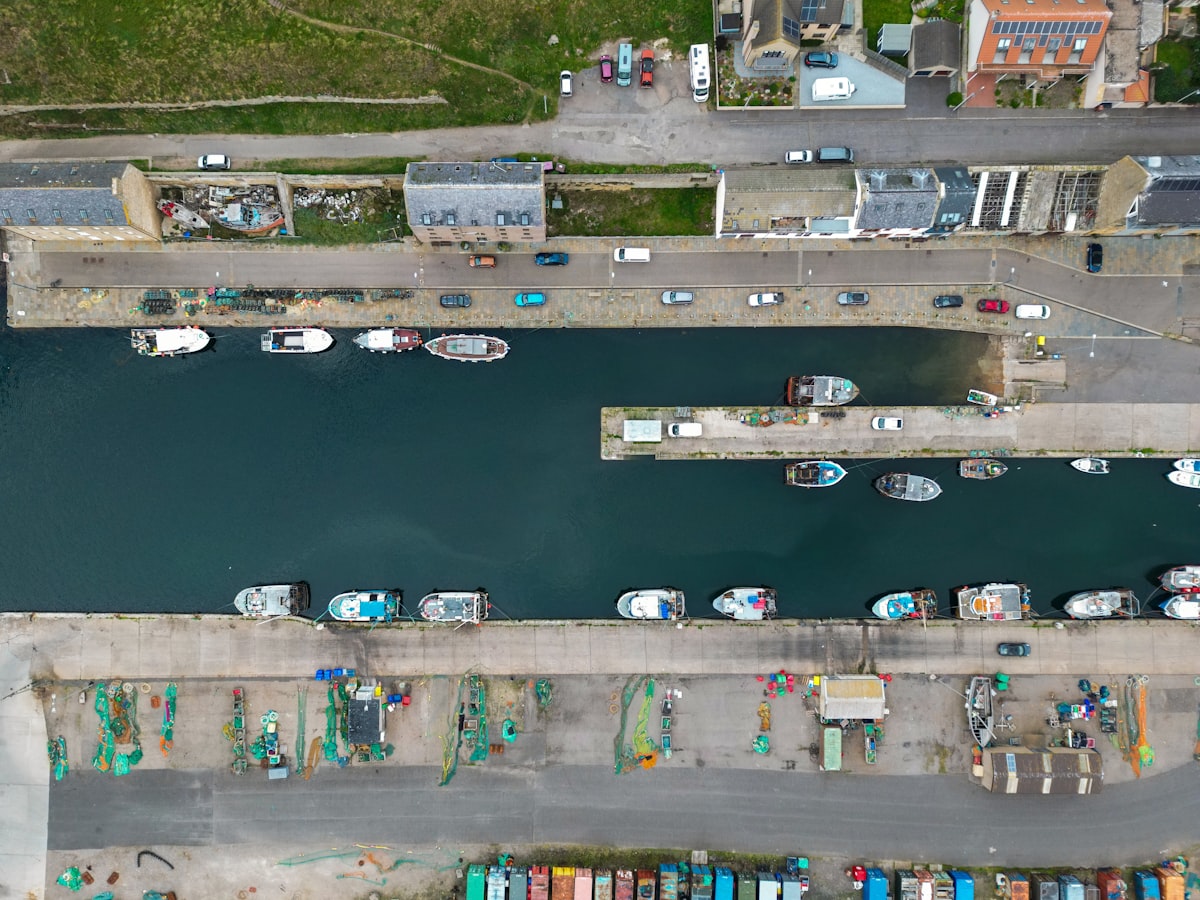
Understanding the daylight requirements in Moray is important for anyone planning a house extension, a loft conversion, a new dwelling or a flatted development in Elgin, Forres, Buckie, Lossiemouth, Keith or Aberlour. Moray Council is the planning authority for the area, and it assesses how a proposal affects the daylight, sunlight and privacy of neighbouring homes against the policies in its adopted development plan. This article explains how those requirements work in practice and how a professional daylight and sunlight report can support your application.
The planning framework in Moray
Planning decisions in Moray are made against the statutory development plan, which has two parts. The first is National Planning Framework 4 (NPF4), adopted by the Scottish Government in February 2023, which now forms part of the statutory development plan across the whole of Scotland. The second is the council's own Moray Local Development Plan 2020 (MLDP), which was formally adopted on 27 July 2020.
Several policy strands are relevant to daylight and amenity:
- NPF4 Policy 14 (Design, quality and place) and Policy 16 (Quality homes), which require development to create well-designed, sustainable places and to provide good-quality residential amenity, including adequate daylight and sunlight.
- MLDP Policy DP1 (Development Principles), the day-to-day test for almost every application.
- MLDP Policy PP1 (Placemaking), which sets the wider design standard for larger schemes, and Policy DP2 (Housing).
The daylight test in the Moray Local Development Plan
Moray is unusually direct about daylight. Among the criteria that proposals must meet under Policy DP1 (Development Principles), the plan states that:
Proposals must not adversely impact upon neighbouring properties in terms of privacy and daylight.
This is a clear, written daylight requirement built into the core development policy, rather than a vague reference to amenity. Because DP1 applies to the great majority of planning applications, including householder extensions and small infill schemes, daylight is a material consideration for virtually every proposal in the towns and villages of Moray. The same DP1 criteria also restrict over-intensive backland development and the sub-division of plots, which are common triggers for overshadowing and loss of light disputes in established streets in Elgin and Forres.
Placemaking and larger schemes
For larger developments, the design bar is set by Policy PP1 (Placemaking), which applies to residential development of 10 units and above and to commercial development of 500 square metres and above. PP1 requires schemes to comply with the Scottish Government's Creating Places and Designing Streets documents and to incorporate fundamental placemaking principles. These include that the scale and density must be appropriate to the surrounding area and reflect the traditional characteristics and pattern of the settlement, so that the spacing and height of new buildings respect their neighbours. Proposed housing capacities are tested through the council's Quality Auditing process against the character of the site and the requirements of good placemaking set out in PP1 and DP1.
Taken together, DP1 and PP1 mean that whether you are submitting a single extension or a larger housing layout, the council will look at how your proposal affects the daylight, sunlight and privacy of existing homes, and how new homes will be served by adequate light.
How daylight is actually measured
The MLDP sets the policy requirement, but it does not write its own numerical daylight metric into the plan. As with most Scottish councils, the detailed assessment is carried out using nationally recognised best practice. In daylight and sunlight work that means the Building Research Establishment (BRE) guide BR 209, ‘Site Layout Planning for Daylight and Sunlight: A Guide to Good Practice’, in its 2022 third edition, alongside the British Standard BS EN 17037. These provide the recognised, objective tests that demonstrate whether a proposal complies with the daylight and amenity aims of DP1, PP1 and NPF4.
A BRE-based daylight and sunlight assessment typically considers:
- The 25 degree rule of thumb – if an obstruction rises at more than 25 degrees from the horizontal, measured from the centre of a neighbour's lowest window, daylight may be at risk and detailed checks are needed.
- The 45 degree test – used to judge the effect of extensions built at an angle to a neighbour's window, on both plan and elevation.
- Vertical Sky Component and daylight distribution – the BRE's detailed measures of how much skylight reaches a window and how it spreads across a room.
- Annual Probable Sunlight Hours – a check on sunlight to principal living rooms and to garden and amenity spaces.
What this means for your project
Whether you are extending a granite cottage in Elgin, building a new home on an infill plot in Forres or developing flats in Buckie, the council will want to be satisfied that your proposal does not adversely affect the privacy and daylight of neighbours, in line with DP1 and PP1. A daylight and sunlight assessment is most often requested where:
- An extension or new building would breach the 25 degree line from a neighbour's window;
- A new dwelling or flatted block sits close to existing homes;
- A backland or infill plot intensifies development behind existing houses;
- A planning officer or objector raises overshadowing, overlooking or loss of light.
Producing a clear, BRE-based report at the application stage helps an officer reach a positive recommendation and answers neighbour objections with objective evidence rather than assertion.
How Fortress Associates can help
Fortress Associates provides a professional daylight and sunlight report service prepared to BRE BR 209 (2022) and BS EN 17037, the recognised best-practice methodology that Moray Council applies in support of its MLDP 2020 development principles and placemaking policies and NPF4. We assess the 25 and 45 degree tests, run the detailed BRE daylight and sunlight calculations where needed, and check privacy and overshadowing so your application is supported by clear evidence. We work UK-wide with a turnaround of 4 to 5 working days and no advance payment. We also prepare building warrant and Building (Scotland) Regulations drawings. To discuss your project in Elgin, Forres or Buckie, please get in touch.
Sources & further reading
Need help with a UK planning project?
Fixed-fee daylight reports and Building Regulations drawings — delivered in 4–5 working days. No advance payment.
Request a free quote