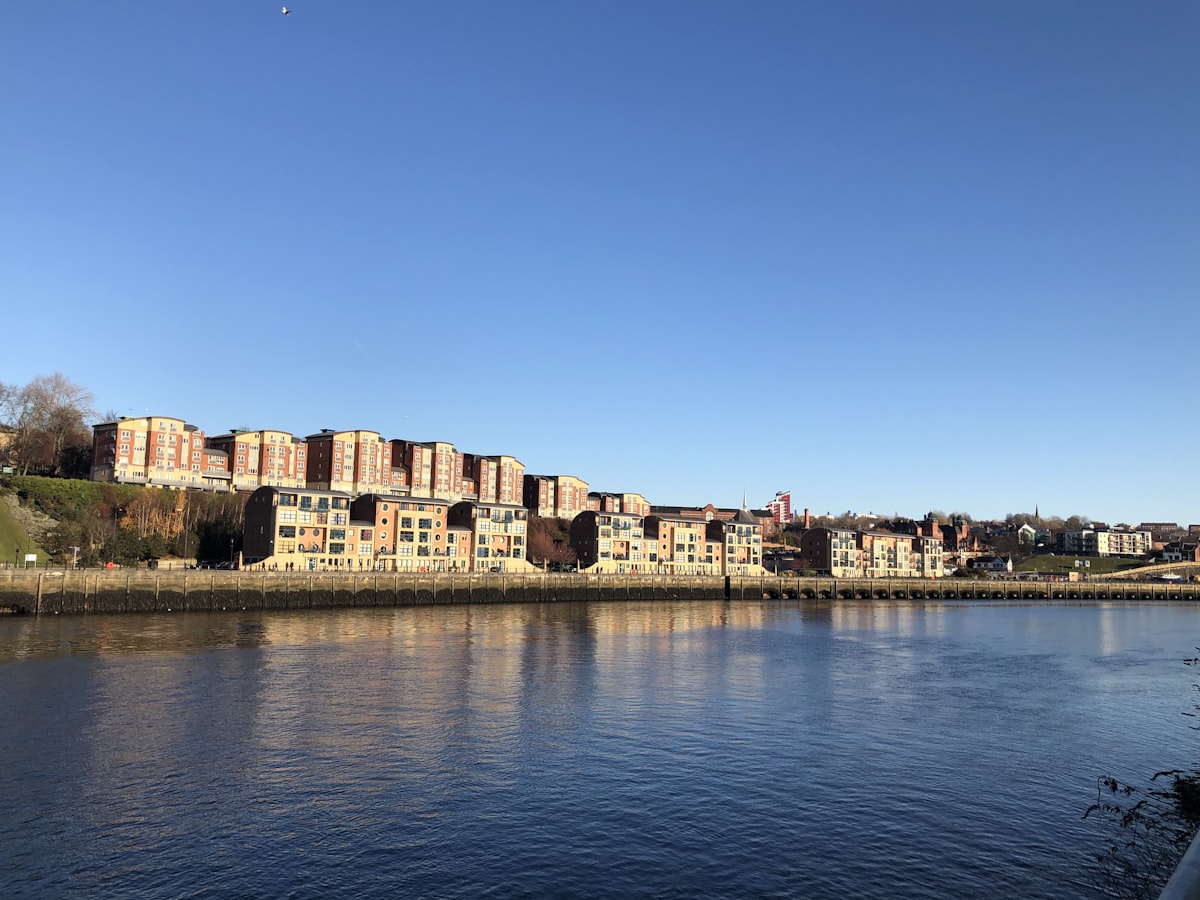
Daylight requirements in Newcastle-under-Lyme are a recurring issue for householders, developers and architects working across the borough, from the market town centre to suburbs such as Wolstanton, Silverdale, Keele and Madeley. Whether you are adding a two-storey extension, infilling a back garden or building a small block of flats, the local planning authority will want to be satisfied that your scheme protects the daylight, sunlight, outlook and privacy of neighbouring homes. This guide explains how the borough assesses those impacts and when a professional daylight and sunlight report is likely to be needed.
The local planning authority for the area is Newcastle-under-Lyme Borough Council — a shire district authority. Staffordshire County Council is the upper-tier authority but is not the local planning authority for householder and residential planning decisions, so applications and amenity questions are dealt with by the borough.
The development plan for Newcastle-under-Lyme
Newcastle-under-Lyme does not yet have a single modern local plan. The statutory development plan currently comprises the Newcastle-under-Lyme and Stoke-on-Trent Core Spatial Strategy (adopted October 2009), which sets the strategic framework to 2026, together with a number of saved policies from the Newcastle-under-Lyme Local Plan 2011 (adopted October 2003) and made neighbourhood plans. Decisions on daylight and amenity are therefore drawn from this combination of documents rather than from one consolidated policy.
At the strategic level, the Core Spatial Strategy expects high-quality, well-designed development that respects local character and protects living conditions. The day-to-day detail on the design and amenity of residential schemes comes from the saved 2003 Local Plan.
Saved Local Plan design and amenity policies
Two saved policies are particularly relevant when daylight and sunlight are in play:
- Policy S15 – The Design of Development. This requires that the external design and appearance of all new development, and of extensions and alterations to existing buildings, is in visual harmony with the character of the area, with buildings designed, massed and grouped so that the spacing between them and the landscape treatment create well-considered compositions. Spacing between buildings is the mechanism through which daylight, sunlight, outlook and privacy are protected.
- Policy H7 – Protection of Areas of Special Character. In the identified areas at Porthill Bank, Sandy Lane/Brampton, Seabridge Lane, Betley (North) and Wolstanton, the council seeks to preserve the character of large houses set in extensive plots and resists the further sub-division of plots. Generous spacing in these areas means daylight and overshadowing are scrutinised closely on any infill or backland scheme.
The 2003 Local Plan also records that the council adopted Supplementary Planning Guidance in 1994 covering privacy, daylighting, private garden areas and the provision of services, intended principally for estate-style residential development but with standards the council considers widely applicable. The borough has likewise had regard to the jointly prepared county design guide Staffordshire Residential Design. These older documents pre-date the current BRE methodology, so for a robust assessment of daylight and sunlight effects the recognised national guidance is used — as explained below.
The emerging Local Plan 2020-2040
The council is advancing an emerging Newcastle-under-Lyme Local Plan covering the period 2020 to 2040. It was submitted for independent examination in December 2024, with examination hearings held during 2025 and a main modifications stage following. Until that plan is adopted it carries only limited weight, but it signals the borough's direction of travel on design quality and residential amenity. Applicants should check the current status of the emerging plan, because once adopted it will replace the saved 2003 policies and update the design and amenity framework.
How daylight and sunlight are actually assessed
Newcastle-under-Lyme has no separate adopted daylight and sunlight calculation standard of its own. In practice, where a proposal could materially affect the daylight or sunlight reaching neighbouring windows or gardens, the recognised national methodology is applied through the development plan and the National Planning Policy Framework. The key reference points are:
- BRE guidance BR 209, Site Layout Planning for Daylight and Sunlight: A Guide to Good Practice (2022 edition, BR 209). This is the standard tool used by planning officers, inspectors and consultants across England to test daylight to neighbouring windows (Vertical Sky Component and the daylight distribution test), sunlight to windows (Annual Probable Sunlight Hours) and overshadowing of amenity space.
- BS EN 17037 Daylight in Buildings, which informs the daylight provided to the proposed dwellings themselves.
- The National Planning Policy Framework (NPPF), whose chapter on achieving well-designed places expects a high standard of amenity for existing and future users, and whose paragraph on optimising the use of land cautions against an unjustified refusal where the only harm would be a single aspect of daylight provision.
So the council's position is that, beyond the older 1994 guidance and the saved design policies, the substantive technical assessment of daylight and sunlight is carried out against BRE BR 209 (2022), supported by BS EN 17037 and applied through Policy S15, the Core Spatial Strategy and the NPPF.
When is a daylight and sunlight report needed?
A report is most often expected where:
- a two-storey or first-floor extension sits close to a boundary and could overshadow a neighbour's main windows or garden — the 25-degree and 45-degree tests from BRE BR 209 are a useful early check;
- backland or infill development is proposed in a tight plot, particularly within the Areas of Special Character covered by Policy H7;
- a flatted or higher-density scheme is proposed near existing homes; or
- an officer, neighbour or the validation process raises daylight, sunlight or overshadowing as a concern.
Commissioning a report early — before the design is fixed — usually gives the best outcome, because layout, height and window positions can be adjusted while changes are still cheap.
Local context worth knowing
Two local specifics shape daylight cases in Newcastle-under-Lyme. First, the borough is a long-established market town close to Keele University, and student and shared housing pressure around Keele and the town centre means infill and conversion schemes are common — exactly the situations where spacing, overlooking and daylight are tested. Second, the Areas of Special Character at Porthill Bank, Sandy Lane/Brampton, Seabridge Lane, Betley (North) and Wolstanton are defined precisely because of their generous plots and mature landscape, so any proposal that erodes that spacing will face close scrutiny on amenity grounds.
How Fortress Associates can help
Fortress Associates prepares daylight and sunlight reports to BRE BR 209 (2022) and BS EN 17037 for schemes across Newcastle-under-Lyme and the rest of the UK. We assess the impact on neighbouring properties and the daylight available within your own scheme, and set the findings in the context of the borough's saved design policies and the NPPF. Find out more about our daylight and sunlight report service, or read about our wider services including Building Regulations drawings. We work nationwide with a 4–5 working day turnaround and no advance payment. To discuss a Newcastle-under-Lyme project, please get in touch.
If your project is elsewhere in the county, see our companion guide on daylight requirements in Staffordshire Moorlands.
Sources & further reading
Need help with a UK planning project?
Fixed-fee daylight reports and Building Regulations drawings — delivered in 4–5 working days. No advance payment.
Request a free quote