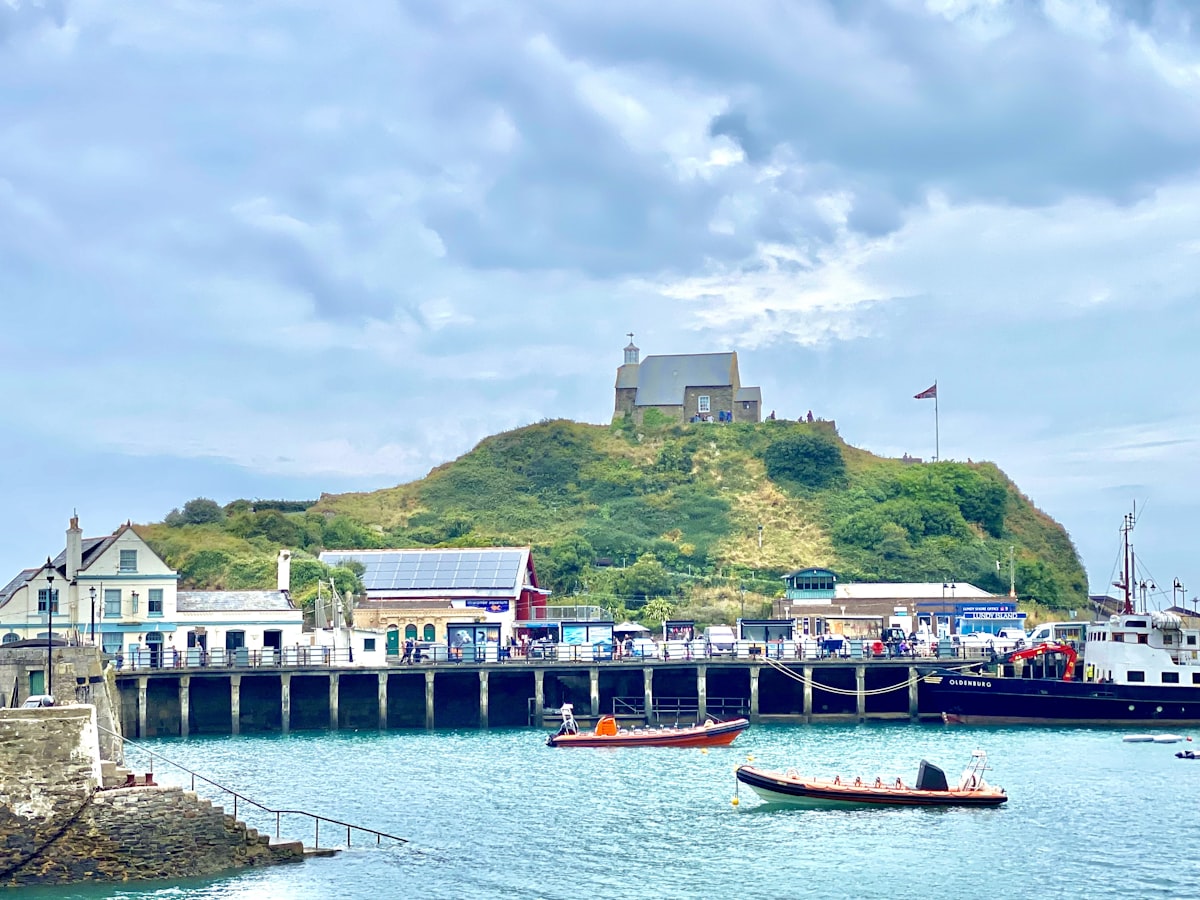
If you are planning an extension, an infill home or a larger residential scheme in Barnstaple, Ilfracombe or the surrounding countryside, understanding the daylight requirements in North Devon is an important early step. North Devon Council is the local planning authority (LPA) for the area — Devon County Council is not the planning authority for these applications — and it judges the light reaching neighbouring windows and gardens against its adopted development plan and recognised national technical guidance. This article explains how those rules work and what a sound daylight and sunlight assessment looks like locally.
Fortress Associates prepares daylight and sunlight reports to the current Building Research Establishment methodology for projects across the UK, including the North Devon district. Below we set out the policy basis, the council's guidance position, and the practical steps that help an application succeed.
The planning framework for daylight requirements in North Devon
The statutory starting point is the North Devon and Torridge Local Plan 2011–2031, adopted on 29 October 2018. This is a joint plan shared by North Devon Council and Torridge District Council, and it is the adopted development plan against which applications in the North Devon district are determined. Two of its development management policies carry most of the weight on daylight, sunlight and amenity.
Policy DM01 — Amenity Considerations
Policy DM01 is the plan's dedicated amenity policy. It supports development where it would not significantly harm the amenities of any neighbouring occupiers or uses, and where the intended occupants of the proposed development would not themselves be harmed as a result of existing or allocated uses. Daylight and sunlight to habitable rooms and usable outdoor space are central elements of the residential amenity this policy is designed to protect — for both existing neighbours and future occupiers.
Policy DM04 — Design Principles
Policy DM04 deals with design quality and is explicit about light. It requires that a design respects and ensures that development does not adversely impact neighbouring dwellings in terms of overlooking, loss of privacy, dominance, overshadowing, and loss of daylight or sunlight. It also guides the scale, density, massing, height, layout, fenestration and materials of development so that it sits sympathetically within its surroundings — and it expects new homes to meet the nationally described space standard, since undersized dwellings are unlikely to provide acceptable amenity for future occupants.
For householder schemes, Policy DM25 (Residential Extensions and Ancillary Development) applies alongside DM01 and DM04, ensuring extensions and outbuildings are designed so that neighbouring living conditions are not harmed. Read together, these policies give North Devon a clear amenity test focused squarely on protecting daylight, sunlight and privacy.
Does North Devon set a numerical daylight standard?
The Local Plan expresses daylight and sunlight in qualitative terms — not "significantly" harming amenity, and avoiding "overshadowing" or "loss of daylight or sunlight" — rather than publishing district-specific numerical thresholds. Nor does North Devon Council operate a dedicated residential design guide SPD setting bespoke daylight metrics: its adopted Supplementary Planning Documents cover Affordable Housing, Air Quality and Rural Workers' Dwellings, together with the site-specific Leadengate Design Guide, none of which establishes its own daylight calculation method.
The joint North Devon / Torridge validation checklist reinforces this. It requires accurately scaled location plans, block plans, floor plans and elevations (at the standard 1:50/1:100 and 1:1250/1:500 scales), and it lists technical assessments such as a Lighting Impact Assessment where artificial light could cause a nuisance — but it does not require a standalone daylight and sunlight assessment as a routine validation item. A Lighting Impact Assessment concerns light pollution and spill, which is a different matter from the daylight and sunlight reaching a neighbour's windows and garden.
Where a quantified, defensible judgement on daylight and sunlight is needed — for example where an extension or new building sits close to neighbouring windows, or where a scheme creates new dwellings — the recognised way to demonstrate compliance with DM01 and DM04 is national technical guidance:
- BRE BR 209 (2022), Site Layout Planning for Daylight and Sunlight: A Guide to Good Practice — the standard methodology for assessing daylight to neighbours (Vertical Sky Component and the no-sky line / daylight distribution test), sunlight (Annual Probable Sunlight Hours) and overshadowing of amenity areas.
- BS EN 17037 Daylight in Buildings — the British/European standard for daylight provision inside new habitable rooms.
- The National Planning Policy Framework (NPPF), which expects a good standard of amenity for existing and future occupants, balanced against the efficient use of land — a balance the BRE guide is explicitly designed to support.
Because North Devon does not impose its own numerical metric, a BRE-based report is the clearest way to evidence that a scheme satisfies the council's amenity and design policies.
Local factors that affect daylight assessment in North Devon
North Devon combines a busy main town, smaller coastal resorts and extensive countryside running up to the edge of Exmoor. Several local characteristics commonly shape an assessment:
- Dense historic and harbour-side townscapes. In Barnstaple, the district's principal service centre, and in coastal towns such as Ilfracombe, closely spaced buildings and steep, terraced streets mean even modest extensions can affect a neighbour's principal windows — exactly the overshadowing and loss-of-light effects Policy DM04 addresses.
- Steep coastal and valley topography. Much of North Devon, particularly around Ilfracombe and the coast, rises and falls sharply. Changes in level can amplify overshadowing and overbearing effects, so the orientation, siting and massing of a proposal — the very factors set out in DM04 — deserve careful analysis.
- Sensitive landscape edges. The eastern part of the district adjoins Exmoor and includes protected coast and countryside, where development is often expected to be modest in scale; getting daylight, sunlight and amenity right helps a scheme respond appropriately to these settings.
Identifying these issues before the design is fixed is usually far cheaper than redesigning after a neighbour objection or an officer's amenity concern.
When should you commission a daylight and sunlight report?
It is worth obtaining a report when:
- An extension or new building will sit close to, or directly opposite, a neighbour's principal windows;
- A scheme creates new dwellings or rooms whose own daylight must be demonstrated under BS EN 17037;
- A two-storey or taller addition could overshadow a neighbouring garden or terrace; or
- A planning officer or neighbour raises overshadowing, loss of light or overbearing impact during consultation.
A clear, BRE-based report can resolve concerns, support negotiation, and give the case officer the evidence needed to apply Policies DM01, DM04 and DM25 with confidence.
How Fortress Associates can help
Fortress Associates provides our daylight and sunlight report service to BRE BR 209 (2022) and BS EN 17037, prepared specifically to address the amenity tests in the North Devon and Torridge Local Plan. We work nationwide with a 4–5 working day turnaround and no advance payment. We also prepare Building Regulations drawings where a scheme is moving towards construction. To discuss a North Devon site, please contact us — and you may find our companion guide on daylight requirements in Mid Devon useful if your project sits towards the south of the county.
Sources & further reading
Need help with a UK planning project?
Fixed-fee daylight reports and Building Regulations drawings — delivered in 4–5 working days. No advance payment.
Request a free quote