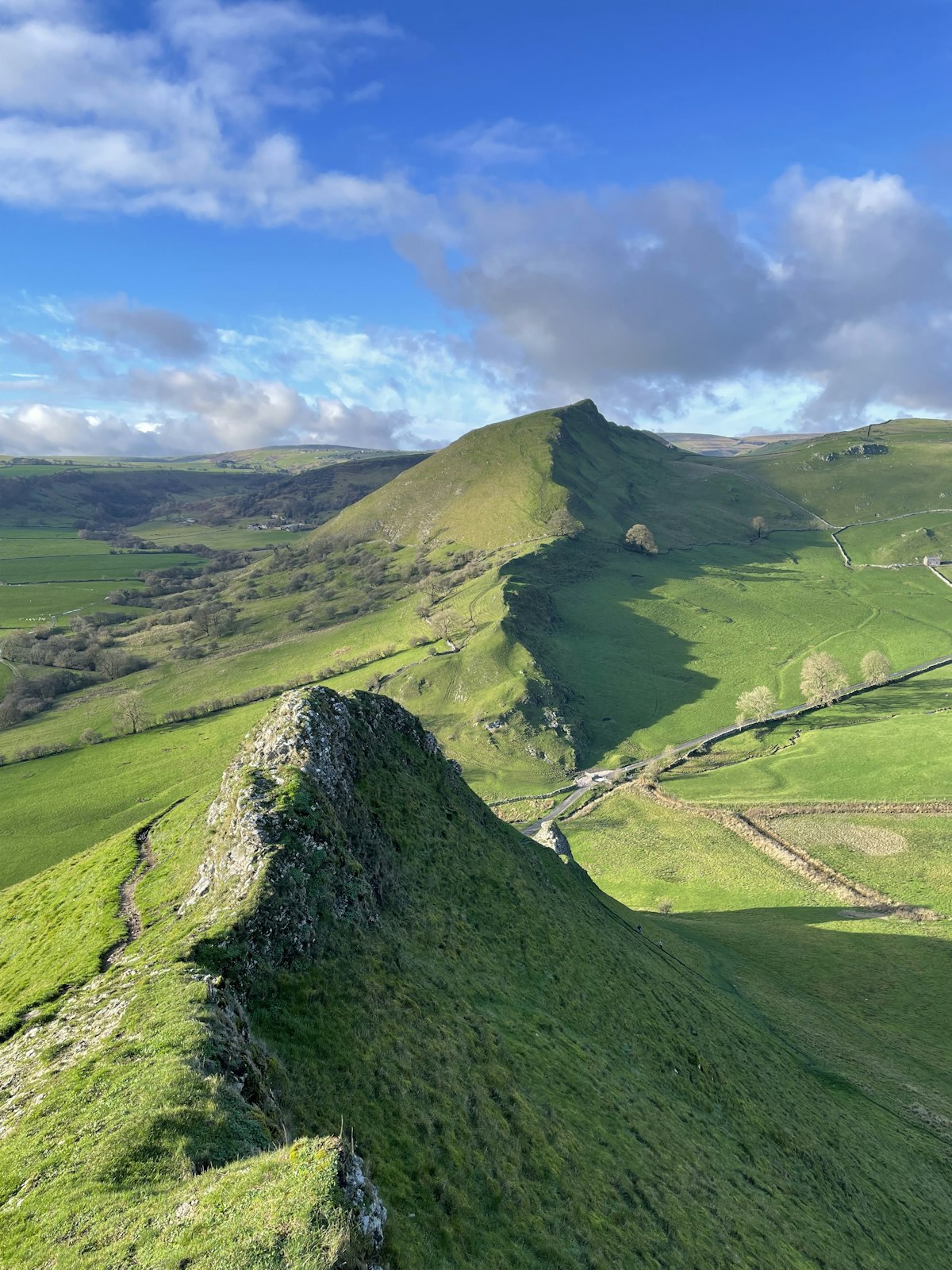
From the commuter villages around Dronfield in the north to the former colliery town of Clay Cross in the south, North East Derbyshire is a district shaped by its ex-coalfield past and its tightly drawn boundary with the uplands. Understanding the daylight requirements in North East Derbyshire matters whether you are squeezing an extension onto a terraced plot, infilling a former pit site, or bringing forward a small housing scheme. This post sets out how North East Derbyshire District Council approaches daylight, sunlight and overshadowing, which policies and guidance documents apply, and how a technical assessment to the recognised national methodology can support a clean route through planning.
One point worth clearing up at the outset: North East Derbyshire lies outside the Peak District National Park. The National Park is a separate local planning authority with its own development plan, so a site in, say, Eckington or Wingerworth is determined by the District Council rather than by the Park authority. If your property sits near the western fringe of the district, it is always worth confirming which authority validates your application before you start. For a comparison with how a very different historic authority handles the same issues, see our guide to the daylight requirements in Exeter.
The planning framework: Daylight Requirements in North East Derbyshire
Development in the district is guided by the North East Derbyshire Local Plan, which covers the period 2014 to 2034 and was adopted on 29 November 2021. The Local Plan replaced the older saved policies and provides the up-to-date basis against which applications are now assessed, alongside the National Planning Policy Framework.
Two policies do most of the work where amenity, light and overshadowing are concerned:
- Policy SDC12 — High Quality Design and Place-Making. This is the principal amenity policy. It expects development to respect the character of its surroundings and, crucially, to avoid unacceptable harm to neighbouring occupiers through loss of privacy, overlooking, overshadowing or an overbearing relationship. Daylight and sunlight to neighbouring habitable rooms and gardens fall squarely within this test.
- Policy SDC13 — Environmental Quality. This policy addresses the wider quality of the living environment, including pollution and amenity considerations that sit alongside the design test in SDC12.
Read together, SDC12 and SDC13 mean that a proposal which materially worsens daylight or sunlight to a neighbour, or which casts significant new overshadowing across an adjoining garden or amenity space, is likely to attract an objection unless the impact can be shown to be acceptable.
Design guidance: Successful Places and the Sustainable Residential Design SPD
Policy alone rarely tells you how a case officer will weigh a scheme. In North East Derbyshire the detail is supplied by two supporting documents:
- “Successful Places” — a joint design guide produced with neighbouring authorities, which sets out expectations for layout, spacing between dwellings, orientation and the relationship between buildings. Generous separation and sensible orientation are the simplest ways to protect daylight, sunlight and privacy.
- The Sustainable Residential Design Supplementary Planning Document (SPD), which expands on residential layout and amenity matters and is a material consideration when applications are determined.
For householders, these documents are the practical reference for questions such as how close a two-storey rear extension can sit to a boundary, or whether a first-floor window will create unacceptable overlooking. For larger schemes they shape the masterplan: where the taller blocks go, how gardens are oriented, and how much space is left between facing windows.
What “daylight requirements” actually means in practice
Local plan policy speaks the language of amenity — “overbearing”, “overshadowing”, “loss of light”. The technical translation of those words is the methodology published by the Building Research Establishment. The relevant guide is BRE BR 209, Site Layout Planning for Daylight and Sunlight: A Guide to Good Practice, updated in 2022. Although it is guidance rather than statute, BR 209 is the document planning officers and inspectors across England rely on to judge whether a daylight or sunlight impact is acceptable.
BR 209 sets out several recognised tests:
- Vertical Sky Component (VSC) — a measure of the skylight reaching a neighbouring window. A retained VSC of around 27%, or no more than a roughly 20% reduction from the existing value, is generally considered to keep daylight broadly unaffected.
- No Sky Line / daylight distribution — how much of a room still receives direct sky.
- Annual Probable Sunlight Hours (APSH) — for sunlight, particularly to south-facing windows and gardens.
- Overshadowing of amenity areas — typically the test that at least half a garden or amenity space should receive some sun on 21 March.
Alongside BR 209, internal daylight provision for new homes is increasingly assessed against BS EN 17037, the European daylight standard, which sets target illuminance levels for habitable rooms. For a new-build apartment scheme in Clay Cross or a barn conversion near Ashover, both standards may be relevant.
Why the district’s character changes the analysis
North East Derbyshire is not a uniform place, and good daylight assessment reflects that. A few local realities are worth bearing in mind:
- Ex-coalfield regeneration. Former colliery and industrial land at and around Clay Cross and the wider coalfield is a focus for new housing. These sites can be constrained, with existing dwellings on the edges whose daylight and sunlight need protecting as densities rise.
- Dronfield and the northern villages. Close to the Sheffield conurbation, plots here are often tight, with mature two-storey housing and sloping topography that can exaggerate overshadowing. Level differences matter: a building uphill of a neighbour throws a longer shadow.
- Topography generally. The district’s rolling landscape means orientation and slope frequently drive the outcome of a sunlight assessment as much as the footprint itself.
Common scenarios where an assessment helps
- A two-storey rear or side extension close to a boundary, where a neighbour may raise loss of light or an overbearing effect.
- Backland or infill development behind existing frontages — a frequent source of overlooking and overshadowing objections.
- Small residential schemes on former employment or colliery land, where SDC12 and the internal daylight of the new homes are both in play.
- Pre-application submissions, where a clear BR 209 report can settle an officer’s amenity concerns early.
How Fortress Associates can help
Fortress Associates provides clear, robust daylight and sunlight assessments to BRE BR 209 (2022) and BS EN 17037 for sites across North East Derbyshire and the rest of the UK. We can produce a numerical VSC, daylight distribution and sunlight analysis to accompany your application, or a concise pre-application note to test a design before you commit. Our daylight and sunlight report service works to a 4–5 working day turnaround, with no advance payment required. Take a look at our services or get in touch to discuss your scheme.
Sources & further reading
Need help with a UK planning project?
Fixed-fee daylight reports and Building Regulations drawings — delivered in 4–5 working days. No advance payment.
Request a free quote