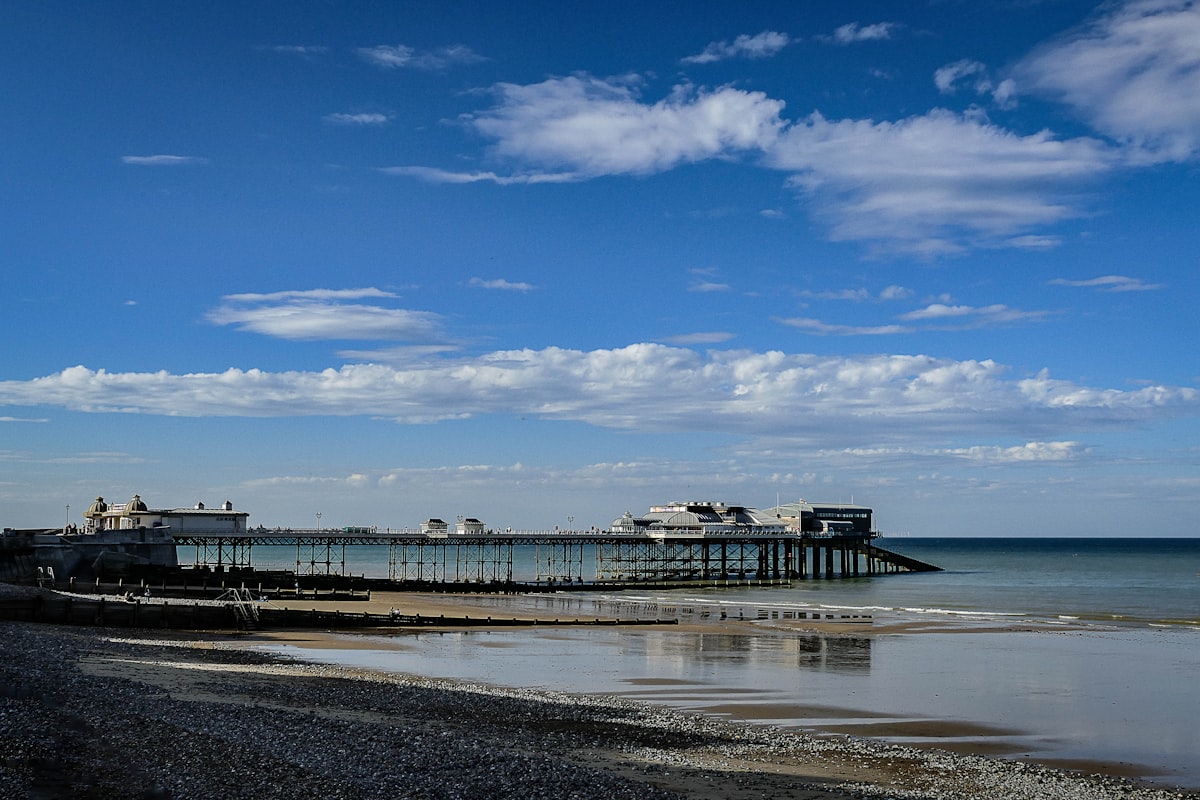
Understanding the daylight requirements in North Norfolk is essential for anyone planning an extension, a new dwelling or a larger residential scheme along this distinctive stretch of the Norfolk coast. Whether your site sits in the centre of Cromer, the conservation areas of Sheringham, or the Georgian streets of Holt, the way a proposal affects light to neighbouring homes is one of the matters North Norfolk District Council weighs most carefully. This guide explains how daylight and sunlight are assessed locally, which planning policies and guidance apply, and how a professional report can support your application.
Who decides planning applications in North Norfolk?
North Norfolk District Council is the local planning authority (LPA) for the district. Although Norfolk County Council covers the wider county, it is the district council that determines householder and residential planning applications, sets the local validation requirements, and adopts the Local Plan. That distinction matters: the policies and guidance that govern daylight and sunlight in Cromer, Sheringham and Holt are those adopted by North Norfolk District Council, not the county.
The adopted Local Plan and amenity policy
North Norfolk District Council adopted the North Norfolk Local Plan 2024-2040 on 17 December 2025, following examination and a finding by the Planning Inspectorate that the plan was sound and legally compliant. The new plan replaces the long-standing Core Strategy that had guided development in the district since 2008, and it now provides the up-to-date policy framework against which applications are assessed.
The plan's principal design policy is Policy ENV8 'High Quality Design', which requires all development to be designed to a high standard, reinforcing local distinctiveness and respecting the amenity of existing and future occupiers. The protection of residential amenity runs through the plan: proposals are expected to avoid significantly detrimental effects on the amenity of nearby occupiers, and across the plan's site-specific allocations the council repeatedly asks for careful attention to layout and building design to ensure there is no unacceptable overlooking or overshadowing of neighbouring properties. In practice, this means that loss of daylight, loss of sunlight, overshadowing and overbearing impact are all material considerations when an application is determined.
Crucially, Policy ENV8 directs applicants to read its requirements alongside the council's design guidance. The plan states that development should comply with Policy ENV8 and take account of the North Norfolk Design Guide SPD, giving that supplementary document real weight in the assessment of light and amenity.
Daylight Requirements in North Norfolk: the Design Guide SPD
North Norfolk does not set its own numerical daylight targets in the Local Plan. Instead, the detailed expectations sit in the North Norfolk Design Guide, a Supplementary Planning Document that supports the development plan and is used to inform proposals. Its householder and amenity sections are where applicants will find the practical tests the council applies.
The Design Guide advises that extensions should be sited and designed to avoid any loss of light or privacy to adjoining properties, and should not result in overshadowing, tunnelling or overbearing effects. To help assess loss of light, the guide applies the familiar 45-degree test: taking the plan and elevation of a proposed extension and drawing a 45-degree line from the midpoint of a neighbour's protected window. As the council explains it, if the centre of an existing neighbouring window lies within the 45-degree lines (on plan and/or elevation), a more detailed daylight and sunlight assessment will be required. This is the trigger point at which a technical study, rather than a simple geometric check, becomes necessary.
Because the Design Guide stops at this practical level, the detailed numerical methodology comes from national technical standards, applied through the Local Plan's amenity expectations.
BRE BR 209, BS EN 17037 and the NPPF
Where a more detailed assessment is needed, the accepted methodology in England is the Building Research Establishment guidance BRE BR 209, Site Layout Planning for Daylight and Sunlight (third edition, 2022). BR 209 sets out the established numerical tests, including the Vertical Sky Component (VSC) for daylight reaching neighbouring windows, the no-sky-line or daylight distribution test for interiors, and the Annual Probable Sunlight Hours (APSH) test for sunlight. For the daylight available within new homes, the British Standard BS EN 17037 'Daylight in buildings' provides target illuminance levels and assessment methods. These technical standards are applied through the Local Plan's amenity policies and the National Planning Policy Framework (NPPF), which asks that developments provide a high standard of amenity for existing and future users.
In other words, North Norfolk's position is the common one for a shire district that does not publish a bespoke daylight SPD: the Local Plan and Design Guide set the principle of protecting amenity, the 45-degree test flags when scrutiny is needed, and BRE BR 209 (2022) together with BS EN 17037 and the NPPF supply the numerical detail.
Validation: what you must submit
North Norfolk District Council operates a Local Validation Requirements List, with the current version covering 2025 to 2027 and effective from 1 January 2025. The validation requirements identify neighbour amenity, including overlooking, loss of daylight and sunlight, and overbearing impacts, as matters that may need to be addressed in supporting information. Where the 45-degree test is failed, or where a scheme is of a scale or proximity likely to affect neighbouring light, a daylight and sunlight assessment prepared to BRE BR 209 (2022) is the appropriate way to demonstrate that the proposal is acceptable. Submitting the right evidence at validation stage helps avoid delay and reduces the risk of a refusal on amenity grounds.
Local factors that affect daylight in North Norfolk
Several characteristics of the district shape how daylight and sunlight issues arise here:
- Coastal towns with tight historic cores. Cromer, Sheringham and Holt all contain conservation areas and closely spaced period properties. Tight back-to-back and side-by-side relationships mean the 45-degree test is frequently engaged, and extensions must be designed sensitively to avoid overbearing or overshadowing neighbours.
- The Norfolk Coast National Landscape (AONB) and Heritage Coast. Much of the district lies within the protected Norfolk Coast National Landscape and the designated Heritage Coast. While these designations are primarily about landscape and visual impact, they reinforce the council's expectation of high-quality, well-considered design under Policy ENV8, which in turn supports careful treatment of light and amenity.
- A predominantly low-rise, traditional grain. Much of North Norfolk is characterised by low-density, two-storey development. Proposals that introduce greater height or depth, or that build close to a boundary, are the ones most likely to need a detailed daylight and sunlight study to show that neighbouring amenity is protected.
How Fortress Associates can help
Fortress Associates prepares our daylight and sunlight report service to BRE BR 209 (2022) and BS EN 17037, tailored to the requirements of North Norfolk District Council and its Design Guide SPD. We assess impacts on neighbouring properties, the daylight and sunlight available within proposed dwellings, and we set out clear, defensible conclusions to support your planning application. We work nationwide with a typical turnaround of 4 to 5 working days, and we ask for no advance payment. We also offer Building Regulations drawings where your project needs them. To discuss a North Norfolk scheme, get in touch with our team.
Related reading
If your project sits elsewhere in the county, you may find our guide to daylight requirements in Breckland useful for comparison.
Sources & further reading
Need help with a UK planning project?
Fixed-fee daylight reports and Building Regulations drawings — delivered in 4–5 working days. No advance payment.
Request a free quote