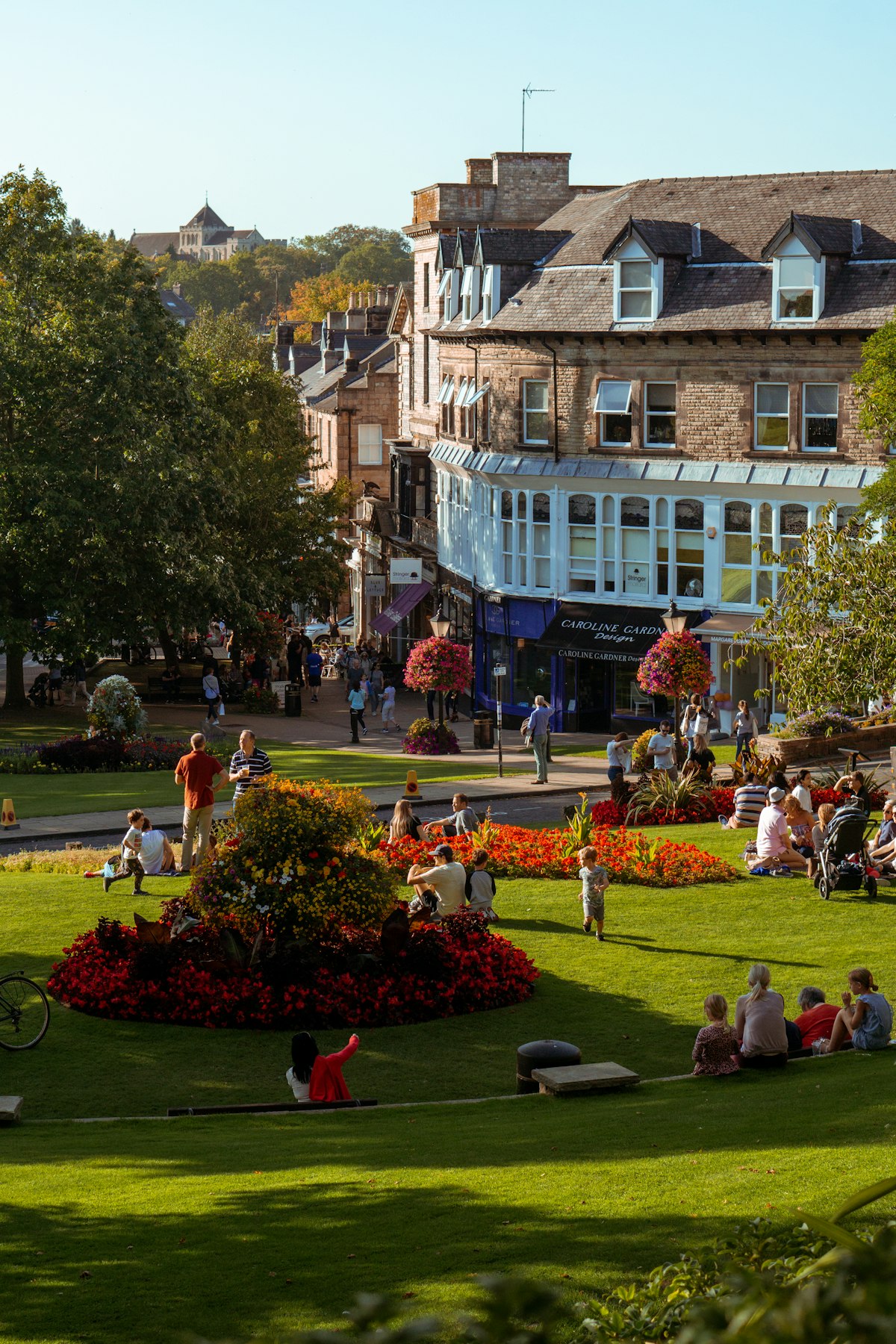
Daylight requirements in North Yorkshire are unusually layered, because the planning policy that governs your site depends on which former district it sits in. Since the 2023 local government reorganisation, a single council determines applications across a vast rural and market-town area, from Harrogate and Knaresborough to Scarborough, Skipton, Selby, Northallerton and Richmond. This guide explains how daylight and sunlight are assessed in North Yorkshire, which adopted Local Plan applies where, and how the recognised national standards fit in.
How North Yorkshire Council assesses daylight and sunlight
On 1 April 2023, North Yorkshire Council was created as a new unitary authority, replacing North Yorkshire County Council and the seven former district and borough councils: Craven, Hambleton, Harrogate, Richmondshire, Ryedale, Scarborough and Selby. The new council is now the local planning authority for the whole of this area. The City of York is a separate unitary authority and is not part of North Yorkshire Council.
There is one important exception to keep in mind. The Yorkshire Dales National Park and the North York Moors National Park are administered by their own National Park Authorities, which are the local planning authorities within their boundaries. If your site falls inside either national park, you deal with that Authority and its own Local Plan, not North Yorkshire Council.
Seven legacy Local Plans still apply
This is the single most important point for any North Yorkshire applicant. North Yorkshire Council has a statutory duty to prepare a single new North Yorkshire Local Plan covering the whole council area, and is required to adopt it by April 2028. Until that plan is adopted, the adopted Local Plans of the seven former districts continue to apply, each within its old district boundary, as set out in the council's consolidated planning policy framework. In other words, a daylight and sunlight question in Harrogate is currently judged against the Harrogate plan, while the same question in Scarborough or Selby is judged against those districts' plans.
So the first step on any North Yorkshire scheme is simply to identify which legacy district your site lies in, and then apply that plan's amenity and design policies.
A worked example: the Harrogate District Local Plan
Take the largest of the former districts. The Harrogate District Local Plan 2014–2035 (adopted March 2020) contains clear, directly relevant policies:
- Policy HP4 (Protecting Amenity) states that development “should be designed to ensure that they will not result in significant adverse impacts on the amenity of occupiers and neighbours,†and lists the amenity considerations as including “A. Overlooking and loss of privacy; B. Overbearing and loss of light; and C. Vibration, fumes, odour noise and other disturbance,†taking account of both individual and cumulative impacts.
- Policy HS8 (Extensions to Dwellings) supports extensions provided there is “no adverse impact on neighbouring residential amenity.†The supporting text is explicit on light: extensions “should be designed to avoid overlooking neighbouring windows (unless separated by at least 21 metres) and gardens,†and the “position, height and orientation of an extension should avoid unreasonable obstruction of sunlight and daylight to neighbouring properties.â€
The Harrogate plan also points applicants to the legacy House Extensions and Garages Design Guide (2005) for further detail. Each of the other six legacy districts has its own equivalent design and amenity policies, so the governing wording will differ depending on where your site is, even though the underlying issues – loss of light, overshadowing, overbearing impact and overlooking – are the same throughout.
North Yorkshire's daylight guidance position
North Yorkshire Council has not yet adopted a single area-wide supplementary planning document dedicated to daylight and sunlight; that is one of the matters expected to be consolidated through the new Local Plan. In the meantime, the position is determined by the relevant legacy Local Plan policy (such as Harrogate's HP4 and HS8) together with any legacy design guidance that survives in the former district. Where those policies require an assessment of loss of light or overshadowing, the recognised technical benchmark for that assessment is the BRE methodology described below.
It is also worth noting that, historically, the former Scarborough Borough validation requirements expected a daylight/sunlight assessment where a development might cause loss of amenity to nearby property through loss of daylight or sunlight to habitable windows, or cause overshadowing of adjacent land. Applicants should always check the current local validation list for the relevant area, as requirements are periodically updated.
How the national standards fit in
Across all seven legacy areas, the policies on light derive their meaning from the same national framework:
- BRE BR 209 (2022 edition), Site Layout Planning for Daylight and Sunlight – the recognised technical guide used to assess loss of light to neighbours (via the vertical sky component and daylight distribution tests) and sunlight (via the annual probable sunlight hours test), and to check daylight within new homes;
- BS EN 17037 (Daylight in buildings) – the standard for daylight provision within new dwellings, referenced in current BRE guidance; and
- The National Planning Policy Framework (NPPF) – which seeks a good standard of amenity for existing and future occupiers and is delivered locally through each adopted Local Plan; the Harrogate plan's HP4 expressly cites the NPPF on this point.
What this means for your scheme
- Identify your district first. Confirm whether your site is in the former Harrogate, Scarborough, Selby, Hambleton, Richmondshire, Ryedale or Craven area – or inside one of the two national parks – before you cite any policy.
- Apply the right legacy policy. Quote the amenity and design policies of that plan (for Harrogate, HP4 and HS8) when explaining how your scheme protects neighbouring light.
- Back it with a BRE-based assessment. For new dwellings, flats, backland plots and larger extensions, a report to BR 209 (2022) provides the objective evidence officers need, regardless of which legacy plan applies.
How Fortress Associates can help
Fortress Associates prepares our daylight and sunlight report service to BRE BR 209 (2022), BS EN 17037 and the relevant adopted Local Plan – including whichever of the seven North Yorkshire legacy district plans applies to your site. We work nationwide with a 4–5 working day turnaround and no advance payment. We also produce Building Regulations drawings to the Approved Documents (Parts A–S). To discuss a North Yorkshire site, get in touch. If your project is in the South West, see our companion guide on daylight requirements in North Somerset.
Sources & further reading
Need help with a UK planning project?
Fixed-fee daylight reports and Building Regulations drawings — delivered in 4–5 working days. No advance payment.
Request a free quote