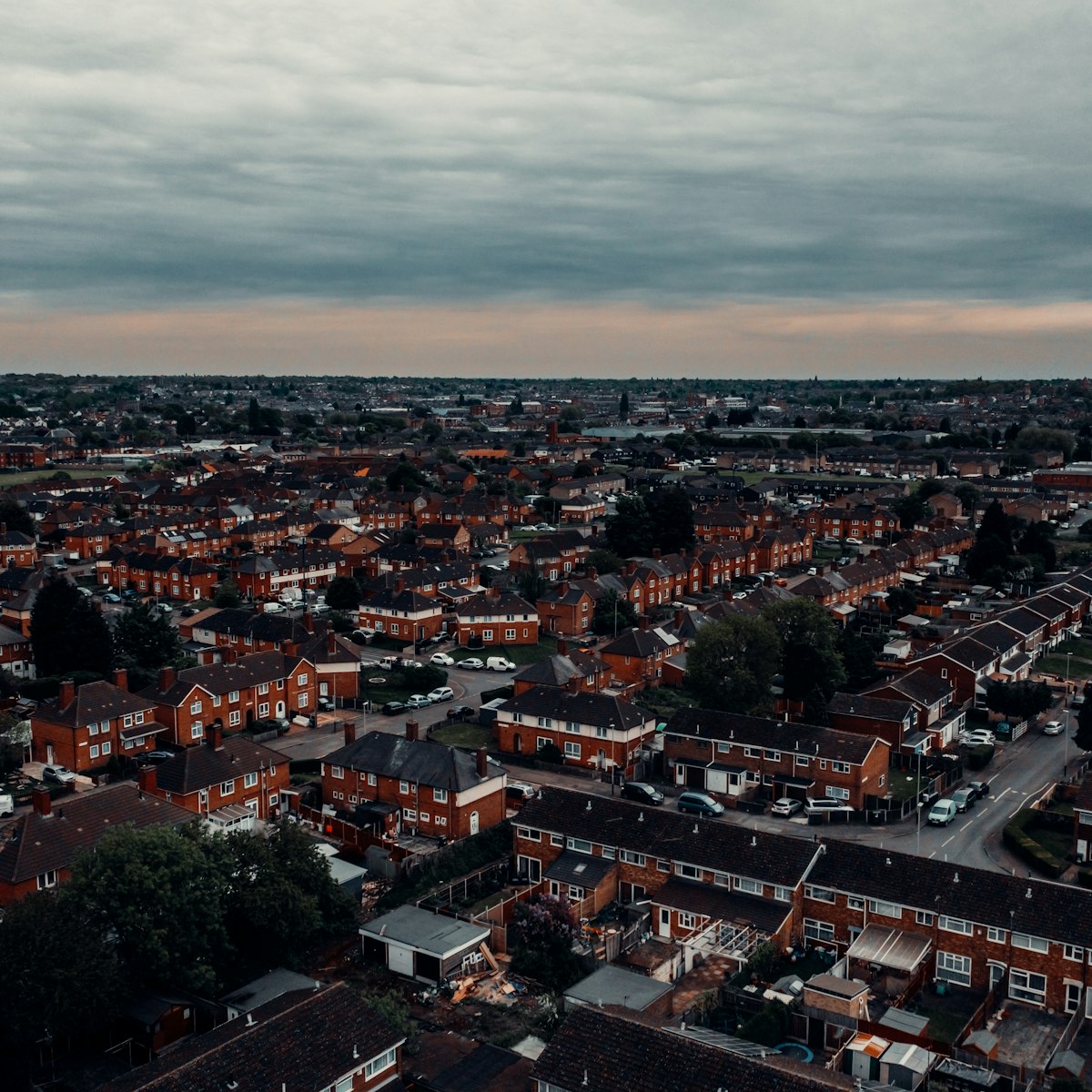
Understanding the daylight requirements in Oadby and Wigston is one of the most useful things a homeowner, developer or architect can do before submitting a planning application in this compact Leicestershire borough. Oadby and Wigston is the smallest district in Leicestershire by area, made up of the closely built suburbs of Oadby, Wigston and South Wigston on the southern edge of Leicester. That tight, largely residential grain means that extensions, infill plots and back-land schemes regularly sit close to neighbouring windows and gardens, so the effect of a proposal on light and amenity is almost always a material consideration.
This guide explains how Oadby and Wigston Borough Council approaches daylight and sunlight, which adopted policies and guidance apply, and how a professional daylight and sunlight assessment can support your scheme.
The planning framework in Oadby and Wigston
The Council adopted the Borough of Oadby and Wigston Local Plan on 16 April 2019. This is the up-to-date development plan against which planning applications in the borough are determined, alongside the National Planning Policy Framework (NPPF). The Local Plan sets out the borough's spatial strategy and the development management policies that control the design and amenity impact of new building work.
Two adopted policies are particularly relevant to light and neighbour amenity:
- Policy 6 (High Quality Design and Materials) requires the highest standards of inclusive design for all new development and major refurbishment, including respecting existing local character, responding to layout, orientation and scale, and protecting local amenity.
- Policy 15 (Urban Infill Development) deals with the infill and back-land plots that are common across Oadby, Wigston and South Wigston, where the relationship between a new dwelling and existing homes is critical.
Policy 44 (Landscape and Character) is also referenced where the wider setting of a settlement is engaged. Together these policies provide the local hook on which daylight, sunlight and overshadowing issues are weighed.
Daylight requirements in Oadby and Wigston: the Residential Development SPD
Oadby and Wigston is unusual among smaller districts in having a dedicated design document for householder and residential schemes. The Council adopted its Residential Development Supplementary Planning Document (SPD) in April 2019, the same month as the Local Plan. The SPD supplements Policies 6, 15 and 44 and sets out, in plain terms, how the Council assesses matters such as residential amenity, privacy and visual intrusion, the provision of private open space, and sunlight and daylight.
The SPD is explicit that the Council will assess the natural lighting implications of any new development, noting that a badly designed extension “can cut out both sunlight and daylight, be overbearing and be too dominant on the boundary separating the neighbours.” To control this, the borough applies its 45 Degree Code of Practice.
How the 45 Degree Code of Practice works
The 45 Degree Code is the borough's primary local test for daylight and sunlight on householder and similar schemes. In summary:
- An imaginary line is drawn at 45 degrees from the nearest window that is the main source of light to a neighbour's habitable room. New building work should not cross this line.
- A habitable room includes bedrooms, dining rooms, kitchens, conservatories, studies, play rooms and home offices. It does not include bathrooms, en-suites, halls, utility rooms, landings, garages or workshops.
- Secondary windows to a room are not normally taken into account.
- The point from which the line is drawn differs for single-storey and for two-storey or first-floor extensions, and the SPD illustrates this with diagrams.
The SPD also gives a helpful practical allowance: at the rear of a dwelling, a single-storey extension projecting an effective maximum distance of 3.5 metres along the boundary will usually be acceptable irrespective of the 45 degree guidelines. This kind of local rule is exactly why a generic, off-the-shelf approach to daylight is risky in Oadby and Wigston, and why a council-specific assessment matters.
Where the BRE Guide and BS EN 17037 come in
The 45 Degree Code is a useful screening tool, but it is a simplified rule of thumb. For larger or more sensitive proposals, for back-land and infill development under Policy 15, and where a neighbour raises a detailed objection, the Council and applicants commonly turn to the recognised national methodology. The borough does not publish bespoke numerical daylight targets of its own; instead the technical standards apply through the Local Plan and the NPPF, namely:
- BRE BR 209 (2022), Site Layout Planning for Daylight and Sunlight: A Guide to Good Practice, which provides the Vertical Sky Component (VSC), No Sky Line (NSL/daylight distribution) and Annual Probable Sunlight Hours (APSH) tests used to measure impact on neighbours, plus guidance on overshadowing of gardens and amenity space.
- BS EN 17037, the British and European Standard Daylight in Buildings, which addresses daylight provision within new rooms and dwellings.
Using these alongside the 45 Degree Code lets you demonstrate compliance both in simple householder terms and in robust numerical terms, which is particularly valuable where a scheme is finely balanced.
Validation and what the Council expects
Oadby and Wigston Borough Council operates a Local Validation Checklist (most recently approved by Members in August 2024) that sets out what must accompany a planning application. Where a proposal could materially affect a neighbour's daylight, sunlight or privacy, a supporting daylight and sunlight assessment is the clearest way to address Policy 6 and the SPD up front, rather than leaving the issue to be raised by objectors or planning officers later in the process.
Two further local points are worth keeping in mind. First, the borough's high density and small gardens mean overshadowing of neighbouring amenity space is frequently scrutinised, not just window light. Second, the SPD's privacy and visual intrusion guidance sits alongside the daylight tests, so a well-prepared submission should consider light, outlook and overlooking together.
How Fortress Associates can help
Fortress Associates provides our daylight and sunlight report service for homeowners, architects and developers across Oadby and Wigston and the rest of the UK. Our reports are prepared to BRE BR 209 (2022) and BS EN 17037, and are written to engage directly with the Council's adopted Policy 6, the Residential Development SPD and the 45 Degree Code. We typically turn reports around in 4–5 working days, and there is no advance payment required. See our services or get in touch to discuss your scheme.
If your project is on the wider Leicester fringe, you may also find our guide to daylight requirements in Blaby useful.
Sources & further reading
Need help with a UK planning project?
Fixed-fee daylight reports and Building Regulations drawings — delivered in 4–5 working days. No advance payment.
Request a free quote