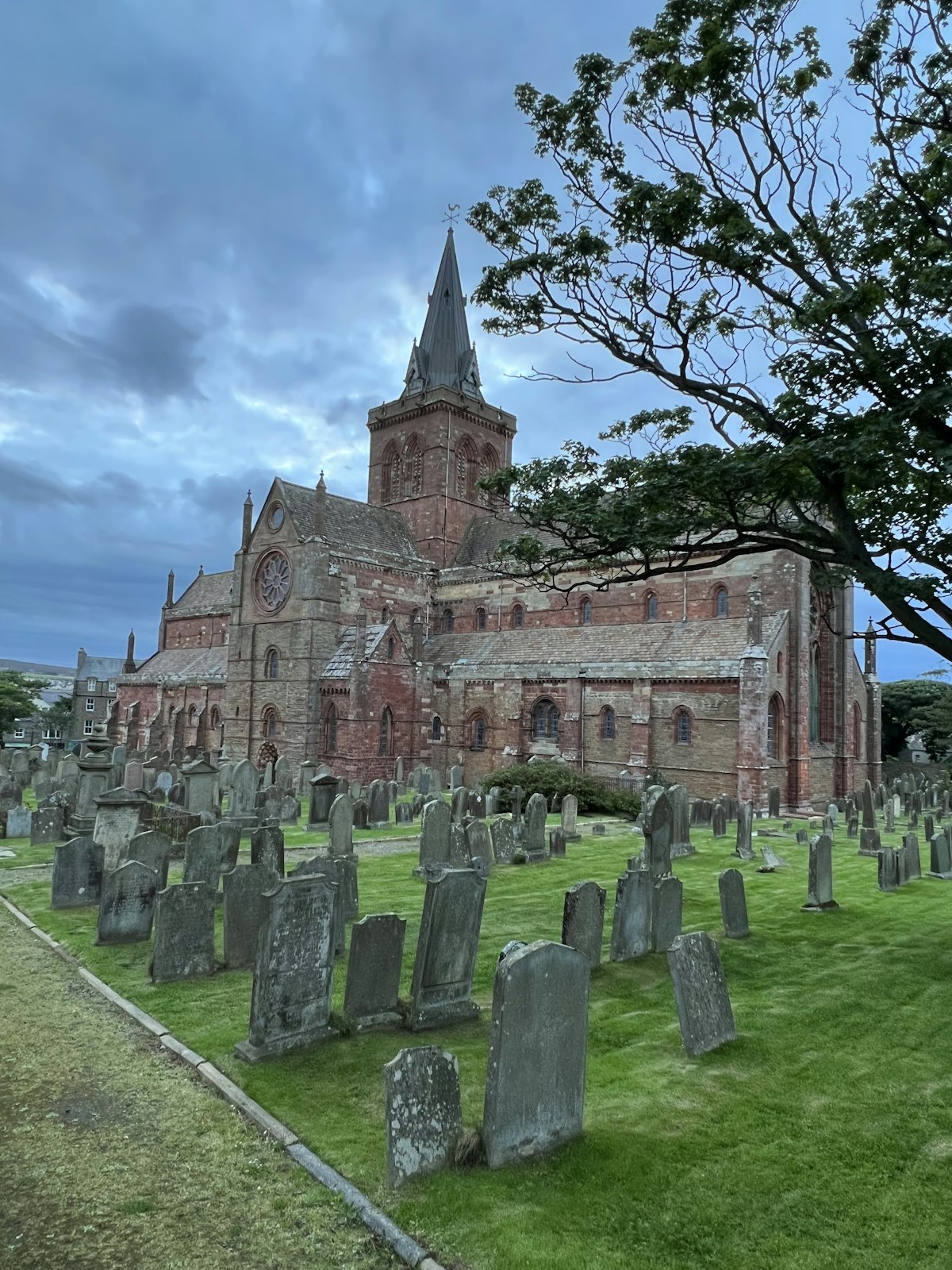
Understanding the daylight requirements in Orkney Islands matters for anyone planning a new house, an extension, an infill plot or the sub-division of a garden in Kirkwall, Stromness or across Orkney's villages, rural settlements and isles. Orkney Islands Council is the planning authority for the whole archipelago, and it assesses the daylight and sunlight effects of new development through its adopted Local Development Plan, supported by national planning policy and recognised technical guidance. This guide sets out what the Council actually looks for and how a daylight and sunlight report can support your application. Because Orkney is a remote island authority, its development plan is a relatively concise, criteria-based document, and we have been careful below to set out only what the adopted plan says.
The planning framework in Orkney
Planning decisions in Orkney are made against two principal documents: the council's adopted Local Development Plan and Scotland's National Planning Framework 4 (NPF4), adopted in February 2023. Together these form the statutory development plan, and applications are judged primarily on whether they accord with it.
The local document is the Orkney Local Development Plan 2017, adopted in April 2017. The plan sets out fifteen criteria-based policies, and it is explicit that all of its policies are given equal weight: as the plan states, "if a proposal is contrary to any single policy then it does not accord with the Plan." Amenity considerations such as daylight and sunlight sit within its criteria for all development and its design policy.
Policy 1: Criteria for All Development
The plan's overarching policy is Policy 1: Criteria for All Development, which sets out the key guiding principles considered in the assessment of every planning application. Among its criteria, development will be supported where:
"The amenity of the surrounding area is preserved and there are no unacceptable adverse impacts on the amenity of adjacent and nearby properties/users."
Protecting the daylight and sunlight enjoyed by neighbouring homes is a core part of this amenity test, and it applies to proposals throughout Orkney.
Policy 2: Design
The plan's Policy 2: Design reinforces this. It states that design is a material consideration and that "it is the aim of the Plan to create places that are safe, pleasant, sustainable and well-designed to meet the needs of people." Where relevant, proposals must demonstrate, through consideration of "scale, massing, form, proportions, plot size/density, materials, layout and landscaping," that they comply with a set of fundamental principles, including that the development:
- reinforces the distinctive identity of Orkney's built environment and is sympathetic to the character of its local area; and
- has a "positive or neutral effect on the appearance and amenity of the area."
The factors listed in Policy 2 — scale, massing, form and layout — are exactly the design considerations that determine whether a new building overshadows neighbouring windows or reduces the light to nearby gardens.
Policy 5: Housing and garden sub-division
For residential proposals, Policy 5: Housing is directly relevant. Within settlements it confirms there is a presumption in favour of appropriate residential development consisting of infill, conversion, the redevelopment of derelict land and "the sub-division of garden grounds." Importantly, for redevelopment sites it states that other uses may be acceptable "providing there are no unacceptable adverse impacts on the residential amenity of surrounding users." Because much of Orkney's housing comes forward as windfall infill and garden-ground plots in Kirkwall and the villages, the relationship between a new dwelling and its neighbours' light and privacy is frequently the deciding issue.
National guidance and NPF4
Policy 2 confirms that, when assessing applications, the Council will also have regard to national design guidance including Creating Places, Designing Places and Designing Streets. At the national level, NPF4 now sits at the top of the development plan. Two of its policies are most relevant: Policy 14 (Design, quality and place), which applies the six qualities of successful places and requires development to support amenity and wellbeing, and Policy 16 (Quality homes), which seeks high-quality, sustainable homes — in practice including adequate natural light for new dwellings. NPF4 is read together with the Orkney LDP 2017 when an application is determined.
How daylight and sunlight are actually assessed
Neither the Orkney LDP 2017 nor NPF4 sets numerical daylight or sunlight targets in policy. Instead, the requirement is that amenity — including light to neighbours and to future occupiers — is preserved and that there are no unacceptable adverse impacts. To demonstrate this objectively, planners across Scotland rely on the established technical methodology produced by the Building Research Establishment.
The relevant guidance is the BRE's BR 209, Site Layout Planning for Daylight and Sunlight: A Guide to Good Practice (third edition, 2022), often supported by the daylight provision criteria in BS EN 17037. BR 209 provides the recognised tests used to judge light effects, including:
- Vertical Sky Component (VSC) measured at neighbouring windows, with a guideline value of around 27%, and a meaningful loss generally identified where the figure falls below 0.8 times its former value;
- No Sky Line / daylight distribution, assessing how much of a room still receives direct sky light;
- Annual Probable Sunlight Hours (APSH), used to assess sunlight to windows, with particular attention to south-facing windows; and
- overshadowing of gardens and amenity space, typically tested against the 21 March sun-on-ground criterion.
A professional daylight and sunlight report applies these tests to your specific scheme and its neighbours, giving the Council's planners the evidence they need to conclude whether the amenity tests in Policy 1 and Policy 2 are met. Where a development is in a sensitive setting, the report can also help refine the design before submission.
Local factors that matter in Orkney
Several Orkney characteristics make daylight and sunlight assessment locally distinctive:
- Historic towns and conservation areas. Kirkwall and Stromness have tightly-grained historic cores and designated conservation areas, with Kirkwall focused on the landmark of St Magnus Cathedral. In these closely-built streets, protected under Policy 8 (Historic Environment and Cultural Heritage), the relationship between built form, scale and light to neighbours is closely scrutinised.
- High latitude and shelter. Orkney lies far north, so the sun sits low in the sky for much of the year and winter daylight is limited. Policy 2 expressly asks proposals to "maximise opportunities for shelter" while still achieving a positive or neutral effect on amenity, so careful orientation and spacing of new homes is important both for the development itself and for its neighbours.
- Windfall and garden-ground development. With much of Orkney's housing delivered as infill and the sub-division of garden grounds, new homes are often placed close to existing dwellings, making daylight and sunlight a frequent and decisive consideration.
When you may need a daylight and sunlight report
A daylight and sunlight assessment is commonly worthwhile where you are:
- building a rear or side extension that a neighbour or the case officer raises concerns about;
- proposing an infill plot, a garden-ground sub-division or a building taller than its surroundings in Kirkwall or Stromness;
- developing a constrained site within a historic town centre or conservation area; or
- responding to a planning condition or an objection that raises overshadowing or loss of light.
Submitting a BRE-based report up front can reduce delay, head off objections and give the Council the technical comfort it needs to support your scheme.
How Fortress Associates can help
Fortress Associates provides our daylight and sunlight report service for householders, developers and agents in Orkney and across the rest of the UK. Each report is prepared to BRE BR 209 (2022) and BS EN 17037, written to support your application under the Orkney LDP 2017 and NPF4. We work to a 4 to 5 working day turnaround and ask for no advance payment. We can also prepare building warrant and Building (Scotland) Regulations drawings where your project needs them. To discuss your site, see our services or contact us.
Sources & further reading
- Orkney Islands Council: Orkney Local Development Plan 2017
- Scottish Government: National Planning Framework 4 (NPF4)
- BRE: BR 209 Site Layout Planning for Daylight and Sunlight (2022)
- Fortress Associates daylight and sunlight reports
- Daylight Requirements in North Ayrshire
- Our services and contact details
Need help with a UK planning project?
Fixed-fee daylight reports and Building Regulations drawings — delivered in 4–5 working days. No advance payment.
Request a free quote