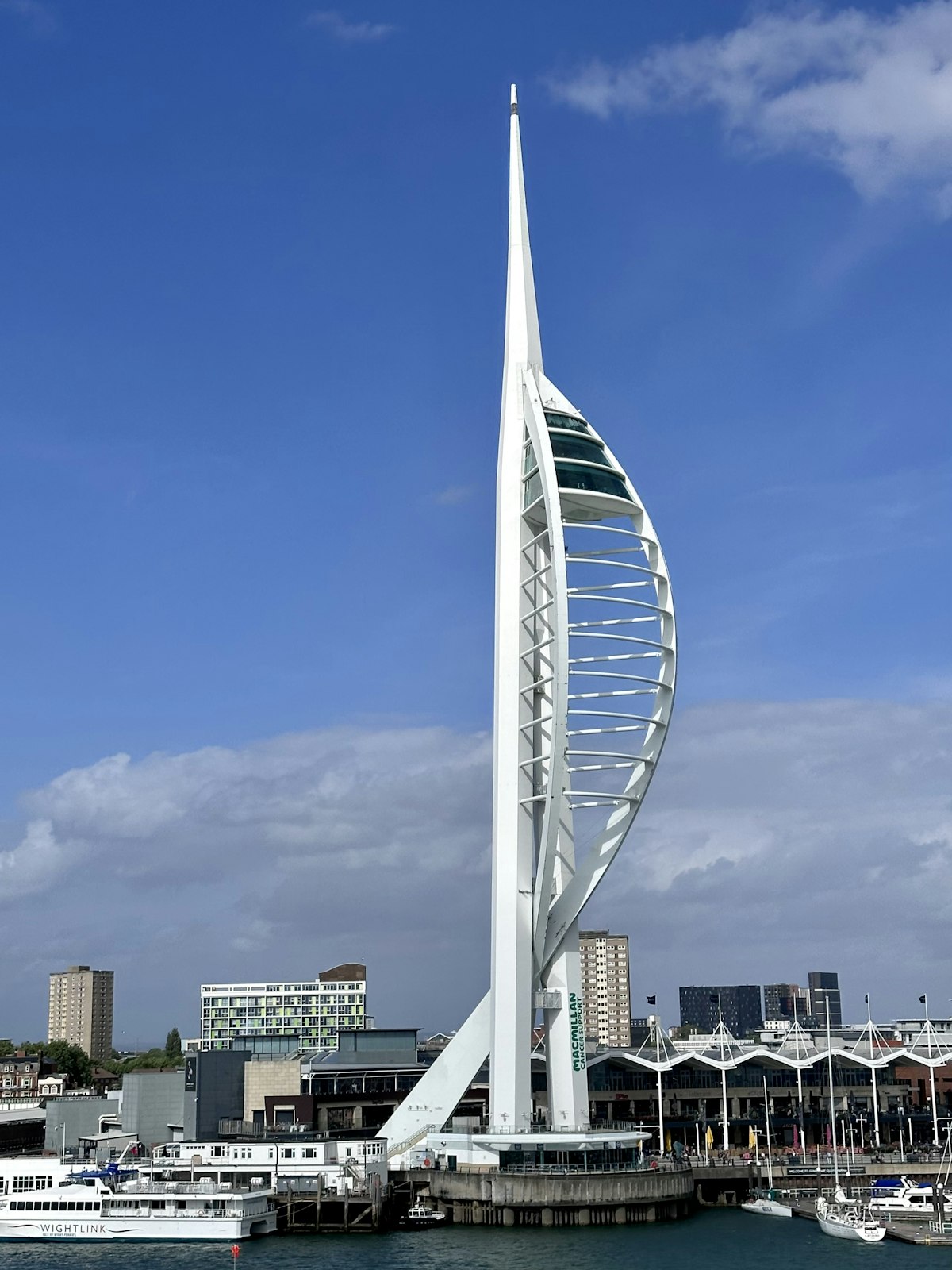
Daylight requirements in Portsmouth carry unusual weight. Portsmouth is the most densely populated city in England outside London, and as a tightly built island city its development sites are typically constrained, overlooked and close to existing homes. Tall structures such as the Spinnaker Tower punctuate a skyline where space is at a genuine premium. In this context, demonstrating that a scheme protects daylight and sunlight to neighbouring properties, and provides acceptable internal light for future occupiers, is often decisive to whether planning permission is granted.
This guide sets out how daylight and sunlight are assessed within Portsmouth's planning framework, which adopted policies and guidance apply, and when a formal assessment is likely to be expected. It is written for homeowners, developers, architects and agents preparing applications to Portsmouth City Council.
The adopted planning framework in Portsmouth
The statutory development plan for the city is led by The Portsmouth Plan (Portsmouth's Core Strategy), adopted in 2012. The most relevant policy for daylight and sunlight is Policy PCS23 (Design and conservation), which requires new development to be of excellent architectural quality, to be of an appropriate scale, density, layout, appearance and materials in relation to its context, and to protect amenity and provide a good standard of living environment for neighbouring and local occupiers as well as future residents and users of the development.
In practice, the council assesses amenity under PCS23 by considering changes to overlooking, privacy, daylight, sunlight, disturbance and outlook. Where a proposal would materially reduce the daylight or sunlight reaching neighbouring windows or amenity space, or would deliver poor internal daylight for new homes, that can amount to an unacceptable loss of amenity and a reason for refusal.
Two further policies frequently come into play alongside PCS23:
- Policy PCS20 (Housing density), which expects efficient use of land while still requiring high-quality, well-designed living environments, a balance that almost always raises daylight and sunlight questions on constrained island sites.
- The city's design and housing policies more broadly, supported by the Housing Standards Supplementary Planning Document and the Sustainable Design and Construction SPD, which set expectations on the quality of residential accommodation, dwelling mix and open space.
The emerging Portsmouth Local Plan 2040
Portsmouth is preparing a new Portsmouth Local Plan covering the period to 2040, which will eventually replace much of the 2012 Core Strategy. At the time of writing the plan is at the examination stage and has not been adopted: the Pre-Submission (Regulation 19) Local Plan was published in 2024 and a Local Plan Addendum was approved by Full Council on 11 November 2025 before submission for independent examination. The emerging plan introduces city-wide policies on design, greening and the climate emergency.
Because the new plan is not yet adopted, applications continue to be determined principally against The Portsmouth Plan (2012). The emerging plan can, however, carry limited weight as a material consideration depending on its stage and the extent of any unresolved objections. Anyone planning a scheme over the next year or two should check the current adoption position with the council, as it directly affects which policies apply.
Daylight requirements in Portsmouth: what guidance applies
Portsmouth's adopted local policies set the amenity principle, but they do not contain their own numerical daylight and sunlight metrics. Instead, the technical assessment is carried out against the recognised national standards, applied through the Local Plan and the council's validation requirements:
- BRE guidance – BR 209, Site Layout Planning for Daylight and Sunlight: A Guide to Good Practice (2022 edition). This is the principal methodology for assessing impact on neighbouring properties (using measures such as the Vertical Sky Component and the no-sky line / daylight distribution) and for sunlight to gardens and amenity areas (the Annual Probable Sunlight Hours test, and the requirement that amenity space receive at least two hours of sunlight on 21 March over at least half its area).
- BS EN 17037 Daylight in Buildings, together with the BRE's accompanying guidance, which informs the assessment of internal daylight for the new accommodation itself.
- The National Planning Policy Framework (NPPF), which expects a high standard of amenity for existing and future occupiers and, importantly, advises that local planning authorities should take a flexible approach where daylight and sunlight are concerned, particularly when optimising the use of land in accessible, well-served urban locations such as Portsmouth.
When a daylight and sunlight assessment is needed
Portsmouth City Council operates a Local Validation Checklist (September 2023) that sets out the supporting documents required to register an application. A daylight, sunlight and overshadowing assessment is generally expected where a development could harm the daylight or sunlight enjoyed by neighbouring properties or public spaces, and for taller and larger schemes, consistent with the most recent BRE good-practice guidance.
In day-to-day terms, you are likely to need a formal assessment if your proposal involves:
- A new building or upper-storey extension close to a boundary that could overshadow a neighbour's windows or rear garden, a common scenario in Portsmouth's dense terraced and flatted streets;
- A flatted or multi-storey scheme, or a building exceeding several storeys, particularly where it adjoins existing homes or open space;
- A backland or infill plot where new windows would sit close to existing dwellings; or
- Any application where the council or neighbours have raised loss of light as a concern.
A robust BRE-based report, prepared early, helps demonstrate compliance, anticipates objections, and can support sensible design changes before the application is submitted rather than after a refusal.
A note on island-city constraints
Because Portsmouth sits largely on Portsea Island, the practical pressure to build at higher densities is greater than in most English cities. That makes daylight and sunlight an especially live issue: proposals that would be unremarkable on a spacious suburban plot can be contentious here. A measured, evidence-led assessment that engages honestly with the BRE targets, and explains any departures in the context of NPPF's flexibility for urban sites, tends to carry the most weight with officers and at committee.
How Fortress Associates can help
Fortress Associates provides our daylight and sunlight report service to BRE BR 209 (2022) and BS EN 17037, prepared to support planning applications across Portsmouth and nationwide. Reports are produced with a 4–5 working day turnaround and no advance payment required. We can also prepare Building Regulations drawings to the Approved Documents (A–S) where your project moves to construction. To discuss a site, get in touch and we will advise whether an assessment is likely to be needed.
Sources & further reading
- Portsmouth City Council – The Portsmouth Plan (adopted 2012)
- Portsmouth City Council – Portsmouth Local Plan (emerging, in examination)
- BRE – BR 209: Site Layout Planning for Daylight and Sunlight (2022)
- GOV.UK – National Planning Policy Framework
- Fortress Associates – our services
- See also our companion guide: Daylight Requirements in Reading
Need help with a UK planning project?
Fixed-fee daylight reports and Building Regulations drawings — delivered in 4–5 working days. No advance payment.
Request a free quote