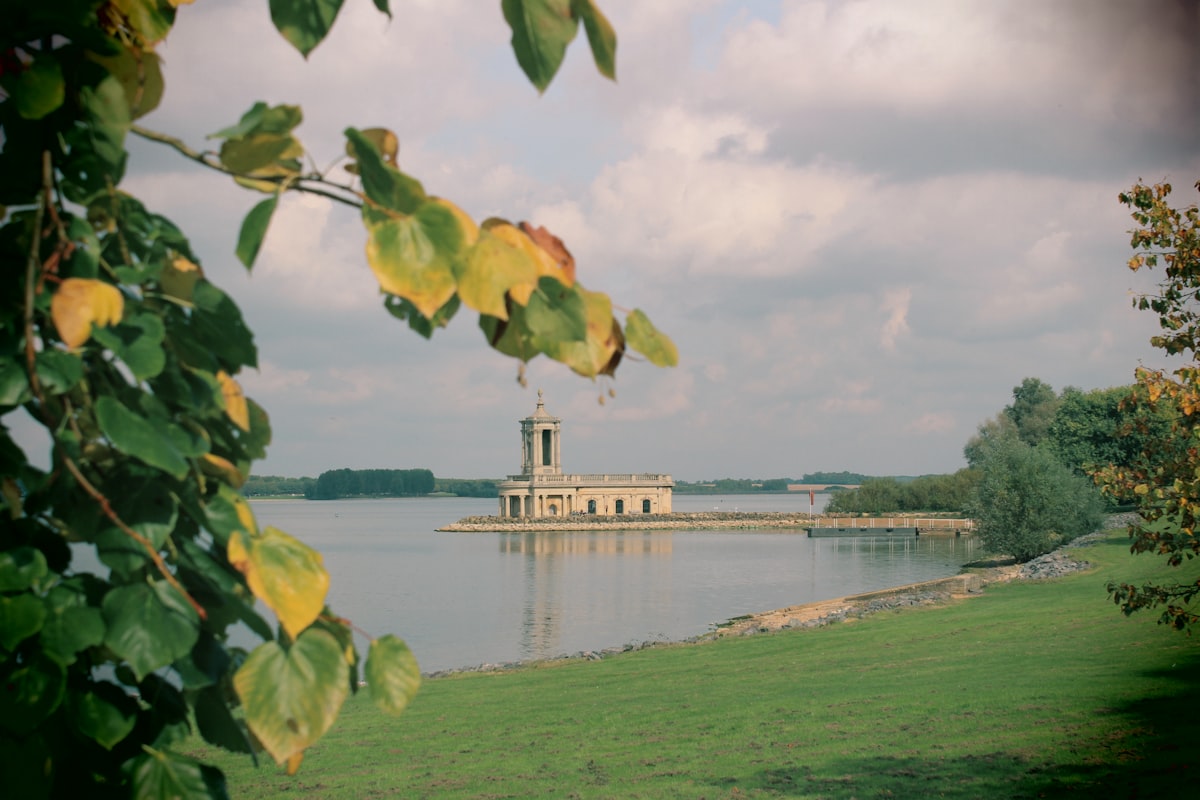
Daylight requirements in Rutland are a recurring consideration for anyone extending a home or bringing forward new development in England's smallest county. Whether you are altering a stone cottage in one of the villages around Rutland Water, building behind a property in Oakham, or designing a new dwelling near Uppingham, local planning officers will expect daylight and sunlight to neighbouring homes to be properly protected. This guide explains how Rutland County Council, as the unitary authority and Local Planning Authority, approaches these issues, and how a professional daylight and sunlight report demonstrates compliance.
Daylight requirements in Rutland: the planning framework
Rutland County Council is a unitary authority, which means it acts as the sole Local Planning Authority for the area. Planning applications are determined against the development plan, read alongside the National Planning Policy Framework (NPPF). The Council's adopted Local Plan is made up of several Development Plan Documents:
- Core Strategy DPD, adopted 11 July 2011;
- Site Allocations and Policies DPD, adopted 13 October 2014;
- Minerals Core Strategy and Development Control Policies DPD, adopted 11 October 2010.
A new Rutland Local Plan, covering the period to 2041, has been progressing through the plan-making process, with a Regulation 19 (publication) draft consulted on in autumn 2024. Until that emerging plan is adopted, the documents above remain the basis for decisions, and applicants should always check the current position on the Council's website before submitting.
The key amenity and design policies
Two policies are central to how daylight and sunlight are weighed in Rutland:
- Policy CS19 (Core Strategy DPD) sets the overarching requirement to promote good design across all development.
- Policy SP15 (Site Allocations and Policies DPD) provides the more detailed development-management policy. It addresses the relationship of new development to its surroundings, residential amenity, detailed design and materials, and is the policy officers routinely cite when assessing impacts such as loss of light, overshadowing and overlooking on neighbouring occupiers.
Neither policy specifies numerical daylight targets. Instead, they require that development does not cause unacceptable harm to amenity — and the recognised way of testing that objectively is to apply the Building Research Establishment's methodology.
Rutland's specific daylight and sunlight guidance
Importantly, Rutland does provide its own published guidance on daylight and sunlight at the household scale. The Extensions to Dwellings Supplementary Planning Document (SPD), adopted on 9 March 2015, elaborates on Policies CS19 and SP15 and gives practical, locally adopted advice. It states that extensions "must be carefully sited to avoid undue loss of daylight and sunlight to the windows and garden of the neighbouring property" and that proposals "must respect the privacy of neighbouring properties".
The SPD sets out the Council's 45-degree code, a useful rule of thumb for assessing loss of light and outlook:
To comply with the code a single storey extension should not cross the line(s) drawn at 45 degrees from the midpoint of the ground floor window of the closest habitable room of the neighbouring property. In the case of a two storey extension the line should be drawn from the nearest edge of the ground floor window.
The code is applied to front and rear extensions, but not to side extensions or to extensions directly opposite affected windows. The SPD defines a "habitable room" as a dining room, kitchen, lounge, study or bedroom — excluding WCs, bathrooms, utility rooms, landings and hallways. It also addresses overlooking, suggesting obscure glazing for non-habitable room windows and rooflights, avoiding balconies that overlook adjoining properties, and retaining adequate private garden space.
Rutland's wider design guidance has been strengthened in recent years. The Design Guidelines for Rutland SPD (2021) sets expectations for good-quality design across all scales, and a Window and Door Design Guidance SPD (2025) addresses the detailing that is so important in the county's many conservation areas and stone-built settlements.
Where the 45-degree code stops and BRE BR 209 begins
The 45-degree code is a quick screening tool for simple householder extensions. For anything more substantial — a two-storey extension affecting several windows, a backland or infill plot in Oakham or Uppingham, a conversion or a multi-unit scheme — the recognised quantitative standard is the BRE guidance. Where the SPD test is borderline or does not apply, a full assessment to BRE BR 209 (2022), Site layout planning for daylight and sunlight: a guide to good practice, is the appropriate way to demonstrate that amenity is protected.
A BRE-based daylight and sunlight report typically reports:
- Vertical Sky Component (VSC) at neighbouring windows, with the 27% benchmark and the "no greater than 0.8 times the former value" test for material reductions;
- No Sky Line / Daylight Distribution within affected rooms;
- Annual Probable Sunlight Hours (APSH), including the winter sunlight component, for windows facing within 90 degrees of due south;
- Overshadowing of neighbouring gardens and amenity areas, usually assessed on 21 March.
For internal daylight provision within new homes, BS EN 17037 (Daylight in Buildings) and its UK National Annex set target illuminance levels. Together these standards give officers the objective evidence that Policy SP15 calls for.
Local factors that matter in Rutland
Rutland's character creates some specific daylight and sunlight considerations:
- Conservation areas and stone villages. Many Rutland settlements, from Oakham and Uppingham to villages such as Lyddington, Exton and Wing, have conservation area designations. Permitted development rights are often restricted here, so a planning application — and supporting amenity evidence — is more likely to be required than in less sensitive locations.
- Tight historic plots. Traditional terraces and cottages frequently sit close to boundaries with limited separation, which makes the 45-degree code and a careful daylight assessment particularly relevant to rear and side extensions.
- Listed buildings. Rutland has a high concentration of listed buildings; all extensions to them require listed building consent, and daylight to neighbours must still be safeguarded.
These local conditions mean a credible, BRE-based report is often the difference between a smooth determination and a request for further information.
How Fortress Associates can help
Fortress Associates provides BRE-compliant daylight and sunlight report services for projects across Rutland and the wider UK. Our assessments follow BRE BR 209 (2022), BS EN 17037 and the NPPF, and are written to address the relevant Rutland Local Plan policies and the Extensions to Dwellings SPD directly. We work nationwide with a 4–5 working day turnaround and require no advance payment. To discuss your project, see our services or get in touch via our contact page.
Sources & further reading
Need help with a UK planning project?
Fixed-fee daylight reports and Building Regulations drawings — delivered in 4–5 working days. No advance payment.
Request a free quote