From a rear extension in Galashiels to infill housing in Hawick, a conversion in Melrose or a new home in Peebles, daylight and sunlight regularly feature in the council's assessment of a scheme. This guide explains the daylight requirements in the Scottish Borders, the policies that apply, and how the recognised technical standards are used to show that neighbouring amenity has been protected.
Scottish Borders Council is the planning authority for the area. Daylight is judged as part of residential amenity and good design rather than against one fixed number, but the adopted plan does set a clear expectation that new development should not cause significant loss of daylight, sunlight or privacy. A methodical daylight and sunlight report is the most effective way to evidence this.
The planning framework in the Scottish Borders
Importantly, the development plan has recently changed. The statutory development plan now comprises the Scottish Borders Local Development Plan 2 (LDP2), adopted on 22 August 2024, which replaces the previous LDP adopted in 2016, together with National Planning Framework 4 (NPF4), adopted by Scottish Ministers in February 2023. Applicants should make sure they are working to the 2024 plan and not the superseded 2016 version.
Within the adopted LDP2, the policies most relevant to daylight and amenity are:
- Policy PMD2: Quality Standards – the principal design policy. It promotes high-quality design and site layout and applies criteria covering sustainability, accessibility, placemaking and design, green space and biodiversity. Protecting the amenity of neighbouring properties, including daylight and sunlight, is part of achieving these quality standards.
- Policy PMD5: Infill Development – directly relevant to daylight. It requires that an infill proposal "does not result in any significant loss of daylight, sunlight or privacy to adjoining properties as a result of overshadowing or overlooking". This is one of the clearest daylight hooks in any Scottish LDP.
- Policy HD3: Protection of Residential Amenity – safeguards the amenity of existing residential areas, which is engaged where new development could affect neighbours' living conditions.
These policies are supported by the Council's approved Supplementary Planning Guidance on Placemaking and Design and, very directly, by its approved Privacy and Sunlight Guide, which the LDP lists as relevant guidance for Policy PMD2. The existence of a dedicated Privacy and Sunlight Guide means daylight and overshadowing are well-established considerations in Borders decisions.
What NPF4 adds
NPF4 reinforces the local position with national policy:
- NPF4 Policy 14 (Design, quality and place) – promotes a design-led approach to create well-designed, sustainable places.
- NPF4 Policy 16 (Quality homes) – expects homes to be designed to address matters including noise, daylight, sunlight, privacy and immediate outlook. This is an explicit national reference to daylight that Borders case officers apply alongside PMD2 and PMD5.
How daylight and sunlight are measured
The LDP and NPF4 set the policy test, but the numerical method comes from established technical guidance. In practice, the Scottish Borders – like authorities across the UK – relies on:
- BRE BR 209, Site Layout Planning for Daylight and Sunlight (2022 edition) – the recognised best-practice methodology for assessing daylight and sunlight to existing and proposed homes.
- BS EN 17037, Daylight in Buildings – the European standard for daylight provision within rooms, often used alongside BR 209 for new dwellings.
A BR 209 assessment usually reports three measures:
Vertical Sky Component (VSC)
VSC measures how much skylight reaches a neighbour's window. Around 27% is regarded as a good level of daylight; where a window is reduced to less than 0.8 times its previous VSC, the change may be noticeable and needs justification.
No Sky Line / Daylight Distribution
This checks how much of a room still receives direct skylight after development. A large reduction in the sky-lit area can indicate a meaningful loss of daylight.
Annual Probable Sunlight Hours (APSH)
For windows facing within 90 degrees of due south, APSH assesses sunlight across the year. Overshadowing of gardens and amenity space is also tested, which matters on the many sloping, valley and riverside sites found across the Borders.
The BRE figures are guidelines, not rigid limits. A tight site in central Galashiels or Hawick is judged differently from an open plot on a settlement edge. The aim is to show the Council that daylight, sunlight and privacy have been properly considered against PMD2, PMD5 and the Privacy and Sunlight Guide.
Local factors that influence daylight cases
Several characteristics of the Scottish Borders shape how daylight is weighed in practice:
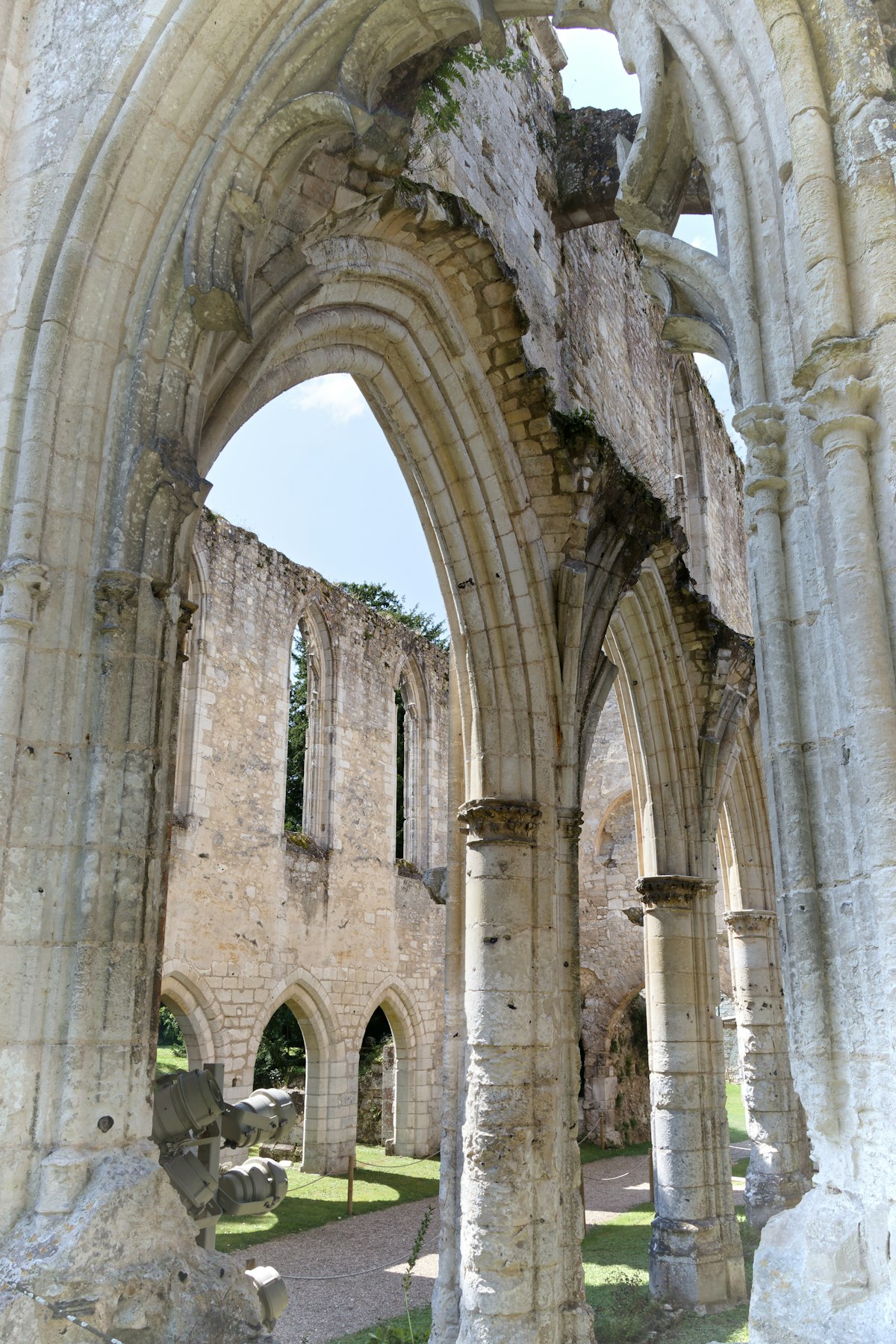
- Historic burgh cores and conservation areas. Towns such as Melrose, Peebles, Galashiels, Hawick and Kelso contain conservation areas and listed buildings, often with tight historic plot patterns around landmarks like Melrose Abbey. Extensions and infill in these settings must balance heritage character against neighbour daylight, and a clear BR 209 analysis helps reconcile the two.
- Valley and sloping topography. Much of the Borders sits in the valleys of the Tweed, Teviot and their tributaries, with significant changes in level and the Eildon Hills as a backdrop. Slopes and orientation strongly affect overshadowing and sunlight to gardens, so site-specific 3D modelling is far more reliable than rules of thumb.
- Infill and back-land plots. Policy PMD5 specifically guards against town and village cramming and against significant loss of daylight, sunlight or privacy through overshadowing or overlooking, so infill and garden-ground schemes routinely need a daylight assessment.
Putting together a strong daylight submission
For most householder and small residential schemes in the Scottish Borders, a well-prepared daylight and sunlight report will:
- Identify the neighbouring windows and amenity spaces that could be affected.
- Model the existing and proposed arrangement using a 3D method consistent with BR 209 (2022).
- Report VSC, daylight distribution and APSH results against the BRE benchmarks.
- Explain any shortfalls in context, referencing LDP2 Policies PMD2 and PMD5, the Privacy and Sunlight Guide and NPF4 Policies 14 and 16.
Providing this analysis up front reduces the risk of a request for further information and gives the case officer the evidence to support a positive recommendation.
How Fortress Associates can help
Fortress Associates provides our daylight and sunlight report service for homeowners, architects and developers across the Scottish Borders and the whole of the UK. We assess your scheme to BRE BR 209 (2022) and BS EN 17037 and present the results clearly against the relevant LDP2 and NPF4 policies. We also prepare building warrant and Building (Scotland) Regulations drawings where they are needed. Typical turnaround is 4 to 5 working days, with no advance payment required. Contact us to discuss your site, or read our companion guide on daylight requirements in Renfrewshire.
Sources & further reading
Need help with a UK planning project?
Fixed-fee daylight reports and Building Regulations drawings — delivered in 4–5 working days. No advance payment.
Request a free quote