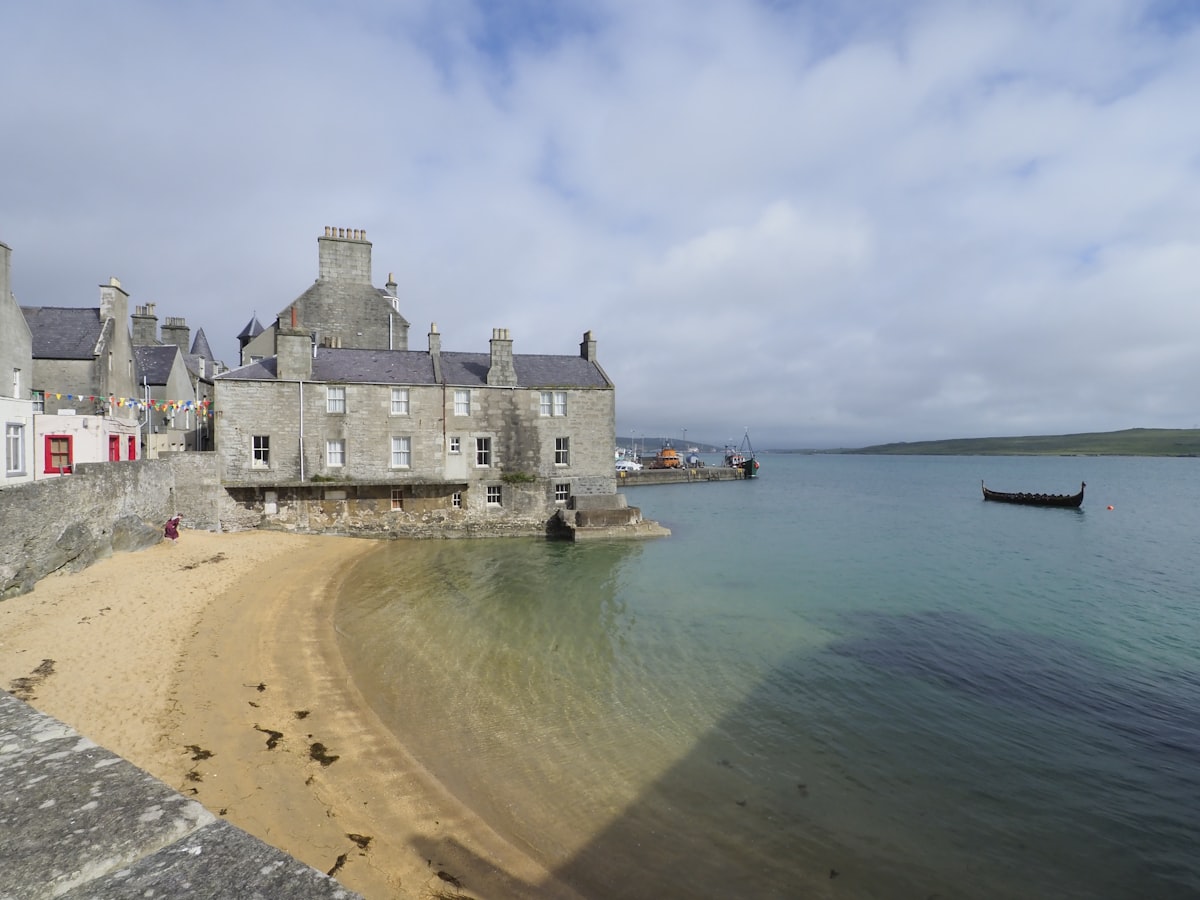
Understanding the daylight requirements in Shetland Islands is essential for anyone proposing a new house, extension or infill development across the archipelago, from Lerwick and Scalloway to Brae, Sandwick and the remoter isles. The Shetland Islands Council is the planning authority for the whole of Shetland, and it assesses the daylight and sunlight effects of development through its adopted local plan, its council housing guidance and Scotland's national planning policy. This article sets out how those requirements work in practice, and why Shetland's exceptional northern latitude makes daylight a particularly important consideration here.
The planning framework in Shetland
Two documents form the statutory development plan for Shetland. The first is the Shetland Local Development Plan (LDP) 2014, which was adopted by the Council on 26 September 2014 and remains the adopted plan for the islands while a replacement ("Plan Shetland") is prepared. The second is National Planning Framework 4 (NPF4), adopted by the Scottish Government in February 2023, which now carries full statutory weight as part of every council's development plan.
The LDP 2014 sets the strategy for how and where development happens in Shetland, with the consistent requirement that the density, scale and overall design of a development must be appropriate to its context and cause no loss of amenity for neighbouring properties. Daylight, sunlight, overshadowing and privacy all fall within that amenity test.
NPF4 and design quality
NPF4 reinforces the local position through two policies that are directly relevant to daylight and amenity:
- Policy 14 (Design, quality and place) requires a design-led approach and applies the Place Principle, expecting development to create successful places, improve the quality of an area and protect amenity regardless of scale or location.
- Policy 16 (Quality homes) promotes high-quality, sustainable homes in the right locations, with residential amenity, including daylight and outlook, forming part of what makes a home genuinely high quality.
Neither policy prescribes a numerical daylight target. Instead they set the expectation that good daylight, sunlight and amenity are designed in from the outset, which is where technical assessment to recognised standards becomes valuable.
Daylight requirements in Shetland Islands: the council position
Shetland's most specific guidance on daylight sits within the council's housing design advice for the islands, which addresses how new homes should relate to their neighbours. The guidance is clear that a proposed development must respect the right of its neighbours to a reasonable amount of daylight into all of their windows, and it links this directly to separation and scale.
To safeguard daylight and privacy, the council guidance advises that a distance of 25 metres should be maintained from main window to main window, reducing to 18 metres in more urban areas such as parts of Lerwick.
The guidance also warns specifically about overshadowing: a house built much taller than an existing neighbour, or built up on a higher part of a sloping site, can block daylight and direct sunlight from reaching the existing home. This is a recurring issue on Shetland's many sloping coastal and hillside plots, where a poorly positioned new dwelling can cast a long shadow over a neighbour for much of the day.
Two genuinely local factors
Two characteristics make daylight in Shetland different from almost anywhere else in the UK:
- Extreme latitude. Lerwick sits at roughly 60 degrees north, further north than Bergen or much of southern Greenland. The sun sits very low in the sky in winter, with only around five to six hours of weak daylight around the winter solstice, while midsummer brings the long twilight locally known as the "simmer dim". Because the winter sun is so low, even modest obstructions can block direct sunlight, so separation distances and building height matter more here than at southern latitudes.
- Exposed, sloping coastal sites. Much of Shetland's housing is on open, wind-exposed plots near the shore, often on a slope. The combination of sloping ground and a low sun angle means overshadowing assessments need to consider the real topography of the site, not just a flat-plan separation distance.
Because the adopted LDP and council guidance set out the principle rather than a detailed numerical method, applicants and planners in Shetland frequently look to recognised UK best-practice standards to demonstrate that a scheme protects daylight and sunlight.
BRE and BS EN 17037: the technical methodology
The established way to assess daylight and sunlight in the UK is the Building Research Establishment guide BRE BR 209 (2022), Site Layout Planning for Daylight and Sunlight: A Guide to Good Practice, used alongside the British and European daylight standard BS EN 17037. Together they provide objective, numerical tests that translate Shetland's amenity policies into measurable results.
The main assessments are:
- Vertical Sky Component (VSC) measuring the amount of sky visible at a neighbour's window, with 27% treated as a good daylight level.
- No Sky Line / Daylight Distribution assessing how far daylight penetrates into a room.
- Annual Probable Sunlight Hours (APSH) assessing direct sunlight to neighbouring windows across the year, which is especially sensitive at Shetland's latitude where the winter sun is so low.
- Overshadowing of gardens and amenity space, typically tested on 21 March, to check that outdoor areas keep adequate sunlight.
For new homes, BS EN 17037 sets target daylight and sunlight levels inside habitable rooms, helping demonstrate that a Shetland scheme delivers the quality of internal environment expected under NPF4 Policy 16.
When a daylight assessment is needed in Shetland
A daylight and sunlight report is most often requested where a proposal could affect a neighbour's light or where new homes are tightly arranged. Typical Shetland situations include:
- A two-storey house or extension close to a neighbouring dwelling in or around Lerwick or Scalloway.
- Infill or backland housing within an established settlement where separation distances are tight.
- A taller new build on a sloping coastal plot that could overshadow an existing home below it.
- Any scheme where a planning officer or neighbour raises concern about loss of daylight, sunlight or privacy.
A clear report prepared to BRE BR 209 (2022) and BS EN 17037 lets the council weigh the amenity impact objectively against the LDP and NPF4, and helps avoid delay caused by uncertainty over light.
How Fortress Associates can help
Fortress Associates provides our daylight and sunlight report service for applicants across Shetland, prepared to BRE BR 209 (2022) and BS EN 17037 and written to sit alongside the Shetland LDP 2014 and NPF4. We work UK-wide with a typical turnaround of four to five working days and ask for no advance payment. We also prepare building warrant drawings to the Building (Scotland) Regulations where a project needs them. To discuss a Shetland scheme, get in touch with our team.
Sources & further reading
- Shetland Islands Council current Local Development Plan, policies and guidance
- Scottish Government: National Planning Framework 4 (NPF4)
- BRE BR 209 (2022): Site Layout Planning for Daylight and Sunlight
- Fortress Associates daylight, sunlight and building warrant services
- Daylight Requirements in South Ayrshire
Need help with a UK planning project?
Fixed-fee daylight reports and Building Regulations drawings — delivered in 4–5 working days. No advance payment.
Request a free quote