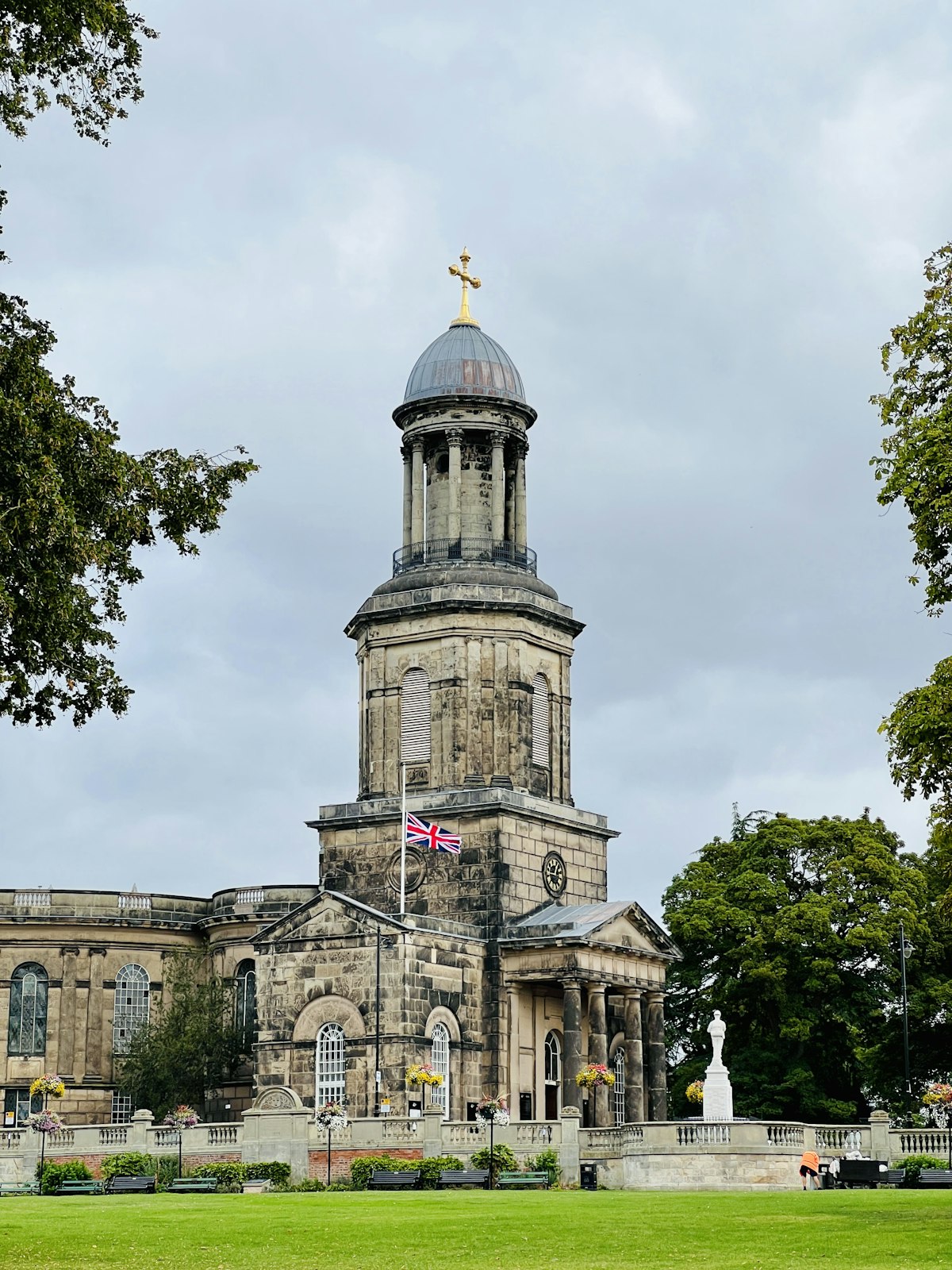
Daylight requirements in Shropshire affect almost every residential project in the county, from extensions in Shrewsbury's historic centre to new homes in market towns such as Ludlow, Oswestry, Bridgnorth and Whitchurch. Shropshire Council, as the unitary Local Planning Authority, expects development to protect the daylight, sunlight and amenity of neighbouring occupiers. This guide explains the policy framework, the guidance that applies, and how a professional daylight and sunlight report demonstrates compliance.
Daylight requirements in Shropshire: the planning framework
Shropshire became a unitary authority in 2009, so a single council acts as the Local Planning Authority for the whole county (excluding Telford and Wrekin, which is a separate authority). Planning applications are determined against the adopted development plan, read together with the National Planning Policy Framework (NPPF).
Shropshire's adopted Local Plan currently comprises two documents, together covering the period 2006–2026:
- The Shropshire Core Strategy, adopted in 2011, which sets the vision, spatial strategy and strategic policies; and
- The Site Allocations and Management of Development (SAMDev) Plan, adopted on 17 December 2015, which provides the detailed development-management and settlement policies and site allocations.
A new Local Plan for Shropshire has been in preparation, and at the time of writing the council has been progressing the next plan and consulting on a suite of draft design Supplementary Planning Documents. Until any new plan is adopted, the Core Strategy and SAMDev Plan remain the basis for decisions. Applicants should always confirm the current position on Shropshire Council's planning policy pages before submitting.
The key amenity and design policies
Two policies are central to how daylight and sunlight impacts are assessed in Shropshire:
- Policy CS6 (Core Strategy) — Sustainable Design and Development Principles. This requires development to be designed to a high quality, respecting and enhancing local distinctiveness and, importantly, safeguarding residential and local amenity.
- Policy MD2 (SAMDev Plan) — Sustainable Design. This builds on CS6 with more detailed requirements on design, character, amenity, sustainability and open space, including responding appropriately to the form, layout and amenity value of existing development.
Neither policy sets numerical daylight or sunlight thresholds. Instead they require that the existing amenity of neighbouring occupiers — which includes adequate daylight, sunlight and freedom from undue overshadowing or overlooking — is protected. The recognised, objective way to test that is the Building Research Establishment's methodology.
Shropshire's daylight and sunlight guidance position
Shropshire Council publishes design guidance to support its policies, including a Sustainable Design Supplementary Planning Document that elaborates on Policies CS6 and MD2, and the council has been consulting on further draft SPDs specifically covering design for new dwellings and residential extensions and alterations. However, the council does not set its own numerical daylight or sunlight standards (such as a fixed Vertical Sky Component target or a local 45-degree rule) in adopted policy.
In the absence of bespoke local metrics, the established national standards apply through the Local Plan and the NPPF. For daylight and sunlight assessment in Shropshire this means:
- BRE BR 209 (2022), Site layout planning for daylight and sunlight: a guide to good practice — the principal reference for assessing impacts on neighbouring properties and daylight to new homes;
- BS EN 17037 (Daylight in Buildings) and its UK National Annex — for internal daylight provision within proposed dwellings;
- The NPPF, which supports making efficient use of land while securing well-designed places and a good standard of amenity for existing and future occupiers.
Shropshire's validation requirements for planning applications also mean that where a proposal could materially affect a neighbour's light, supporting evidence is often expected. A BRE-based assessment is the most credible way to provide it.
What a BRE BR 209 report assesses
A professional daylight and sunlight report prepared to BRE BR 209 (2022) typically reports:
- Vertical Sky Component (VSC) at neighbouring windows, with the 27% guideline and the test that a retained value of no less than 0.8 times the former value is unlikely to be noticeable;
- No Sky Line / Daylight Distribution within affected rooms;
- Annual Probable Sunlight Hours (APSH), including the winter component, for windows facing within 90 degrees of due south;
- Overshadowing of neighbouring gardens and amenity spaces, usually tested on 21 March.
For new homes, the report can also demonstrate adequate internal daylight against the BS EN 17037 targets — useful evidence under Policy MD2's requirement to deliver good-quality, well-functioning places.
Local factors that matter in Shropshire
Shropshire's geography and heritage create specific daylight and sunlight considerations:
- Shrewsbury's medieval core. The county town sits within a tight loop of the River Severn, with narrow streets, listed buildings and a large conservation area. Tightly packed historic plots make daylight and overlooking impacts particularly sensitive, and permitted development rights are frequently restricted.
- The Shropshire Hills National Landscape (AONB). Around a quarter of the county lies within this designated landscape, which includes the Long Mynd and the Stiperstones. Development here faces heightened scrutiny on design and amenity, so robust supporting evidence is valuable.
- The Ironbridge Gorge World Heritage Site. Around Ironbridge and Coalbrookdale, the steep, wooded valley and dense historic settlement pattern make light and outlook between properties an important amenity consideration.
In these sensitive contexts, a clear, BRE-compliant report can be the difference between a smooth determination and a request for further information.
How Fortress Associates can help
Fortress Associates provides BRE-compliant daylight and sunlight report services for projects throughout Shropshire and across the UK. Our assessments follow BRE BR 209 (2022), BS EN 17037 and the NPPF, and are written to address the relevant Shropshire Local Plan policies — including CS6 and MD2 — directly. We work nationwide with a 4–5 working day turnaround and require no advance payment. To get started, see our services or reach us via our contact page.
Sources & further reading
Need help with a UK planning project?
Fixed-fee daylight reports and Building Regulations drawings — delivered in 4–5 working days. No advance payment.
Request a free quote