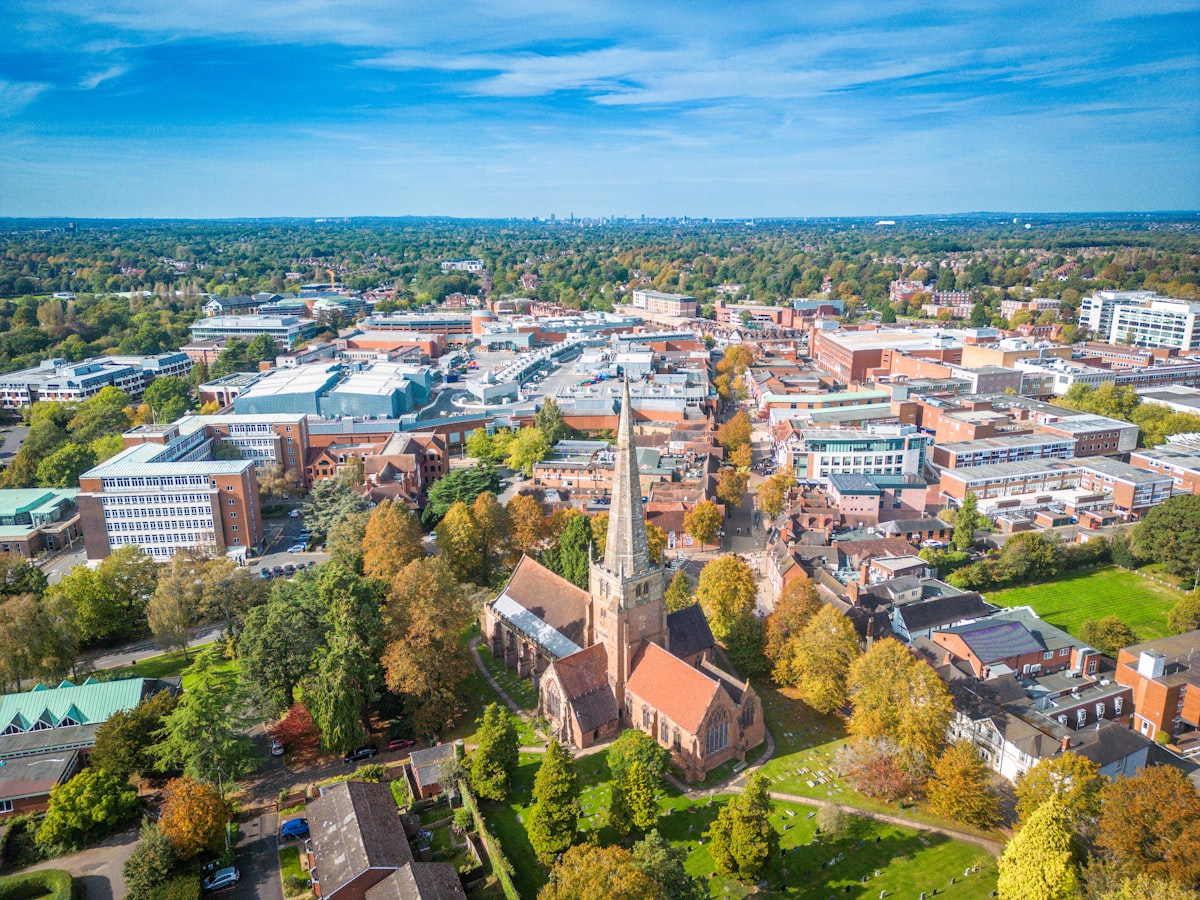
Daylight requirements in Solihull sit at the meeting point of national guidance and the borough's adopted planning policy. Whether you are extending a home in Shirley, infilling a plot in Knowle, or bringing forward flats near Solihull town centre, the council will want to see that your scheme protects the daylight, sunlight and general amenity of neighbouring occupiers — and that any new homes you create enjoy reasonable light themselves. This article sets out where those requirements come from, which Solihull Metropolitan Borough Council policies apply, and how a technical assessment to the BRE method fits in.
The planning policy position in Solihull
Solihull's statutory development plan is the Solihull Local Plan ("Shaping a Sustainable Future"), adopted on 3 December 2013. It is worth being clear about the borough's recent plan-making history, because it has been widely reported and often misunderstood: Solihull submitted a new Local Plan for examination, but in September 2024 the appointed Inspectors recommended its withdrawal, and Full Council resolved to withdraw it on 8 October 2024. The council has since begun a fresh Local Plan Review (covering the period to 2043), which is at an early Issues and Options stage. As a result, the 2013 Local Plan remains the adopted plan against which applications are determined today.
Two policies do most of the work on light and amenity:
- Policy P14 – Amenity. This policy seeks to protect the amenity of neighbouring occupiers and of the occupants of the proposed development itself, alongside the visual amenity of the surrounding area. Loss of daylight, sunlight, outlook and privacy are all amenity considerations weighed under this policy.
- Policy P15 – Securing Design Quality. This sets out the borough's design principles, covering the scale, massing and appearance of buildings, their relationship to neighbouring buildings and spaces, and their environmental performance. Daylight and sunlight feed into design quality both as an amenity matter and as an aspect of good layout and orientation.
These policies operate alongside the National Planning Policy Framework, which expects new development to provide a high standard of amenity for existing and future users and to make efficient use of land while avoiding unacceptable harm to neighbours.
Solihull's House Extension Guidelines and the 45-degree guide
The most Solihull-specific piece of guidance for householder and smaller residential schemes is the council's House Extension Guidelines Supplementary Planning Document (SPD, 2010). The SPD explains how the effects of an extension on neighbouring properties are assessed and introduces the council's 45-degree guide. In practice, an extension that breaches a 45-degree line drawn from the centre of a neighbour's main habitable-room window is more likely to be judged to cause an unacceptable loss of daylight, outlook or an overbearing effect. The SPD treats single-storey rear extensions with somewhat greater flexibility than two-storey additions, but the underlying tests — loss of direct sunlight or general daylight, overbearing or dominating effect, and loss of privacy from overlooking (particularly at first-floor level) — remain the same.
The 45-degree guide is a useful screening tool, but it is not a substitute for a numerical daylight and sunlight assessment where a scheme is larger, closer or more complex than a typical domestic extension. For those cases, the council will look for an assessment carried out to the recognised national methodology.
When a daylight and sunlight assessment is needed
Solihull publishes a Local Validation Checklist (most recently revised in January 2020) that sets out the supporting documents required to validate an application. For sensitive or larger proposals — flatted schemes, backland and infill development, taller buildings, and sites adjoining existing homes — a daylight and sunlight report is commonly expected, either to validate the application or to discharge concerns raised during determination. The relevant technical standards are:
- BRE BR 209, Site Layout Planning for Daylight and Sunlight: A Guide to Good Practice (3rd edition, 2022) — the established national benchmark for assessing impact on neighbours (Vertical Sky Component, the daylight distribution / No Sky Line test, and the Annual Probable Sunlight Hours test) and the light available to new dwellings;
- BS EN 17037 Daylight in Buildings — referenced in BR 209 for target daylight levels within new habitable rooms;
- the amenity and design expectations of Policies P14 and P15 of the adopted Local Plan, read with the NPPF.
It is worth noting that the BRE figures are guidelines, not absolute thresholds. BR 209 itself recognises that in established urban areas a degree of flexibility may be appropriate, and Solihull — with its mix of leafy suburbs, denser town-centre frontages and the major regeneration around the UK Central Hub — contains a wide range of contexts in which those guidelines should be applied with judgement.
Local context that shapes assessments in Solihull
A few borough-specific factors regularly influence daylight and sunlight work in Solihull:
- The UK Central Hub and HS2 Interchange. The area around Birmingham Airport, the NEC and the planned HS2 Interchange station is a focus for significant growth, including higher-density and mixed-use development where overshadowing and inter-building daylight relationships need careful study.
- Chelmsley Wood and the north of the borough. Regeneration and intensification of existing residential areas raise classic neighbour-amenity questions — exactly the situations the 45-degree guide and BR 209 are designed to address.
- Established suburban character. Much of Solihull comprises generous, low-density housing where well-lit gardens and rooms are part of the expected standard of amenity, so loss-of-light objections are taken seriously at committee and appeal.
Daylight requirements in Solihull: bringing it together
For most applicants in Solihull the practical position is this: there is no separate borough "daylight standard" with its own numbers. Instead, the council assesses light through Policy P14 (Amenity) and Policy P15 (Securing Design Quality) of the 2013 Local Plan, supported by the House Extension Guidelines SPD and its 45-degree guide for smaller schemes, with BRE BR 209 (2022) and BS EN 17037 providing the technical method for measuring impact on neighbours and the quality of light in new homes. Getting the assessment right early — before submission — is the surest way to avoid validation delays, objections and refusals.
How Fortress Associates can help
Fortress Associates prepares our daylight and sunlight report service to BRE BR 209 (2022) and BS EN 17037, tailored to the policy context of the relevant local planning authority — in this case Solihull's adopted Local Plan and House Extension Guidelines. We work UK-wide with a 4–5 working day turnaround and ask for no advance payment. We also produce Building Regulations drawings to the Approved Documents (Parts A–S). To discuss a Solihull scheme, see our services or get in touch via our contact page. If your project is just over the boundary, you may also find our guide to daylight requirements in South Tyneside useful for comparison.
Sources & further reading
Need help with a UK planning project?
Fixed-fee daylight reports and Building Regulations drawings — delivered in 4–5 working days. No advance payment.
Request a free quote